Because public schools are trying to continue with all of their traditional subjects, including P.E., during distance learning, apparently lots of students are having to keep diet and exercise logs... with some unintended negative consequences to the already unsteady mental health of our children. It is bringing the nutrition curricula we use in this country into the spotlight.
I have some thoughts about this and I would love to hear from other people as well, about what is healthy nutrition education and what is unhealthy.
I remember teaching a traditional nutrition curriculum when I taught 4th grade public school in Maryland in 2001. Even though it was two decades ago, I vividly remember making a display of thick white spoonfuls of Crisco and tall towers of sugar cubes, measuring and heaping them up while children watched, to show how many grams of fat and sugar were in different items from the McDonald's menu. All three of the fourth grade classes came together into one room to watch me present that lesson. So it was 75-80 chidren. They were all silently watching me.
It was a visceral experience and really shocking, as an adult, to see just how unhealthy something that I was eating (and loving) was.
And it did change my food habits. But I was an adult. And I was in charge of what I ate. Kids are not in charge of the shopping or of the budget in their homes... and it isn't fair to put that burden on them.
From those years I also remember how difficult it is to teach that kind of curriculum while looking out into the classroom at children who were heavier than their friends and my heart hurt, knowing that those children felt all eyes in the classroom were on them. It is also really hard to look at a child who has a family that is struggling financially, and who is eating what his or her parents or grandparents can afford, and to know that this curriculum is making those children feel bad about themselves too.
And in the years after leaving that public school teaching job to become a parent, there have certainly been many times when my kids and I went to the food pantry and we ate what we were given. And we were glad for it.
Waldorf doesn't cover nutrition overtly until 8th grade. In the early years, children help to make stone soup and bake bread in the classroom each week, which is meant to not only give them access to healthy foods but to introduce them to a variety of fresh produce and grains. Each day in Kindergarten the snack is supposed to feature a different grain. Steiner wrote about the cosmic cycle of the week, thus the idea of a grain a day.
- Sunday - Sun - Wheat
Monday - Moon - Rice
Tuesday - Mars - Barley
Wednesday - Mercury - Millet
Thursday - Jupiter - Rye
Friday - Venus - Oats
Saturday - Saturn - Maize
Then there is a big emphasis on Agriculture throughout the grades. Waldorf schools are expected to have active year-round gardens, and keep farm animals such as chickens or goats on their grounds as well, if possible, and children are expected to participate in the tasks related to taking care of the plants and the animals, so that they can see where food comes from. The Boulder Waldorf Kindergarten was a working goat dairy for a while and even sold milk to the community. Last time I was there they didn't have the goats anymore, but they still had plenty of chickens.
Beekeeping on Waldorf school grounds is also very common. Steiner lectured on many things, including bees and agriculture (and he invented biodynamic agriculture... education was only one of the areas he had an impact on).

Agriculture Course:
The Birth of the Biodynamic Method

And in 3rd grade in Waldorf, students are supposed to plant a grain which grows in their area (this is part of the Farming & Gardening block), tend it, harvest it, take it through the process of threshing and milling, and then finally make and eat a recipe which uses their very own grain.
(It's all about practical life skills in Third Grade. Another non-food agriculture option is to plant something which can be used in clothing, such as cotton or flax, and then harvest and process that all the way to a usable fiber!)
In 3rd grade there is also often an entire block on Baking (part of the Maths of Practical Life series) as a way to practice Measurement. It is also a wonderful topic for 4th grade as a way to practice working with Fractions.
In 8th grade, Nutrition is taught as an Organic Chemistry block (with sugar, starch, cellulose, fat, and protein experiments, as well as discussions about the roles of different vitamins & minerals), as a follow-up to the Chemistry lessons of 7th grade and to go along with the Human Anatomy & Physiology study in both grades 7 and 8. There are no messages about WHAT to eat besides perhaps Eric Fairman's emphasis on drinking water and how he thinks dark green leafy vegetables should be their own section on the food guide pyramid. There is no discussion at all of what a child should weigh.
In Montessori, there is similarly an introduction to fresh produce in the Primary classroom (ages 3-6). Since it is Montessori, there is a study of vegetables and fruits as nomenclature (three part cards). The focus is on identifying terminology. There is also a sense of beauty... the images used in the three part cards are often lovely paintings.
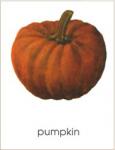
Vegetable Cards produced by Michael Olaf
In the Lower Elementary classroom (ages 6-9), the story of The Great River is told as the Sixth Great Lesson. This explains how all of the human body systems work together in a beautiful coordinated plan, and the cells of our body are like inhabitants in a great and wonderful kingdom. The emphasis is on the marvelousness of our bodies as organisms. Maria Montessori saw the Great Lessons as part of Cosmic Education... building the children's sense of being part of the grand order of things in the universe. She felt this was an important part of the Peace curriculum.
Just as in the Primary lessons on nomenclature, there is a focus on accuracy in Lower Elementary (the analogies in the story of The Great River are very carefully chosen) but also beauty.
In Upper Elementary, children go deeper into Human Anatomy & Physiology. Again, it is about information + reverence. They absorb themselves into learning the intricate details of the human body systems. There are no messages about WHAT to eat and there is no discussion at all of what a child should weigh. As in Waldorf, Montessori schools are also expected to have productive vegetable gardens throughout a child's entire time at school and, for the adolescent years, having the school operate a working farm is also thought to be ideal. At the Montessori elementary school where I taught for 6 years, we had sheep as part of the 4-H program. I'm sure, somewhere, there are pictures from 2008 of my happy summer taking care of the sheep!
This post contains affiliate links to materials I truly use for homeschooling. Qualifying purchases provide me with revenue. Thank you for your support!





 Immersive Experience
 Immersive Experience
 Immersive Experience
 Immersive Experience


