Showing posts with label local history. Show all posts

Thursday, April 23, 2026

Local Industry - Fruit

Our fifth Local Industry for Southern Illinois!


timing:


Zac, age 3
Greer's Lost Creek Blueberries


resource list:


art ideas:

Baking Soda Paint
Since this reaction leaves a fuzzy texture, it is perfect for painting peaches! (I like to use this template. Print it, cut it out, and use that to trace a peach shape onto your watercolor paper. Then cut out the watercolor paper shape.)

Positive / Negative Art
This technique workes really well for apples or pears!


special guest:

fruit farmer


This post contains affiliate links to materials I truly use for homeschooling. Qualifying purchases provide me with revenue. Thank you for your support!

Monday, April 20, 2026

Local Industry - Coal

Our fourth Local Industry for Southern Illinois!


timing:

    1810 - present day


resource list:


artifacts:

lump of coal (it's a rock... but not a mineral!)
found at a student's 1930s-era house that had a coal chute

coal chute illustration in Harry the Dirty Dog by Gene Zion


special guest:

coal miner


This post contains affiliate links to materials I truly use for homeschooling. Qualifying purchases provide me with revenue. Thank you for your support!
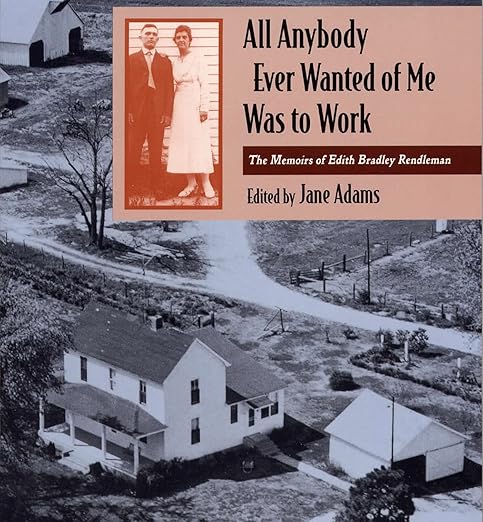
Wednesday, April 15, 2026

Local Industry - Bricks

Our third Local Industry for Southern Illinois!


timing:

    Murphysboro Paving Brick Company
    1909 - 1931


resource list:


artifacts:

vintage "Egyptian" brick


follow ups:

it would be fun to

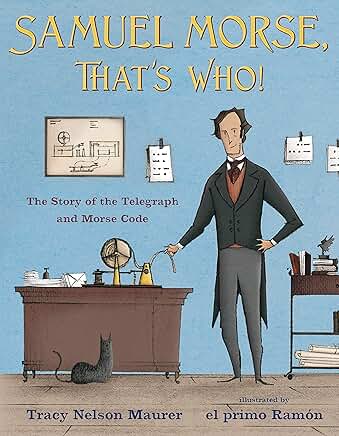
Learn About the Telegraph!

Practice Morse Code!


This post contains affiliate links to materials I truly use for homeschooling. Qualifying purchases provide me with revenue. Thank you for your support!

Sunday, April 12, 2026

Local Industry - Salt

Our second Local Industry for Southern Illinois!


timing:

    Great Salt Spring is a prehistoric site first occupied around AD 800 along the Saline River in southern Illinois. Here, Native Americans extracted salt from the naturally occurring salt springs, mainly as a seasonal activity during the autumn months. (source)

    Temple and Castle owned and operated the mine from 1854 to 1873. They are said to have made five hundred bushels every twenty-four hours. About the beginning [of] 1873 they thought the brine could be transported easier than the fuel, so they started to build a larger and newer plant nearer the coal mine. The work of construction was started but hard times, caused by the panic of 1873, came on and work stopped. Salt became cheaper when the crisis passed over and they never finished the new plant. (source)


resource list:


artifacts:

examples of sea salt


follow ups:

it would be fun to

Explore the Water Cycle!
Water Cycle Mat from Waseca Biomes

Design a Science Experiment!
The Curious Kid's Science Book by Asia Citro

Asia's book is the best for Science Experiments because she has them create their own instead of just replicating an experiment design she has provided.

We have done this in the past to explore questions about evaporation (dishes of water with food coloring or sugar dissolved in them, left out covered or uncovered, left in places in the house of different temperatures).

Even though they know intellectually that the water will "go back up into the clouds," it's fun to watch it happen firsthand!

They are often interested in how quickly evaporation will happen, what else will evaporate up along with the water and what will be left behind (sugar? food coloring?), and if water can successfully get out of a closed container.


This post contains affiliate links to materials I truly use for homeschooling. Qualifying purchases provide me with revenue. Thank you for your support!
Sunday, April 5, 2026

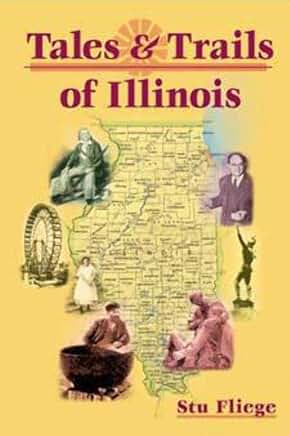
Southern Illinois Industry - overview

There is so much to cover in the classic Waldorf 4th grade "Local History & Geography" block! We spread this content out over four month-long blocks:


Sep - Landforms & Water Features

    an overview of basic geography terms


Jan - Local Geography and History

    week 1 - Illinois State Symbols, Glaciers & Dinosaur Fossils

    week 2 - Rivers & Drainage Basins, New Madrid Seismic Zone

    week 3 - Mound Builders, Louisiana Purchase, Lewis & Clark

    week 4 - Founding of Carbondale, Illinois Central Railroad


Apr - Local Industry


Sep - Orienteering

    Since this block often includes map skills and terms such as scale and compass rose, we will also do Orienteering next September as we transition into the 5th grade year. I always like to start out each fall with a lively outdoor hands-on topic. It helps break the ice, and I love to see the children come together and bond as a group.


What to cover in April?

I made a short list of the local Industries I was interested in:

I also flagged those books we used in January that I wanted to check out again:


Rudolf Steiner talked about "economy of teaching," and this is a perfect example. I am combining this block with the grade 4 Composition focus in Language Arts, which is Personal Narratives. I want to give them some context to understand why Personal Narratives Matter!

Industry being an ideal theme to highlight the importance of the stories of everyday people living their lives, we can go to the Historical Society and hear firsthand from the staff there about the value of personal artifacts such as journals and letters.

Of course, the children can write their own narrative pieces about events from their own lives.

We can even interview several local people who are part of traditional industries in the present moment. And the children have also requested that we have someone from the Tourism Board come as a special guest, to talk about what attracts people and businesses to the region. That's a great idea!


~ ~ ~ ~ ~


Last, but not least, our June Summer Camp theme this year is Tall Tales. This is another excellent bridge from grade 4 into grade 5, since Tall Tale figures often typify the traditional Industry of their region. In looking at them, we transition perfectly into U.S. Geography!

I vastly prefer Olive Beaupre Miller's Heroes, Outlaws & Funny Fellows of American Popular Tales from 1939 over all other collections of tall tales. The writing is exquisite and the collection far-ranging. She also tells which state each legend is from in the table of contents, which is helpful!


This collection contains 25 stories, enough to easily fill two Waldorf 4th grade main lesson blocks. They are as follows:

    Captain Kidd and His Buried Treasure
    A Story of New York, New Jersey, Maryland, and New England

    Lord Timothy Dexter, First Lord of "Amercay"
    A Story of Newburyport, Massachusetts

    Old Stormalong
    A Yarn of the Yankee Sailors on the Maine to Massachusetts Coast

    When Witches Rode Broomsticks
    A Legend of New England

    Dutch Adventures in Old New York
    Yarns and Legends of the Dutch Retold after Washington Irving

    Christmas in Bethlehem, Pennsylvania
    A Story Told by Czech and German Settlers from Moravia

    Old Johnny Appleseed
    A Tale of Ohio and Indiana

    Mike Fink and the Outlaws of Cave-in-Rock
    A Story Told by Boatmen of the Ohio and Mississippi Rivers

    A Twelfth Night Prank in Cahokia
    A Folk Tale of the French in Illinois and Missouri

    The Pirate La Fitte and His Ghost
    A Popular Tale of Louisiana and Texas

    The Bell Witch
    A Folk Tale of North Carolina, Tennessee, and Mississippi

    John Henry's Contest with the Big Steam Drill
    A Story of West Virginia Told from Ballads of the Railroad Builders

    The Crazy Doings of a Funny Fellow Among the Pennsylvania Germans
    Told from Articles Written in Pennsylvania German by T.H. Harter

    Heroes of the Coal Mines
    Told from Tales and Songs of the Anthracite Miners of Pennsylvania

    John Buck, the Big Norwegian Sailor
    A Story of the Green Bay Islands off Wisconsin and Michigan

    Big Paul Bunyan and His Blue Ox, Babe
    A Tall Tale of the Forests of Maine, Michigan, Wisconsin, and Minnesota as told by Loggers in the Lumber Camps

    The Cardiff Giant
    A Favorite Story Told by Old Timers in Iowa

    The Sad Story of Febold Feboldson and His Enormous Load of Sand
    A Popular Tale of Nebraska

    The Traveling Courthouse
    A Yarn of the Kansas County Seat Wars

    Kemp Morgan, the Hero of the Oil Fields
    A Tale Told by the Oil Drillers of Oklahoma and Texas

    Pecos Bill, the Cowboy
    A Tall Tale of Texas, New Mexico, and Colorado as Told by American Cowboys

    Don Jose's Sheep
    A Folk Tale from the Spanish of the Mexicans in New Mexico

    Finn MacCool, the Greatest of Civil Engineers
    A Tale of the Grand Canyon of Arizona as Told by Irish Work Gangs and Civil Engineers

    Joaquin, the Robber
    A Story of the California Gold Rush

    Paul Bunyan Goes West
    A Tall Tale of North Dakota, Oregon, and Washington


This post contains affiliate links to materials I truly use for homeschooling. Qualifying purchases provide me with revenue. Thank you for your support!

Tuesday, March 24, 2026

Giant Microbes

The Science Club topic for this entire school year is Human Anatomy and Physiology. This is such a rich subject! Here is what we have done so far:

    week of

    Sep 8 - The Twelve Senses
    Sep 15 - The Twelve Senses, cont.
    Sep 22 - The Twelve Senses, cont.
    Sep 29 - The Brain

    Oct 6 - The Nervous System
    Oct 13 - The Nervous System, cont.
    Oct 20 - The Circulatory System
    Oct 27 - The Circulatory System, cont.

    Nov 3 - The Lymphatic System (special guest)
    Nov 10 - The Skeletal System
    Nov 17 - Assembling a Skeleton (special guest)

    Dec 1 - The Skeletal System, cont.
    Dec 8 - The Muscular System
    Dec 15 - The Muscular System, cont.

    Jan 5 - The Digestive System
    Jan 12 - The Excretory System
    Jan 19 - Food Guide Pyramid / The Teeth

    Feb 2 - Forensic Anthropologist (special guest)
    Feb 9 - The Respiratory System
    Feb 16 - Childhood Polio Survivor (special guest)

    Mar 9 - review The Digestive System & The Respiratory System
    Mar 16 - The Immune System
    Mar 23 - The Immune System, cont.


Next week we will be wrapping up the Immune System with one more set of activities. Then it's on to the Integumentary System and the Endocrine System! We will have more special guests this year... including a student from the Mortuary Science department at SIU... and even a field trip to John A Logan College to see their SYNDAVER aka "THE SYNTHETIC CADAVER"!


To kick off our study of the Immune System we began with rabies:


Today we learned about plagues like cholera, typhoid, smallpox, and the Black Death.


Then they got to make WANTED posters for different plague-causing microbes from my set of Plagues from History.


I absolutely love the Giant Microbes! In addition to that set (which includes Smallpox, Black Death, Cholera, Typhoid Fever, and Spanish Flu), I also have


Tuberculosis


Salmonella


Penicillin


Chicken Pox


Did You Know?

Illinois has a state microbe. It is Penicillium rubens, which was found quietly growing on a cantaloupe -- in a grocery store in Peoria -- in 1944!

from the IDNR website on Illinois state symbols:

    On May 31, 2021, the Illinois General Assembly approved Penicillium rubens as the official State Microbe. The designation serves to honor Peoria and the National Center for Agricultural Utilization Research, whose scientists with the help of local residents in the 1940s discovered a method of mass-producing penicillin. Penicillin is the most widely used antibiotic in the world. The methods were developed in time to provide penicillin to treat Allied soldiers wounded during the invasion of Normandy, France, which began June 6, 1944, and helped to revise pharmaceutical drug production.

    The mold strain was found on a cantaloupe at a local store, not far from the laboratory in Peoria. The scientists discovered that when grown in vats with special nutrients, this Penicillium mold strain produced more penicillin than the Penicillium strain originally discovered by Alexander Fleming in 1928.


This post contains affiliate links to materials I truly use for homeschooling. Qualifying purchases provide me with revenue. Thank you for your support!

Thursday, January 29, 2026

Steam Engine Notes

We are wrapping up the first half of Local Geography & History (Southern Illinois) with a look at the importance of the railroad. In the second half, which I am combining with Personal Narratives, we will look at Industry.

Week One - Illinois State Symbols, Glaciers & Dinosaur Fossils

Week Two - Rivers & Drainage Basins, New Madrid Seismic Zone

Week Three - Mound Builders, Louisiana Purchase, Lewis & Clark

Week Four - Founding of Carbondale, Illinois Central Railroad


The railroad has been an interesting topic for kids. After reading portions of Illinois Trails & Traces: Portraits and Stories along the State’s Historic Routes (pp.171-179 and also the profile of Milton McDaniel), the children had lots of questions about how steam locomotives work. How did towns spring up along the train routes, and why did the trains specifically need water towers?

Today we are watching sections of this video on how a steam engine works, reading Locomotive by Brian Floca, and looking at a sheet of stamps for the 150 year anniversary of the completion of the Transcontinental Railroad.

just a reminder that the lines shown snaking across the country are telegraph lines, not telephone lines

here are my notes on teaching Morse Code to children


Below I have organized my notes as to the sections of the steam locomotive video that I thought would be most accessible for ages 8-11. I am also starting by reminding the class that the Big Boy was the world’s largest and most powerful steam train! It is much larger than the locomotive in Locomotive, but the mechanisms of the steam engine are largely the same.

    Begin video at 0:00

    STOP after
    “There’s a steam dome at the top where steam collects and flows out of the boiler.”

    JUMP to 7:05

    STOP after
    “Water flowing into the boiler must be pumped or injected in to overcome boiler pressure.”

    JUMP to 10:00

    STOP after
    “The piston and valve continue their synchronized movements, exchanging fresh superheated steam for spent exhaust, as the train chuffs down the track.”

    JUMP to 25:15

    STOP after
    “It’s covered with critical instruments, gauges, knobs, and more.”

    JUMP to 33:05 and watch to the end


We are extremely excited to have Daniel Overturf -- the photographer for Illinois Trails & Traces: Portraits and Stories along the State’s Historic Routes -- come in as a special guest on Monday to talk about Illinois rail history more with the children, and explain how the author and he organized all of this extensive information (which includes railroads but also land travel in Illinois more generally) into a 10 chapter book! Note: Their previous book together, A River Through Illinois, covered the main Illinois waterway.


UPDATE Apr 30, 2026

Great-Grandma Tells of Threshing Days by Verda Cross


Another book I own which goes very well with this topic! It takes place in Missouri in about 1920.


This post contains affiliate links to materials I truly use for homeschooling. Qualifying purchases provide me with revenue. Thank you for your support!

Monday, January 12, 2026

Illinois Exotic Species Coloring Book

Looking through my resources for the Southern Illinois block (grade 4 Local Geography, History & Industry), I came across this lovely coloring book.

Printed on nice heavy card, these beautiful illustrations come with helpful information on the back. Some of them would work very well in other blocks too, such as "Night Crawler" for Zoology, "Queen Anne's Lace" for Botany, or "Teasel" for Fibers & Clothing (teasers were an early tool used to card wool).

Here is the complete list:

    Dame's Rocket

    Eurasian Watermilfoil

    Rusty Crayfish

    Buckthorn

    Japanese Beetle

    Musk Thistle

    Ruffe

    Round Goby

    German Yellowjacket

    European Starling

    Rock Dove

    House Sparrow

    Reed Canary Grass

    Gypsy Moth

    Chinese Mantis

    Goldfish

    Common Carp

    Daphnia

    Zebra Mussel

    Asian Tiger Mosquito

    Mute Swam

    Multiflora Rose

    Night Crawler

    Kudzu

    Asian Longhorned Beetle

    Teasel

    Garlic Mustard

    Purple Loosestrife

    Honey Bee

    Wild Parsnip

    Multicolored Asian Lady Beetle

    Queen Anne's Lace

    Monk Parakeet

    European Corn Borer

    Norway Rat

    House Mouse

    Ring-necked Pheasant


The book's introduction clarifies the difference between an exotic species and an invasive species.

Written by Michelle Garland, Carolyn P. Nixon, and Philip L. Nixon
Illustrated by Carolyn P. Nixon and Loren Kirkwood