Showing posts with label no fault classroom. Show all posts

Saturday, December 2, 2023

The No-Fault Game

We have LOVED using The No-Fault Classroom so far and will be focusing on it a lot in December, as the children work together to collaboratively plan and put on our annual Class Play. That's a lot of social-emotional learning!

I wrote up all the details here: The No-Fault Classroom / The Alien Lessons.


The No-Fault Classroom:
Tools to Resolve Conflict & Foster Relationship Intelligence

by Sura Hart and Victoria Kindle Hodson


Thank you to Ms. Destinee for letting me know that The No-Fault Classroom book now has an accompanying No-Fault Game which you can get for at home. The website is https://thenofaultzone.com/the_no-fault_zone.html.

There are lots of free resources on the site as well, which you could print off if your child simply wants to draw another IOS Power Panel for at home use.

FREE downloads:


Check your office supplies stash. You can also easily make up your own Feelings, Needs, and Choices Cards if you have some old print-your-own perforated business cards lying around. These cards are a great size!

Choice Cards are white. Need Cards have a yellow border, and Feeling Cards have a border of red / pink. Simply punch out the cards, write the words you want on each card, and have your child draw pictures and color the borders.

Marshall Rosenberg's work on Nonviolent Communication (NVC) is truly life changing. I hope you enjoy having this resource for your family!


This post contains affiliate links to materials I truly use for homeschooling. Qualifying purchases provide me with revenue. Thank you for your support!

Saturday, November 18, 2023

The No-Fault Classroom / The Alien Lessons

I had a grandparent ask me a few days ago about our "Alien Lessons" so I realized I had better hop on here and explain!

In our classroom, we are using a wonderful book inspired by the work of Marshall Rosenberg and Nonviolent Communication (NVC). It is called


The No-Fault Classroom:
Tools to Resolve Conflict & Foster Relationship Intelligence

by Sura Hart and Victoria Kindle Hodson


In this book, children are introduced to NVC and the process of Observations, Feelings, Needs, and Requests.

Children also learn about Jackal Language vs. Giraffe Language, reading their Feeling Thermometer, and ways to get themselves to Calm Alert so that they can make Choices and avoid Black & White Thinking.


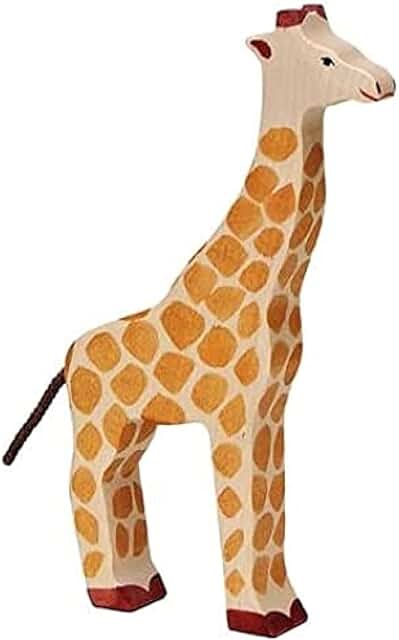
our classroom giraffe


Here is an excerpt: Prepare the Ground for Your No-Fault Classroom (PDF).

The book's premise is that two aliens, named Michi and Nao, visit the classroom and and help the children (the Earthlings) to better understand their Inner Space and how to read their Inner Operating System (IOS) Control Panel and use it to make every place they are into a No-Fault Zone.

We began by making our IOS Power Panels. Now we are learning the 9 Powers that Earthlings have. We spend a week or so on each Power.

The 9 Powers are:

    1) The Power to Get to Calm Alert

    2) The Power to Know Your Needs

    3) The Power to Meet Needs

    4) The Power to Read Feelings

    5) The Power to Observe

    6) The Power to Listen

    7) The Power to Navigate the Fault Zone

    8) The Power to Co-operate to Solve Problems & Conflicts

    9) The Power to Create a No-Fault Zone Wherever You Are


So far we have done Powers 1 and 2.

Below are the four messages from Michi and Nao that we have received. Every message is followed by a classroom discussion or hands-on activity to help the children understand them better.


Power 1a

    Facts

  • Earthlings function best when in a state of Calm Alert.
  • Knowing how to get to Calm Alert is an important skill for Earthlings.
  • Earthlings have access to many choices for action when in a state of Calm Alert.
  • Certain kinds of thoughts take Earthlings out of a state of Calm Alert into a Fault Zone filled with stress pools, anger volcanoes, and black holes of conflict.

  • Message

  • Use your IOS Feeling Thermometer to get a moment-to-moment read-out about the intensity of your feelings.
  • Learn to read your Feeling Thermometer to find out how far you are from Calm Alert.
  • Learn ways to get to Calm Alert whenever you choose to.


Power 1b

    Facts

  • When Earthlings think thoughts that stimulate stress, anger, or fear, up to 80% of their usual blood supply can leave the thinking center of the brain (the frontal lobes). Then thinking becomes fuzzy, feelings get intense, and Earthlings cannot function well.
  • Fortunately, throughout history and in all cultures Earthlings have devised Energy-Shifting exercises to help them get to Calm Alert and optimum functioning.

  • Message

    When you want to get to Calm Alert:

  • Take a reading of your Feeling Thermometer.
  • Notice when your feelings are very hot or very cold.
  • Do Energy-Shifting exercises.


Power 2a

    Facts

  • The well-being of Earthlings depends on learning how to meet needs.
  • If they choose, Earthlings can develop skills for meeting needs.
  • Earthlings have Surviving Needs (like air, water, food, shelter, and safety) and Thriving Needs (things that make life wonderful like friends, family, learning, play, respect, kindness, and many more).
  • All Earthlings are born with and operate from the same set of human needs.

  • Message

  • Get to know your needs -- your Surviving Needs and your Thriving Needs -- so that you can meet them well.
  • Notice that everyone operates from the same human needs.


Power 2b

    Facts

  • There is a need behind every action.
  • Most Earthlings don't know this.
  • When Earthlings understand why they do what they do, they can be more effective, create more understanding, and decrease conflicts.

  • Message

  • Add to your vocabulary of needs.
  • Look for the need behind everything you do and say, and everything other people do and say, and see what you can learn from that.


Here is a useful list of human Universal Feelings & Universal Needs (PDF).

The children are really enjoying the Alien Lessons and I recommend this resource to all teachers and all families! And I will be forever grateful to the former superintendent of District 95, Mike Shimshak, for our wonderful meetings about progressive education and for turning me on to this book!!!


This post contains affiliate links to materials I truly use for homeschooling. Qualifying purchases provide me with revenue. Thank you for your support!

Wednesday, January 29, 2020

Classroom Agreements and Job Chart

It may sound strange that we are just starting our classroom Job Chart in February! Here's why. I've had several parents request more explicit social-emotional learning and social skills lessons, so we are using the wonderful book The No-Fault Classroom: Tools to Resolve Conflict & Foster Relationship Intelligence by Sura Hart and Victoria Kindle Hodson.


In Lesson 1, which we did last week, we wrote our Vision Statement.

    Our vision is a welcoming, calm & productive learning environment where people feel safe & happy. Everyone can communicate respectfully. Each person’s needs are met in a way that is kind & fair.


In Lesson 2, which we did on Monday (a great tie-in to the Protector Archetype), we wrote the first draft of our Classroom Agreements. This is meant to be a living document, which we can revisit and revise as needed.

After brainstorming things in a classroom environment that would make us feel physically or emotionally unsafe, and a review of the primitive/reptilian brain and the frontal lobe, etc. and how the brain works in stress (ie. when you do not feel safe YOU CAN NOT LEARN), we decided on a set of classroom Agreements that we all were comfortable following. This was a long meeting and took our entire afternoon work time. However, it was the favorite activity of many of the children, and most of them wrote it in their gratitude journals as the best thing of the day... better than the field trip to the Fire Station!


    Little Bluestem Agreements
    2019 - 2020

    Stop and listen when others are talking. Stay present.

    Don’t interrupt.

    Think before you speak or act.

    Use respectful language that is comfortable for everyone.

    Be honest and keep your word.

    Do no harm.

    Be kind and thoughtful.

    Try to notice if other people are being excluded.

    Respect another person’s privacy.

    Take good care of your physical and emotional needs.

    Take good care of shared space and shared property.

    Apologize for your mistakes and try to make amends.

    Speak up calmly when something isn’t fair.

    Treat people the way you would want them to treat you.


We also decided on the various tasks in our new classroom Job Chart.

    Materials Managers
    Plan Book / Colored Pencil / Clipboard
    Pencil / Paper / Eraser
    Gratitude Journal / Handwork Bag

    Animal Care Experts
    Rabbit Water & Food
    Rabbit Bedding
    Dog Water & Walk

    Cleanliness Crew
    Lunchbox / Water Bottle / Backpack
    Mop / Sweep / Vacuum
    Trash / Recycling / Art Sink


Most of these jobs function as a part of the end of the day routine, with a person assigned to double check that each classroom material or area has been tidied up. The animal care jobs take place in the middle of the day.

On Tuesday, students wrote me their job application letters!

In these letters, they were to explain which job they were applying for and why specifically they thought they would be a good fit for that job. Each child was also asked to include two additional classroom jobs they would be willing to have. The children will have these jobs for a month and, at the end of the month, they will train their replacements. This is how master teacher Jan Szymaszek at the Smith College Lab School (I was extremely fortunate to student teach under Jan in her third grade classroom when I had my teacher training at Smith) did her job chart and it worked exceptionally well.

Here are their letters:

    I feel that I would do well on bunny duty because I have two cats and a dog and I take my dog out, and feed him and water him once a week. And I keep him company when he is scared. I feed my chickens and peacocks! I can volunteer for plan books and colored pencils.

    ~

    I would love to walk the dog and give him water. Because I have three dogs but one of them needs walking. Lunchbox. Rabbit.

    ~

    Bunny Food & Water
    I think I should give the bunny food and water because I like bunnies and I think I would be good at it.

    Bunny Bedding
    I would like to do the bunny's bedding. I just like animals! I think that I would be good at it because I have a guinea pig and I have to change his bedding so I have experience.

    Dog Walk & Water
    I think I should give the dog water and walk because I walk my dog.

    ~

    Rabbit Water & Food
    I want to have the job of feeding and watering the rabbit. I would be good at this because I always take care of pets. I have experience with cats, dog, hamster, guinea pig, lizard, and a mudpuppy.

    Dog Walk & Water

    Sweeping & Mopping

    ~

    Pencil / Paper / Eraser
    I always find pencils.

    Mop / Sweep / Vacuum
    I sweep and vacuum all the time at home.

    Planbook / Colored Pencil / Clipboard
    I find planbooks and colored pencils on the ground a lot.

    ~

    Dog Walk & Water - #1 Choice
    I think I should help take care of Archie because I have taken care of Archie over the summer and I like taking him on walks.

    Lunchbox / Water Bottle / Backpack - #2 Choice
    I could also do this job because it appeals to me. Ummmmmmmm. I could hand out / make sure everyone has their stuff.

    Rabbit Food & Water - #2 1/2 Choice
    This job would also be fun because I like to help take care of animals. It would be fun to feed Chia every day.

    ~

    Planbook / Colored Pencil / Clipboard
    I remember to feed my dogs so I think that I can remember to do this job. I think that I can be careful with the supplies.

    ~

    I have applied for the job Materials Manager because my mom usually comes late and I have extra time.


In the next few lessons the book has us make our IOS Power Panels (to help us monitor our Feeling Thermometers), learn about Energy Shifters (how to get back to Calm Alert), and start to practice exactly how to use the appropriate steps and language from Non-Violent Communication to handle a frustrating situation. I'm eager to see how these explicit lessons on SEL and social skills make a difference in how the children talk to one another!


This post contains affiliate links to materials I truly use for homeschooling. Qualifying purchases provide me with revenue. Thank you for your support!

Friday, January 17, 2020

Norse Mythology I: Week Two

Some helpful links:


Monday, January 13


Tuesday, January 14

  • glue dot in finished and dry paintings
  • rough draft, edit, add to MLB "The Creation of Man"
  • read Thérèse Makes a Tapestry by Alexandra S.D. Hinrichs
  • warp our loom for this year's new collaborative tapestry topic: Yggdrasil and the Nine Norse Worlds
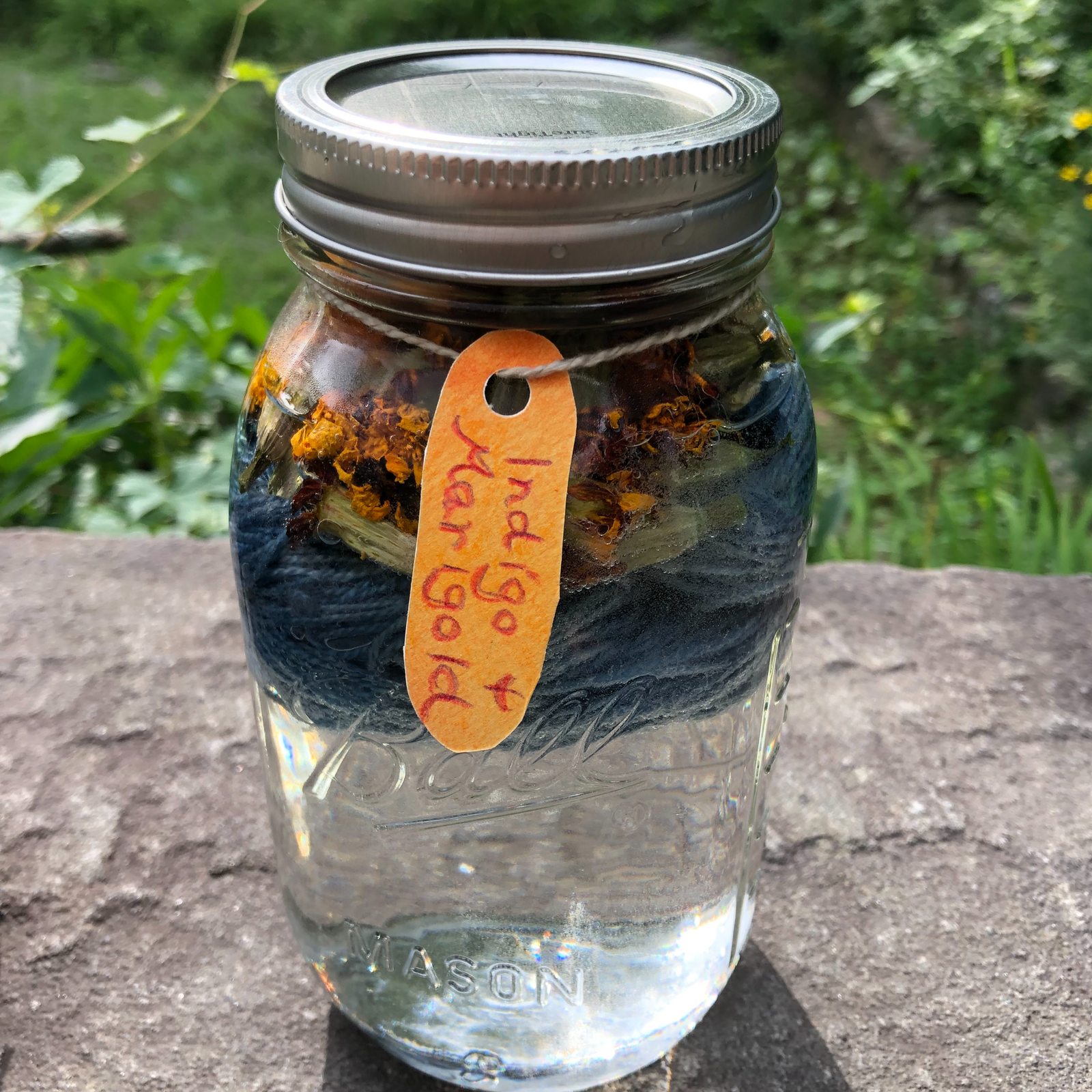
  • crockpot dye wool yarn with onion skins and with beets


Thursday, January 16

  • rough draft, edit, add to MLB "Yggdrasil, the World Tree"
  • do page one of Writing in Runes worksheet (PDF)
  • add The Futhark to MLB
  • read "Asgard and the Aesir Gods" and "Odin, the All-father"
  • check on results of crockpot dyed wool yarn
  • add two-page colored pencil drawing of Yggdrasil and the Nine Norse Worlds to MLB


Friday, January 17


A great follow-up to this at home would be playing chess! The Aesir were famous for sitting in Asgard playing chess with beautiful golden pieces. If your child doesn't know how, we will be working on learning this in school.


We've also been continuing with our January read-aloud, Farmer Boy by Laura Ingalls Wilder. In addition to this we have had the first Class Meeting from The No-Fault Classroom: Tools to Resolve Conflict & Foster Relationship Intelligence, which involves working as a group to set a Vision Statement.


Little Bluestem Vision Statement
2019 - 2020

Our vision is a welcoming, calm & productive learning environment
where people feel safe & happy.
Everyone can communicate respectfully.
Each person’s needs are met in a way that is kind & fair.


This post contains affiliate links to materials I truly use for homeschooling. Qualifying purchases provide me with revenue. Thank you for your support!