Showing posts with label math. Show all posts

Friday, September 4, 2026

Books for 100

In Montessori, we use green for units place, blue for tens place, and red for hundreds place. I like to use this color coding in a Waldorf classroom as well, beginning with grade 2 when we study Column Algorithms / Place Value.

An excerpt from the Column Algorithms / Place Value page on my website:


Activity One - Gems / Pouches / Basket

    Many years ago I was at a homeschool training at Barbara Dewey's and a woman named Misty shared with me what she had done to introduce place value. A group of families worked together to set this up for the children in their homeschool group. They laid out 100 individual gems in a long line on the ground. The children counted as they picked them up: 1, 2, 3, etc. When they got to gem 9 their hands were beginning to get full. Right beside the tenth gem was a small pouch. They made a group of ten gems in a pouch, then picked up the eleventh gem, etc. After nine pouches (each of ten) and nine individual gems, they finally reached gem 100! For this they were provided the tenth pouch and a basket to put all ten pouches in.

    It was a lovely idea and she said they always understood it thereafter.

    To do this in a way that is compatible with the Montessori color coding for the digits, use green glass gems, small blue pouches for the 10, and a large red basket for the 100.


    for small blue pouches of 10:

    Etsy white linen favor gift bag
    beautifully made 100% white linen and so easy to dye blue

    LinenForest sells these as a set of 10 (and it would be fun to dye these with your child first and keep a mystery what you were going to use them for...)

    If you prefer to purchase blue pouches, I suggest these


    small sheer organza pouches


    red willow basket with folding handles


    A red box, bin, pie plate, platter, Christmas cookie tin, etc. would work just as well. The color is what's most important. To introduce this place value activity with a Waldorf story you could use The White Snake from Grimm's (organizing the grains of millet into sacks)


    The Hundred-Year Barn

    You could also use The Hundred-Year Barn by Patricia MacLachlan. This story does a wonderful job of showing the passing of time. It is a really lovely way to talk about the number 100 and, as a bonus, the barn is red which is the color we use for the 100s place.


    The Firehouse Light

    Just found another possibility for the number 100, particularly for the idea of skip counting by tens. It also highlights the color red AND is a true story! The Firehouse Light by Janet Nolan.


    Mr. George Baker

    *NEW* A new idea for introducing 100! Mr. George Baker by Amy Hest. This book highlights the importance of school and of learning to read, and the two of them each have a red backpack. So you could use a red backback or satchel to hold your ten baggies of ten gems!


This post contains affiliate links to materials I truly use for homeschooling. Qualifying purchases provide me with revenue. Thank you for your support!

Monday, April 13, 2026

Fraction Skill-Building

After our Introduction to Fractions in March, we will work during April and May on skill-building. Children will continue to add concepts to their MLBs.

The Introduction to Fractions needs to be done very slowly and carefully to ensure there aren't enduring misunderstandings that show up later on!


I wanted to share the rest of my fractions planning for the year now since it is ready. If I make any changes to this as we go along, I will update it.

You will see that even though we went very slowly at the start, they will end up doing standard fifth grade fraction problems by the end of the ten weeks!


Themes Covered in Week 1

    Mon - K/W/L Chart

    Tue - 1/2, 1/4, 1/8

    Wed - Making Thirds & Halving Thirds

    Thu - Fractions of a Group, Equivalent Fractions (Houses on a Street)


Themes Covered in Week 2

    Mon - Fractions of a Number

    Tue - Puddle Question

    Wed - Reading a Ruler, Fractions in Lowest Terms

    Thu - Build-an-Animal


Themes Covered in Week 3

    Mon - Restaurant Simulation

    Tue - Coins as Fractions & Decimals

    Wed - Basic Operations with Fractions

    Thu - Converting Improper Fractions to Mixed Numbers


Themes Covered in Week 4

    Mon - Converting Mixed Numbers to Improper Fractions

    Tue - Elapsed Time

    Wed - Making Arrays

    Thu - Using Arrays to Simplify Fractions


week of April 6

Mon - Comparing Fractions

    recall Thursday's work with arrays

    look back at Fraction of a Group and find the equivalent fractions (2/4, 4/6) visually but also "prove it mathematically" on the board

    look back at Colorful Fraction Circles and see if you can find the equivalent fractions (4/8, 2/4, 5/10, 2/10)

    have children come up to the board to demonstrate the steps in how to convert each of these fractions to their simplest form

    what happens if you reduce 4/8 by dividing both numbers by 2? nothing, you'll just have to simplify it again by repeating the process

    so if there are multiple things you can divide the top and bottom number by, you should choose the largest one because that'll save you the most time

    notice that a unit fraction (with a 1 on top) is always in simplest form because its only factors are 1, and 1 isn't allowed in factor trees (YCCOM)

    have children work independently on Comparing Fractions worksheet
    https://www.superteacherworksheets.com/fractions/comparing-fractions-tape-diagrams_QWERT.pdf

    for the two equivalent fractions on that worksheet, we then used the chalkboard to "prove it mathematically"

    notice that for 6/8 = 3/4, we divide the top and bottom by 2

    but for 4/5 = 8/10, we multiply the top and bottom by 2

    we can make them larger by multiplying the top and bottom by the same number, and there are times in math when we want to do that!

    it's like Alice in Wonderland; you can make her bigger and smaller by nibbling and sipping, but she's still Alice while her size is changing

    why does it work? remember that the top number is how many and the bottom number is what kind. if you have a plan to eat 5 pieces of cake, but your mom cuts them in half to make twice as many (so now there are 10 and they are smaller) but you just adapt by eating twice as many, you have still had the same amount of cake!

    Arnold Schwarzenegger and the 2 ply toilet tissue fiasco!

    he switched to 1 ply at the government offices in California to save money during the budget crisis, and everyone promptly switched to using twice as much toilet tissue

    "if you're going to give half as much, I'm going to take twice as much"


    Carlyn Beccia book - which 6 of these 9 cures for Wounds worked? that's 2/3!


Tue - Add to MLB

    add the steps in making equivalent fractions to the MLB

    add new observations and new questions about fractions


Wed - Alice in Wonderland

    practice making equivalent fractions by either multiplying the top and bottom number by the same thing or dividing them

    go bigger and smaller just like Alice in Wonderland

    assignment: write three fractions that are equivalent to one another


Thu - Fact Families

    as I watched children working on yesterday's assignment, I realized that the class needed a review of Fact Families

    I had each child just choose a few multiplication facts that they were having trouble with and write out the fact families for them


week of Apr 13

Mon - +/- Fractions with Common Denominators

    have students practice addition and subtraction of fractions with common denominators by creating problems for classmates to solve (an answer key must be provided)

    a fun spin on this is "Secret Code," where the children come up with a fraction to represent each letter of the alphabet and then write a series of math problems for a friend to solve

    the answers to the problems spell out a secret message!

    this works best if improper fractions ("top-heavy fractions") are allowed and the answers do not have to be put in simplest form

    note: a very good way to see if children understand a skill is to have them create their own problems; if children understand that the denominator of a fraction is its name and does not represent an amount, they will resist the temptation to add or subtract them


Tue - Rounding Fractions

    practice Rounding Fractions to 0, 1/2, or 1

    observe, can children visualize the fractions in order to round them?
    who in the group still needs to see them, draw them, or build them?


Wed - Simplifying Fractions Mandala


Thu - "Of" Means "Times"

    explain that, in math, the word "of" means "times"

    sing the song,

      "Multiplying fractions
      Is no big problem
      Top times top over
      Bottom times bottom"

    do Fractions of a Group (a whole number has a denominator of 1)

    write an X over the word "of" to show that it actually means "times," then solve using multplication and simplify using skip counting

    do Multiplying Fractions (notice that the answers are very tiny! 1/3 of 1/4 is 1/12! cut up the Comparing Fractions worksheet to prove this)


week of Apr 20

Mon - First to 50

    play First to 50: Fractions of a Group Game with red counters

    print the 18 cards on cardstock so children can't see through them

    have the children make towers of 10 to easily count their score


Tue - Dividing IS Multiplying by the Reciprocal


Wed - Reciprocals of Mixed Numbers


Thu - Add to MLB

    add adding and subtracting fractions (with common denominators) and multiplying and dividing a fraction by a fraction to the MLB

    add new observations and new questions about fractions


week of Apr 27

Mon - Factor Trees

    read the introduction to YCCOM

    have fun by drawing factor trees and creating the artwork for them!


Tue - Finding the GCF

    do Simplifying Fractions

    how have you been solving these? have you ever found an equivalent fraction but it was still the wrong answer because it wasn't in lowest terms? how can you be absolutely sure you're dividing by the biggest possible number that goes into both, and there are no more steps?

    explain how to write factors in parentheses to find the GCF


Wed - Simplifying Fractions with the GCF


Thu - Add to MLB

    add simplifying by finding the greatest common factor to the MLB
    (use yesterday's worksheet to help you think of examples)

    add new observations and new questions about fractions

    bonus activity:
    write out the factors for the numbers from 1 to 100 in parentheses


week of May 4

Mon - Finding the LCM

    this is it! our final fractions skill! and then you will be able to do anything you ever need to with fractions

    what would happen if we wanted to add fractions from different sections of the box together?

    what if I ate half of my birthday cake during the daytime and then I got really hungry in the middle of the night and went back and ate 1/5 more?
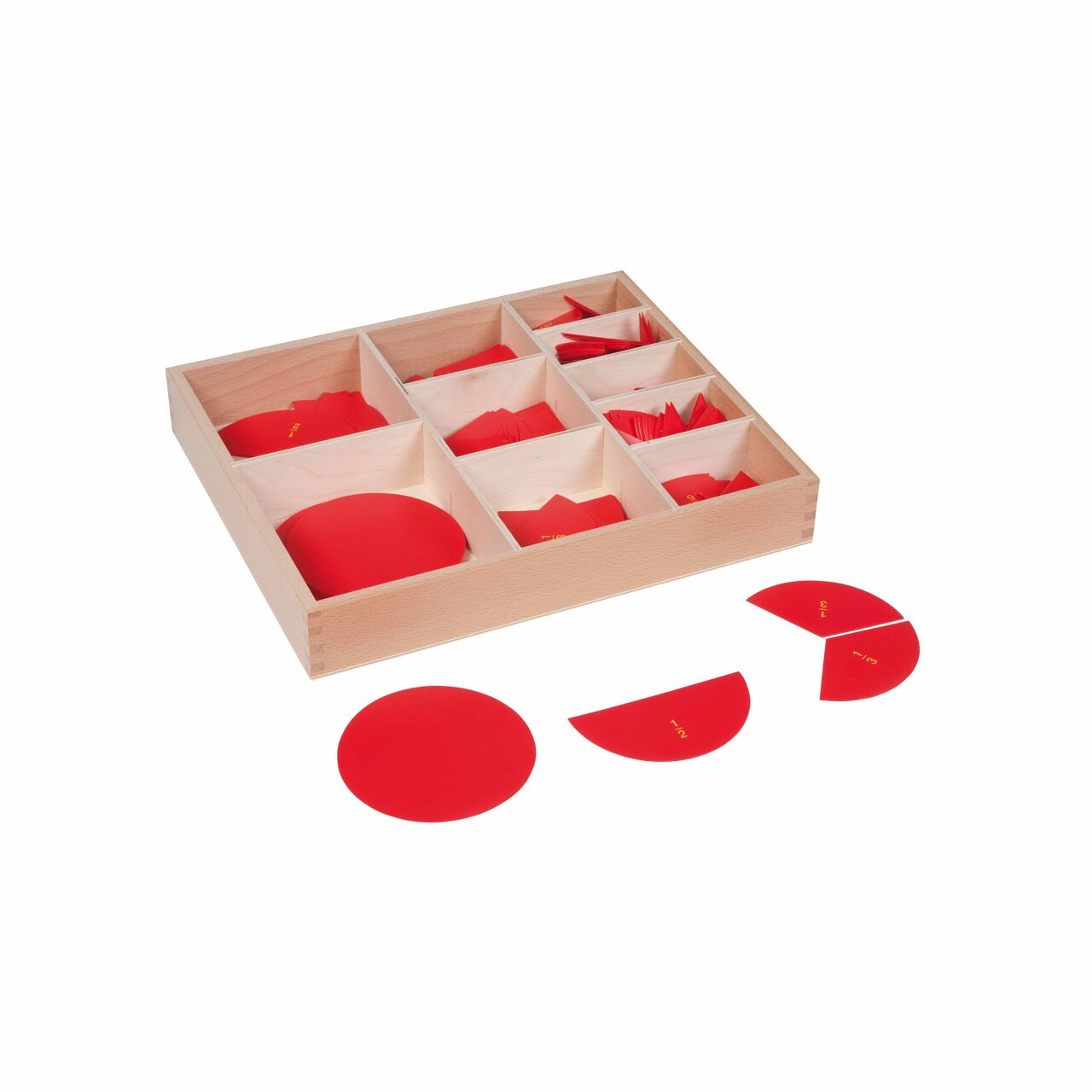
    yes, you could do it... but how would you express the answer?

    if you say well, 1/2 + 1/5 = 1/2 and 1/5 more, then you have basically just repeated the question

    the answer has to have only one denominator; therefore,
    you need those two fractions to share a name before you add them

    is this possible mathematically?

    absolutely! we know how to make fractions smaller by dividing both parts by the same number but we can also make them bigger by multiplying, and the fractions will still be equivalent

    here we need to figure out not what factors but what multiples two numbers have in common (they had trouble with this concept, so we ended up calling it "skip count" instead of multiple)

    as we will still have to simplify our answer at the end of the process, it saves time to go with the smallest common multiple (if I turn 1/2 into 50/100 and 1/5 into 20/100, I will get 70/100 and then reduce... if I turn 1/2 into 5/10 and 1/5 into 2/10, I will get 7/10 right away)

    begin Lowest Common Denominator task cards


Tue - Lowest Common Denominator

    review by doing a problem together on the board

    finish yesterday's set of task cards


Wed - +/- Fractions with Unlike Denominators


Thu - +/- Mixed Numbers with Unlike Denominators


week of May 11

Mon - Add to MLB

    write in adding and subtracting fractions with different denominators to the MLB

    add new observations and new questions about fractions


Tue - Brain Drawings


Wed - Word Problems


Thu - Quiz

    assess the class by giving Fractions Operations Review as a quiz (meaning students have to work independently and without help)

    open book notes are allowed... so, are the notes they put in their MLB helpful to them? does anything need to be revised or expanded before we add the MLBs to the porfolio boxes? if so, update it now


week of May 18

Error Analysis


This post contains affiliate links to materials I truly use for homeschooling. Qualifying purchases provide me with revenue. Thank you for your support!

Sunday, March 29, 2026

Introduction to Fractions week 3

Work with Fractions continued! (Here are notes from week 1 and week 2.)

Mon - Restaurant Simulation


Tue - Coins as Fractions & Decimals

    play Race to a Dollar / Race to a Hundred Dollars
    FREE download from Aimee Salazar's blog post (scroll to bottom)

    again we used the pretend bills, real coins, and my 10-sided dice

    add Coins as Fractions & Decimals to MLB


    bonus question #1: how would we add a dollar coin to this chart?
    bonus question #2: how would we add a half cent to this chart?


Wed - Basic Operations with Fractions


Thu - Converting Improper Fractions to Mixed Numbers

    Fractions Group 1 -
    Penguin Trek (review fractions of a group) and Create Your Own Fraction Problems (adding fractions with common denominators)

    Fractions Group 2 -
    do Crack the Code! (multiplying fractions by a whole number, simplifying "top heavy" improper fractions to mixed numbers)

    note: all three of these activities are FREE on TpT

    write about what we did today in the MLB along with new wonderings


This post contains affiliate links to materials I truly use for homeschooling. Qualifying purchases provide me with revenue. Thank you for your support!

Tuesday, January 27, 2026

Math Game - Divvy Up

Right now the older students are working on Long Division. In the Montessori math progression, this is usually done first with the Golden Beads, then with the Stamp Game, and finally with the Racks & Tubes.

Now we are doing it with abstraction (which I refer to as simply using logic).

Once you've done the Racks & Tubes, the algorithm makes so much sense!

Rather than wait until the children had mastered it all to introduce a Long Division game, I went straight into a game. The whole class played against me! That incentivized them to learn the steps in the algorithm more quickly, in order to make predictions and decide on a winning strategy.

Here is the game:

click on image to enlarge


I found this loose paper in my teacher stash, but I don't know what book I pulled it out of. Sorry!

Divvy Up is a cousin to the Dice Game, which we use every year to reinforce Place Value. And the children have loved it. You can play this game with either a six-sided or ten-sided die. I think 10 is more fun. However, I asked the children if a zero came up to just re-roll. I didn't want to chance a zero in the divisor (which is undefined).


Tips: Because it is too easy to end up with the exact same problem when using a two digit dividend, I let them use a three digit or four digit dividend. And I HIGHLY recommend having children do long division on graph paper to help keep the place value lined up. I like these math journals:


Tomorrow's math game: Remainders Wanted!


This post contains affiliate links to materials I truly use for homeschooling. Qualifying purchases provide me with revenue. Thank you for your support!

Saturday, January 10, 2026

Infinity Street

Just realized that I needed to write one thing down before I returned all my Nonny Hogrogian books and started work on Art History plans for Yoko Ono.

The Cat's Midsummer Jamboree by David Kherdian


And this has to do with teaching place value in math. Waldorf does this in 2nd grade and I -- because I'm also trained in Montessori -- use the Montessori color coded materials for place value in my Waldorf classroom.

Including the Infinity Street lesson!

from the simple family... all the way up to septillion


If this lesson is new to you, start here:

Introducing the Equals Sign ("Is the Same As") and Infinity
Jul 2020

How I Teach Place Value
Sep 2020

A Distraction of Prefixes
Dec 2024


I use Zin! Zin! Zin! A Violin by Lloyd Moss for an introduction to the names of the higher families (trio, quartet, quintet, sextet, septet, octet, nonet).


Looking at musical terms is especially helpful for clarifying that the base is actually < sext > and not < sex > when representing six!

The Cat's Midsummer Jamboree could also be used in this way, and may be a little more thought-provoking. The cat begins by playing his music alone. As each animal joins him, the group grows and gets a new name.

    cat with a mandolin

    + toad with a harmonica - duet

    + fox with a flute - trio

    + badger with a drum - quartet

    + skunk with a violin - quintet

    + goose with a bassoon - sextet


When they encounter a raccoon playing an accordion, the group grows larger once more. But David Kherdian stops using mathematical terms:

    "The cat called up, 'Come with us, and we will have a jamboree.'"


It would be interesting to say to the children, instead of a jamboree, what should they call their group to show that it now has seven members?


This post contains affiliate links to materials I truly use for homeschooling. Qualifying purchases provide me with revenue. Thank you for your support!

Monday, January 5, 2026

Puddle Question: Class Pets

Today we did a very interesting statistics Puddle Question. (Here is all the information on Science Puddle Questions and Math Puddle Questions.)

This prompt is from the Grade 3 Math book.


I was really interested to see the children's mathematical thinking, ie. how well they were able to collect, represent, and interpret data.

But what struck me the most was their philosophical thinking: how flexible they were with the concept of "pet" and how sensitively they responded to a child who was pet-less due to the recent death of her cat.

Of course then I realized that, because they opened the concept of "pet" up so far, they had much more complex data to represent in their reports... which actually did strengthen their mathematical thinking in the long run!

To begin the activity, you are supposed to give each child an index card.

The teacher guide then says to have the students write their current pet(s) "or the words no pets" on their card.

Each of the children then reads aloud what they put on their cards while the other students take notes, and then all of the index cards are displayed for people to refer back to while they put their report together.

The first question that came up was pet sitting. One child is pet sitting two fish and a snail for her neighbor. Does this count as a pet? We decided yes, but I noted that the children may need to find a way to represent in their data that those pets do not actually belong to that family.

The second question that came up was pets that had passed away. The teacher guide specifically says "current pets" so I said no.

Then the little girl who was (to an adult) pet-less raised her hand and asked about "non-living" pets such as a special stuffed animal. I remembered having a pet stick as a child. And then someone else asked about imaginary pets. Ultimately, I decided, "if it's a pet to you, write it down on your card."

Zac, age 1, finding a really great stick!


My son Zac, now age 10, wrote down that he had three pets. One rabbit (living), one rock (non-living), and one bird (imaginary). I had no idea he had an imaginary pet bird.

Allowing that little girl to have a pet crayon instead of a dead cat was so warm and kind on the part of the class! And then the children had all sorts of different sections and color coding and keys on their charts and graphs, in order to represent the more complex categories of information.

I have noticed that because we encourage open-ended thinking here, they find a lot of traditional assignments to be too confining. Here someone very calmly decided to give herself a 3 1/2 on the rubric!


We also used this activity as a chance to talk about drawing conclusions, and I read Poofy Loves Company by Nancy Winslow Parker at snack time.


This post contains affiliate links to materials I truly use for homeschooling. Qualifying purchases provide me with revenue. Thank you for your support!