Showing posts with label Botany. Show all posts

Thursday, October 1, 2026

Botany: Art & Handwork Ideas

It's Making Zen right now and I'm having a great time. I also remembered that there have been several projects over the past 3 years (6 Making Zen conferences) that I mentally tagged as being good possibilities for Botany.

And now we are beginning Botany!

I'm just going to make myself a master list of Art & Handwork Ideas. Feel free to add to it if you found a great online tutorial, or a lesson in a book.

Speaking of books... Drawing from the Book of Nature is KEY for this block. I'll have to make another post listing all of the Botany chapters.


workshops from Making Zen

Amy Maricle

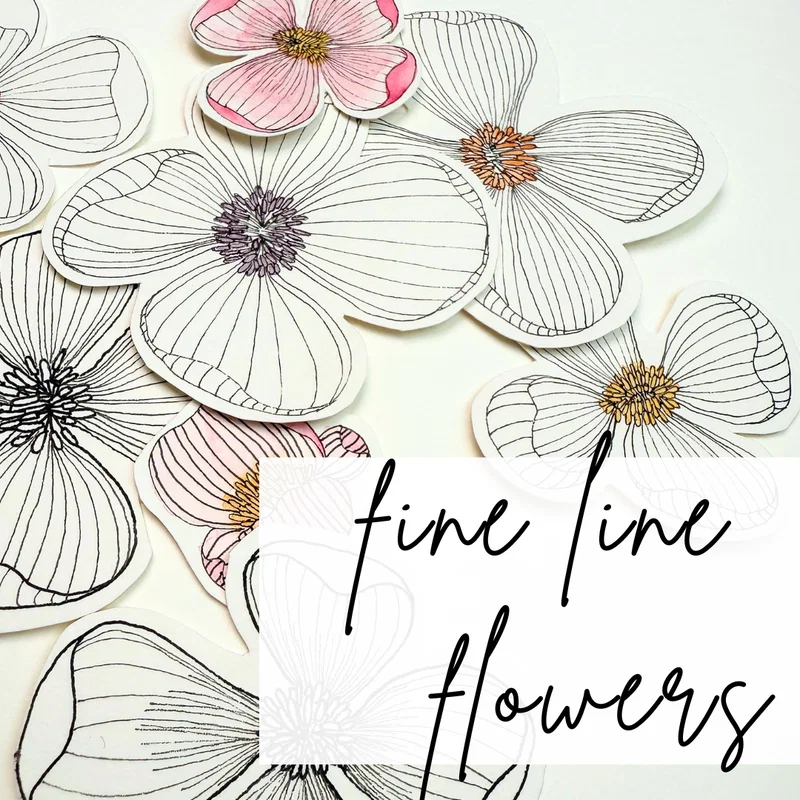
    Fine Line Flowers
    Oct 2025

    watercolor paints: indigo, rose madder, lemon yellow


    Mini Watercolor Leaves: Beautiful Botanicals Made Simple
    Sep 2026
    inspired by Broadhead Arrowleaf

    cold press watercolor paper

    watercolor paints: indigo, lemon yellow, olive green


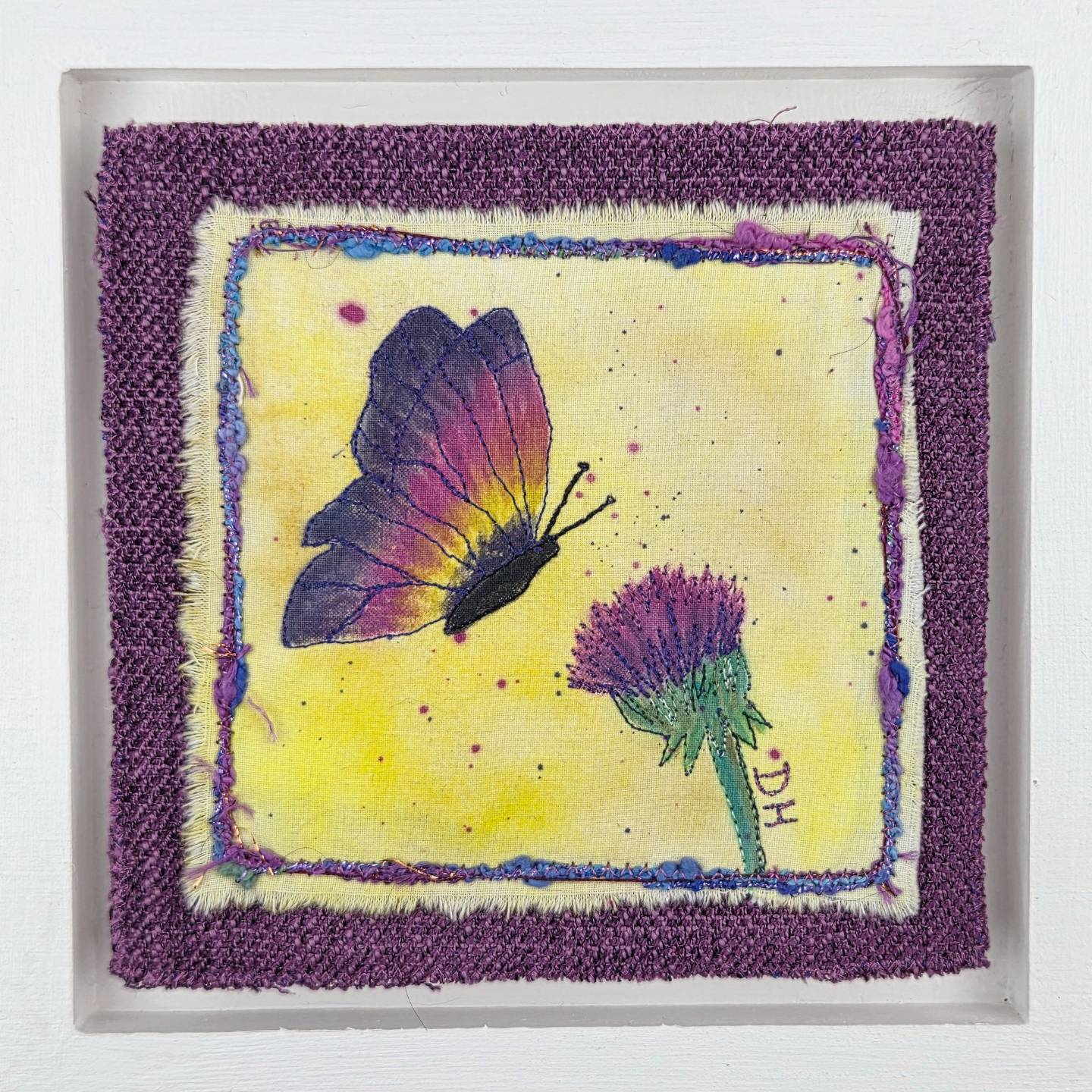
Darcy Hunter

    Hand-Stitched Red Poppies with 3D Elements
    Oct 2025


    Painting Fabric with Watercolour and Inktense
    Sep 2026


Kristin Peterson

    Abstract Textile Seedpods
    Sep 2026

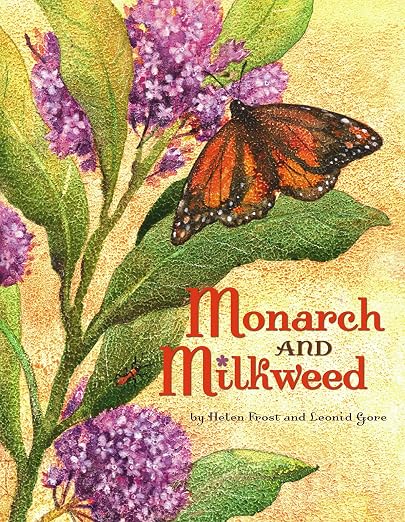
    inspired by Milkweed


Lisa Goddard


other workshops, tutorials & ideas


This post contains affiliate links to materials I truly use for homeschooling. Qualifying purchases provide me with revenue. Thank you for your support!

Friday, September 11, 2026

Whittling

Zac got his first Swiss Army knife yesterday, which is a key milestone for a child. I spent several months thinking about it before deciding that he was old enough. Coincidentally, the age of 11 is actually perfect for learning to whittle because in Waldorf we study Botany in fifth grade. Tree identification!

Once you start working wood with your hands, you realize how absolutely essential tree identification is. This year in Botany we were going to focus on foraging for food and herbal medicines, but I think I will add in tree identification in the context of woodworking as well. See my past blog post Tree Identification and A Reverence for Wood.


I put together a whole pile of books for Zac with woodworking information and projects he might want to tackle. They are

Forest Craft: A Child's Guide to Whittling in the Woodland
by Richard Irvine

The Colonial Woodworker
by Laura Sullivan

Diary of an Early American Boy, Noah Blake
by Eric Sloane (1805)

A Museum of Early American Tools
by Eric Sloane

The Forgotten Arts & Crafts: Skills from Bygone Days
by John Seymour

The American Boy's Handy Book: What to Do and How to Do It
by Daniel Carter Beard (1890)


He didn't want to put down The American Boy's Handy Book long enough for me to photograph it. 😊 Let me know if you have others to recommend!


This post contains affiliate links to materials I truly use for homeschooling. Qualifying purchases provide me with revenue. Thank you for your support!

Wednesday, June 10, 2026

12 Apple Varieties

Back in October 2007, my daughter Natalie came home from Kindergarten and said that her teacher had given them slices of a new apple variety. The children were to taste it and decide what they would name it if they could. She said the class came up with "Sweet Yummy." That is a great name!


Turns out the apple in question was actually Honeycrisp. I've never forgotten that activity, and it made me think of something that we could do tomorrow! I'd love to give the children slices of 12 different apple varieties to compare.

Do all apples taste the same? Which one is your favorite?

This is a great Johnny Appleseed activity, but it also ties in with Botany!

For more on this I recommend Granny Smith Was Not an Apple: The Story of Orchardist Marie Ann Smith by Sarah Glenn Fortson.

We will also likely read the New York Times article from Mar 21, 2026:
After Cosmic Crisp, Scientists Unveil an Apple for the Climate Change Era.


This post contains affiliate links to materials I truly use for homeschooling. Qualifying purchases provide me with revenue. Thank you for your support!

Thursday, April 23, 2026

Local Industry - Fruit

Our fifth Local Industry for Southern Illinois!


timing:


Zac, age 3
Greer's Lost Creek Blueberries


resource list:


art ideas:

Baking Soda Paint
Since this reaction leaves a fuzzy texture, it is perfect for painting peaches! (I like to use this template. Print it, cut it out, and use that to trace a peach shape onto your watercolor paper. Then cut out the watercolor paper shape.)

Positive / Negative Art
This technique workes really well for apples or pears!


special guest:

fruit farmer


This post contains affiliate links to materials I truly use for homeschooling. Qualifying purchases provide me with revenue. Thank you for your support!

Sunday, January 25, 2026

Poisonous or Venomous?

Maybe you already know that Seth Meyers has spent a lot of time on this. But just recently, a Jackal wrote in with the best explanation I've ever heard... and since it's good to know when teaching Zoology (grade 4) and Botany (grade 5), I thought I would share it!

If you bite it and you die, it's poisonous.

If it bites you and you die, it's venomous.


Another tip for poisonous is to think about Snow White and the apple.

And for venomous, someone pointed out that the letter V looks like fangs!

the poisoned apple for Snow White
(I needle-felted this back in April 2016)

Monday, January 12, 2026

Illinois Exotic Species Coloring Book

Looking through my resources for the Southern Illinois block (grade 4 Local Geography, History & Industry), I came across this lovely coloring book.

Printed on nice heavy card, these beautiful illustrations come with helpful information on the back. Some of them would work very well in other blocks too, such as "Night Crawler" for Zoology, "Queen Anne's Lace" for Botany, or "Teasel" for Fibers & Clothing (teasers were an early tool used to card wool).

Here is the complete list:

    Dame's Rocket

    Eurasian Watermilfoil

    Rusty Crayfish

    Buckthorn

    Japanese Beetle

    Musk Thistle

    Ruffe

    Round Goby

    German Yellowjacket

    European Starling

    Rock Dove

    House Sparrow

    Reed Canary Grass

    Gypsy Moth

    Chinese Mantis

    Goldfish

    Common Carp

    Daphnia

    Zebra Mussel

    Asian Tiger Mosquito

    Mute Swam

    Multiflora Rose

    Night Crawler

    Kudzu

    Asian Longhorned Beetle

    Teasel

    Garlic Mustard

    Purple Loosestrife

    Honey Bee

    Wild Parsnip

    Multicolored Asian Lady Beetle

    Queen Anne's Lace

    Monk Parakeet

    European Corn Borer

    Norway Rat

    House Mouse

    Ring-necked Pheasant


The book's introduction clarifies the difference between an exotic species and an invasive species.

Written by Michelle Garland, Carolyn P. Nixon, and Philip L. Nixon
Illustrated by Carolyn P. Nixon and Loren Kirkwood

Sunday, November 30, 2025

Handwork Series - grade 5

I've been wanting for a while to do a series of posts on my suggestions for Handwork in each grade. So I will work on that now! These are my own ideas of what to do when, partly informed by my Waldorf Handwork Teacher Training and partly by what I think works well from personal experience.


~ ~ ~ ~ ~


If you are interested in training, I very highly recommend the Applied Arts Program. Admission to the 14th Cycle of the Applied Arts Program is now open! It will start on March 15, 2026!

    This four-year program meets for two weeks each summer and one week each winter, covering two grades each year. Course sessions take place at the Fiber Craft Studio, which is located in the Threefold community in Chestnut Ridge, NY, just 30 miles from New York City.


If you're looking for a curriculum with videos and whatnot, I recommend Waldorf Handwork Educators. Currently they just have grades 1, 2, 3, and 4.

Happily, however, Fifth Grade is the topic of WHE's upcoming online international Waldorf teaching conference. It will be held in Feb 2026.


~ ~ ~ ~ ~


Here are all of the blog posts in my Handwork Series:

Handwork Series - K

Handwork Series - grade 1

Handwork Series - grade 2

Handwork Series - grade 3

Handwork Series - grade 4

Handwork Series - grade 5

Handwork Series - grade 6

Handwork Series - grade 7

Handwork Series - grade 8


~ ~ ~ ~ ~


Now on to my grade 5 notes. I'll update them if I come up with new ideas:


sewing

    Pigleta, Guardian Angel of Needles
    from "Making Zen" May 2026 workshop with Trixi Symonds


embroidery

    Hand-Stitched Red Poppies with 3D Elements
    from "Making Zen" Oct 2025 workshop with Darcy Hunter

    Textile Vessels
    from "Making Zen" May 2026 workshop with Ellie Beck


Turmeric Anthotype Solar Printing
from Waldorf Handwork Educators


botanical bundle dyeing
Feb 2021 workshop with Anne-Marie Kavulla


wet felting


knitting with straight needles

    pure white horse - “King Sangara's Horse"
    from Ancient Mythologies by Kovacs (Ancient India)

    pure black horse - "Zarathustra and the Kingdom of Light"
    from Ancient Mythologies by Kovacs (Ancient Persia)


beading

    Ancient Persia also lends itself well to jewelry making!


knitting in the round
(circular needles as well as dpns)

    socks


This post contains affiliate links to materials I truly use for homeschooling. Qualifying purchases provide me with revenue. Thank you for your support!

Tuesday, September 16, 2025

Apple Books

Our neighboring town has an Apple Festival every September and that got me thinking about Apple Books! Here is what I have here:

The Zieglers and Their Apple Orchard
by Alice Flanagan

sweet, simple, takes place in Illinois

Apples
by Jacqueline Farmer

I skip right to the apple history & etymology

Miss Hickory
by Carolyn Sherwin Bailey

charming classic chapter book (Newberry winner, 1947)

Granny Smith Was Not an Apple: The Story of Orchardist Maria Ann Smith
by Sarah Glenn Fortson

the amazing story behind the Granny Smith apple
(read before Miss Hickory or its final chapter will not make sense)

Apple Cake: A Gratitude
by Dawn Casey

the perfect blessing for a harvest meal, includes recipe!


The Chart of Varieties in Jacqueline Farmer's book reminded me of a project that Natalie did in Kindergarten, back in 2007 (see my Sweet Yummy post). A new variety of apple had just been developed at the time -- Honeycrisp -- and her teacher gave the children each a sample of it and asked them to describe it and explain what they would name it. What a great idea!


In looking back through my photos that my phone tagged "apple," I found all kinds of things:

Apr 12, 2016

needle felting the half sweet / half poison apple from Little Snow-White


Sep 17, 2018

washing fresh fruits & veggies in Early Childhood


Dec 19, 2018

carving McIntosh apples into candleholders for our Advent Spiral


Oct 13, 2021

reading "The Star House" from Suzanne Down's book of Autumn Tales
and finding the star inside the apple!


Two more options:

If you want a very simple wordless picture book, I suggest Apples by Nonny Hogrogian. And if you want a detailed Botany picture book with many closeup pictures of development (most in black & white), I recommend The Apple and Other Fruits by Millicent Selsam. It also discusses the pear (pp.30-35), peach (pp.36-41), plum (pp.42-43), cherry (pp.44-45), orange (pp.46-47) because they develop in a similar way.


This post contains affiliate links to materials I truly use for homeschooling. Qualifying purchases provide me with revenue. Thank you for your support!

Thursday, April 3, 2025

Stinging Nettle Special Guest

The two oldest students had a Geometry block in March instead of a Measurement block (they calculated the area of our circular garden for us!) but they still adopted a plant. They will be caring for our patch of Stinging Nettle, planted in May 2021 as part of our Botany: Herbal Medicines block. This is food, medicine, and also a fiber plant!


Many thanks to our special guest, Emrys, for coming in to the classroom -- on Sep 10, 2024 -- to explain how stinging nettle can be harvested for fiber.

Here are my notes from that presentation:


Emrys gave a great presentation on how to process stinging nettle for fiber!

They and I first went out to my garden and picked some examples of the plant:  one stalk that was juicy, fresh & green (and sting-y) and one stalk that was dried out with empty seed heads on it.  They also brought us a huge armful of dried stalks that stood through the winter in their garden before They cut them down.  These were ready to use!

Emrys put the green stalk on a towel on the floor and let the children get as close as they wanted to it.  Some touched it.  They explained that the stem as well as the underside and the top of the leaf can sting you.  It can sting you even when it's dried, if the tiny needles are still on it.  They showed the children where the dried stalk had its flower and seeds (in catkins).  The seeds had already fallen off.

They explained that you can use the fiber right away (strip all the leaves and all the spikes off the stem) and make cordage with it.  Stinging nettle has a woody core.  The fiber is around the outside of the core.  BUT if you want a soft fiber, like something that you would want close to your skin, you have to rett the stalks.  Otherwise you're basically using rope as a clothing fiber!

You can water rett it but They said the smell is awful.  They didn't recommend it... but in that method you cut the green stalks and submerge them under water for a week.  The microbes loosen the bonds in the bundles of fibers so that the more woody layers release more easily, and the softest finest fiber is freed up for you to use.

Preferably, do the long slow gentle process of simply leaving the stinging nettle to stand all winter in your garden!  The microbes will again do their work, but there's no smell.  Simply let the stalks stay on their roots in the place where they grew.  Before the new growth comes back, cut the old stalks down.  They just used scissors.  They said to keep an eye on the weather but you would cut it late Feb / early Mar.  I made a mental note that it sounds like it's around the time that the sap stops running in the sugar maple trees.

The finer fiber you can get in the spring is the fiber you want by your skin.

Take the dried stalks and break them open (like you would with flax).  We just used our hands to do this.  The kids loved it.  Emrys also said you can put the stalks in a bag on the floor and dance vigorously on them!  Then we played with it and pulled the large pieces of woody material off until we found the loose delicate fibers inside.  They are very fine, like spider silk.  Once you have a bundle of fluffy fiber free of debris, card it!  

From there, you would spin it!  We are going to ask our next spinning wheel special guest if he/she would be willing to try some on the wheel.  The children were very proud of the little pile of soft fluffy fibers that they made.

It was incredible that such a hostile plant has such coziness hidden inside it.