Tuesday, May 12, 2026

Using L***s in the Classroom

I rarely use this copyright-protected small plastic interlocking toy, but there are two lessons that I love! They both have to do with Biology.


The first one is Cell / Tissue / Organ / Organ System / Organism:

Cells make up Tissues

Tissues make up Organs

Organs make up Organ Systems


this year, I had the children build their own Organisms and preset them to the class (complete with "scientific name")


but you can also combine everyone's Organ System to make one amazing Organism


and, what's smaller than a Cell? an Organelle!


If you have ever wondered if the word < organization > is related to the word < organ >, it is!


The second lesson I love to do this way is Punnet Squares. Inspired by this image, I came up with a lesson on dragon eyes. You will need the following bricks (using two colors helps children understand dominant vs. recessive). 3-D printed dragon is optional!


As you can see, when it comes to dragons, yellow eyes are dominant over blue. Here we have a mother dragon with one gene for yellow and one gene for blue, and a father dragon with one gene for yellow and one gene for blue. Both parents have yellow eyes. No one knows the blue gene is there.

When they have children, a Punnet Square shows all the possible combinations of eye color genes that the baby could have. Three of those combinations would result in a yellow-eyed baby dragon.

But there's a 25% chance that those two recessive blue genes will come together, and you'll have an adorable blue-eyed little one!


We did the Punnet Square lesson as part of the Reproductive System after reading Gregor Mendel: The Friar Who Grew Peas by Cheryl Bardoe.


This post contains affiliate links to materials I truly use for homeschooling. Qualifying purchases provide me with revenue. Thank you for your support!

Monday, May 11, 2026

Human Body: The Reproductive System

Well, we are nearly at the end of the school year and that means wrapping up our Science Club topic! We have done Human Anatomy & Physiology all year, with lots of special guests (including a pediatrician, a forensic anthropologist, a childhood polio survivor, and two morticians) and a culminating field trip to see the Synthetic Cadaver at the community college.


We covered the following systems together: nervous, circulatory, lymphatic, skeletal, muscular, digestive, excretory, respiratory, immune, integumentary, and endocrine. The reproductive system was an optional extra for students who wanted to add that on. More about those lessons in a moment.


This morning I saw in the New York Times that scientists have found a new human body system, and it's a third circulatory system (the first two being blood and lymph).

The Astounding Discovery That Could Link Eastern and Western Medicine
(article summary)

It's All Connected: Inside the Interstitium, the Human Body's Hidden Pathways
(full interactive version of the article)


Of course, one week away from my wrapping up the Human Body, they come out with a new system!!!

I'm sure we could study the Human Body forever; it is vast and profoundly interesting. Regardless, here are my notes from our final set of lessons. I am including them here for those families who would prefer to teach this themselves, but are curious about what resources I found most valuable!


~ ~ ~ ~ ~


Session 1 - Reproductive System


Session 2 - special guest, menstruation

    Specifically for people who menstruate. She explained disposable tampons and pads but focused mainly on sustainable options: menstrual cup, menstrual disk, reusable pads, and period underwear. Samples of each, and a safe space for children to ask their questions.


Session 3 - special guest, non-binary and transgender

    Explanation of the difference between a person's biological sex and gender identity, and a safe space for children to ask their questions.

      "Hatred and bitterness can never cure the disease of fear; only love can do that."

      ~ Dr. Martin Luther King, Jr.
      our current philosopher for the topic of Love


Session 4 - special guests, childbirth

    An obstetric (OB) nurse and an OB nurse educator will explain childbirth, and give a safe space for children to ask their questions.


~ ~ ~ ~ ~


To lay the foundation, both conceptually and terminology-wise, for our series of special guests, here is what we did in Session 1:

    explain the difference between sexual and asexual reproduction (jellyfish life cycle)


    read two page excerpt from The Snail with the Right Heart by Maria Popov (pages beginning with "One of the wonders of snails is..." and "This is how it happens...")


    read Gregor Mendel: The Friar Who Grew Peas by Cheryl Bardoe


    make a Punnet Square with Legos


    watch Fertilization video


    look at "Conception" in Infographics: Human Body by Peter Grundy (pp.22-23)

    How long do sperm live once inside the female?

    How does a sperm compare to an egg in size?

    The successful sperm is one of how many?

    How fast does a sperm travel?

    How does a sperm's ejaculation speed compare with other fast movers?


    watch clips from 18 Ways to Make a Baby

    introduction (from start to 1:50)

    IVF / ICSI (10:00 - 13:20)

    an embryo is transferred to the womb after 3 divisions (8 cell stage)


    look at actual size of a human baby before birth in Nine Months: Before a Baby Is Born by Miranda Paul


    watch additional clips from 18 Ways to Make a Baby

    cytoplasmic transfer (26:30 - 31:00)

    conclusion (40:00 - 41:15)


    pass out handouts from Human Anatomy Coloring Book by Margaret Matt (pp.38-39)

    "Male Reproductive System"

    "Female Reproductive System"


I found this article to be so interesting: The 18 Ways (And Then Some) by Sarah Holt. Sarah produced the NOVA program "18 Ways to Make a Baby."


This post contains affiliate links to materials I truly use for homeschooling. Qualifying purchases provide me with revenue. Thank you for your support!

Saturday, May 9, 2026

Handwork Series - grade 8

I have been wanting for a while to do a series of posts on my suggestions for Handwork in each grade. And I am finishing that now! These are my own ideas of what to do when, partly informed by my Handwork Teacher Training (Fiber Craft Studio, Threefold Educational Center, Spring Valley NY) and partly by what I think works well from personal experience in the classroom.

Ms. Renee learning to use a sewing machine, the focus of grade 8!


~ ~ ~ ~ ~


Here are all of the blog posts in my Handwork Series:

Handwork Series - K

Handwork Series - grade 1

Handwork Series - grade 2

Handwork Series - grade 3

Handwork Series - grade 4

Handwork Series - grade 5

Handwork Series - grade 6

Handwork Series - grade 7

Handwork Series - grade 8


~ ~ ~ ~ ~


Now on to my grade 8 notes. I'll update them if I come up with new ideas:


introduction to sewing machine


There was a very interesting post from Waldorf Handwork Educators about the 8th grade handwork curriculum (where children learn machine sewing and traditionally make pajama pants).


more machine sewing ideas:

    Colouring with Your Scraps
    from "Making Zen" May 2025 with Andrea Tsang Jackson

    The Stitcher’s Pocket Companion
    from "Making Zen" May 2026 with Giovanna Zara

    Wear It Again: Creative Repair with Decorative Stitches
    from "Making Zen" Oct 2025 with Isabel Wilder

    Turning Everyday Patterns into Your Own Designs
    from "Making Zen" May 2026 with Ali Baecker

    textile design - make a stamp and ink it, stamp fabric, and then use that in a machine sewing project?

Handwork Series - grade 7

I have been wanting for a while to do a series of posts on my suggestions for Handwork in each grade. So I will work on that now! These are my own ideas of what to do when, partly informed by my Handwork Teacher Training (Fiber Craft Studio, Threefold Educational Center, Spring Valley NY) and partly by what I think works well from personal experience in the classroom.

a beautiful final project done by one of my friends in the training!


~ ~ ~ ~ ~


Here are all of the blog posts in my Handwork Series:

Handwork Series - K

Handwork Series - grade 1

Handwork Series - grade 2

Handwork Series - grade 3

Handwork Series - grade 4

Handwork Series - grade 5

Handwork Series - grade 6

Handwork Series - grade 7

Handwork Series - grade 8


~ ~ ~ ~ ~


Now on to my grade 7 notes. I'll update them if I come up with new ideas:


embroidery

    sashiko / visible mending
    Sashiko-Inspired Mending with Jujizashi

    Mend and Embellish with Needle Felting and Embroidery
    from "Making Zen" May 2025 with Betz White

    The Living Line: Marking Days with Dots
    from "Making Zen" May 2026 with Jeri Bellini

    a lovely meditative daily practice!


story quilt (Booklist for Story Quilts)


wet felting slippers or vessels


Cyanotype Printing on Fabric
from "Making Zen" Oct 2025 with Madge Evers


paper marbling and bookbinding


Grade 7 is famously open-ended and a bit tricky for Handwork teachers! I've also heard of Waldorf teachers doing copper hammering or leather working.


~ ~ ~ ~ ~


The A to Z of Slowstitch
2026 year-long project by k3n clothtales

A lot of inspiration here for grade 7!

I'll keep track of these YouTube videos as she releases them:


This post contains affiliate links to materials I truly use for homeschooling. Qualifying purchases provide me with revenue. Thank you for your support!

Lion Booklist (and Birthday!)

The main lesson block topic for May is Zoology II and we are on the Lion!

In a stroke of absolutely perfect timing, my youngest student finished knitting her Lion on Thursday. She was extremely proud. 😊

pattern is in A First Book of Knitting for Children

Happy Birthday, little Lion!


Here is my list of Lion books:


On Thursday, we reviewed the biomes of Africa with the Africa Puzzle Map and looked at the three part cards for the animals of the African Grasslands.

    Note: Both of these beautiful materials are from Waseca Biomes.

    If you are interested in their three part cards with examples of plants, invertebrates, fish, amphibians, reptiles, and mammals for all of the biomes on all of the continents in the world, here is the list.


After imagining the African Savannah, we read Young Lions by Toshi Yoshida and drew the "Lion" lesson from Drawing Simple Animal Forms.


On Monday, we will read the "Lion" chapter from The Human Being and the Animal World by Charles Kovacs (chap 13), and add Lion to the MLB.


I also want to do a Dog for our Zoology block, so I've chosen the Rhodesian Ridgeback. In Zoology II, we look at specific animals that serve as pure examples of a highly developed physiological system. The human being also has all of these systems but in a much more balanced way! The Chimpunk was our first animal (Nervous System). The Lion is Cardiovascular System... and so is the Rhodesian Ridgeback, a massive dog bred to hunt lions.

On Tuesday, we will read an excerpt from Facing the Lion: Growing Up Maasai on the African Savanna by Joseph Lemasolai Lekuton.

What qualities would it take -- physically and emotionally -- to hunt a lion?


On Wednesday, we will brainstorm. If there was a dog that was specifically bred to hunt lions, what attributes would it most likely have? We can talk about the Cardiovascular System more specifically (this will be a review for my students who did the Human Body in Science Club all year), and then learn about the Rhodesian Ridgeback. It is truly a remarkable dog!

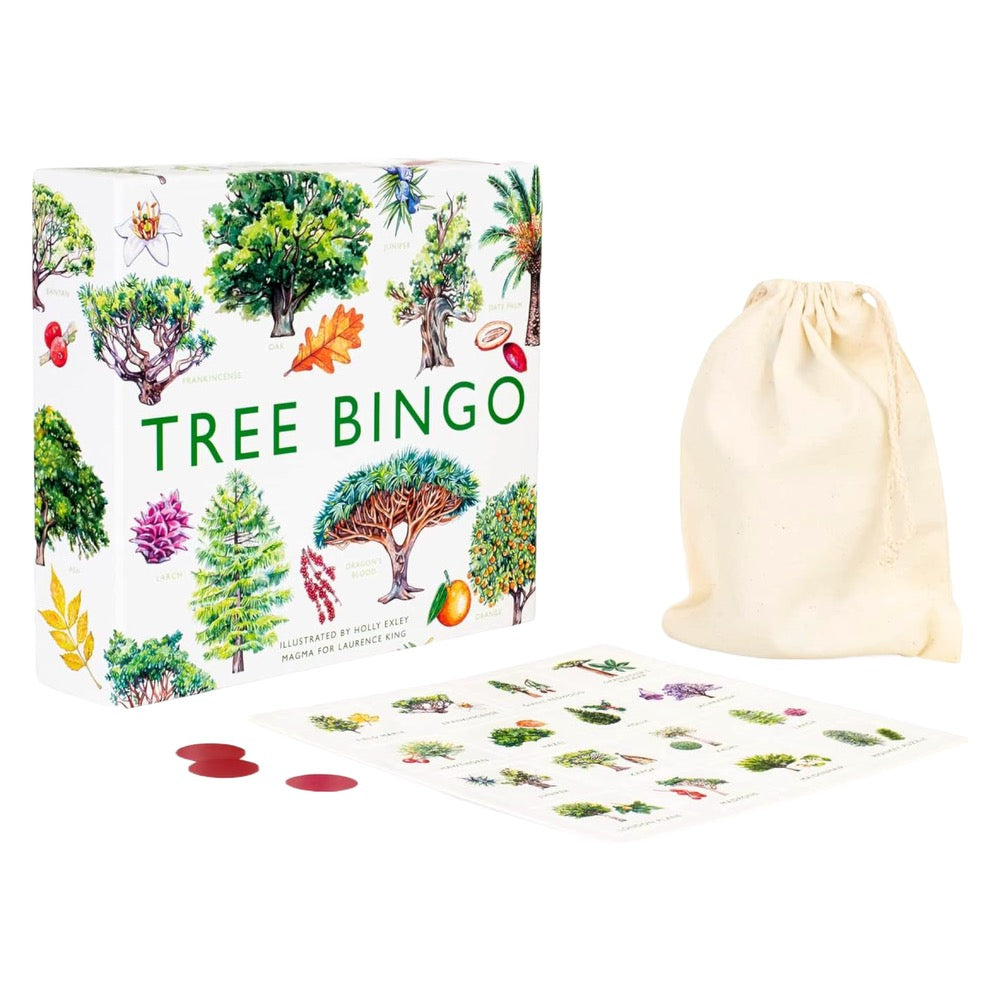
Happily, there is a Rhodesian Ridgeback tile in the very lovely Dog BINGO, so we will play that as well.


This post contains affiliate links to materials I truly use for homeschooling. Qualifying purchases provide me with revenue. Thank you for your support!

Tuesday, May 5, 2026

A Tale of Two Prologues

As part of our discussion of revising vs. editing, I remembered another resource! A former student wrote and self published a fantasy novel when she was 13, and she donated a copy to our homeschool co-op. When she went to write the second book in the series, she looked back at the first one and decided it needed some revisions! Even though it had already been published, she went ahead and revised the whole book and republished it, and then donated another copy to our classroom along with book 2.


Ms. Megan read the class the first two paragraphs from the Prologue of each, so that they could see some of the changes side-by-side.

original text

    The full moon glowed red in the sky. A dog ran on swift paws through a swampy field, stopping as she reached a cavern. She lifted her snout to the sky, smelling the thick trails of smog that snaked across the northeastern horizon. The long billowing formations reflected the flame-colored moonlight. She entered the cave. Scanning her surroundings, for a long time she walked through desolate tunnels before finally placing the item delicately on the floor. It began to glow softly, becoming brighter as the pit bull walked away on shaking legs. This is the right place to put it.. She glanced back at the illuminated tunnel one last time before taking off into the dim light of dawn. I did what needed to be done.

    A cat jumped from rooftop to rooftop- its fur, dark as the night sky, gleaming tepidly in the starlight. The moon was a tiny silver slit far off to the east which cast faint shadows across the buildings. He landed on a cramped wooden balcony and stared into the face of a dog. The animals bowed their heads to eath other. Then the shaggy red dog slipped a piece of paper to him. "Don't let it fall into the wrong paws," he growled.


revised text

    The full moon glowed red in the sky. A dog ran on swift paws through a swampy field, stopping as she reached a cavern. She lifted her snout to the sky, smelling the thick trails of smog that snaked across the northeastern horizon. The long billowing formations reflected the flame-colored moonlight. She entered the cave and scanned her surroundings. For a long time she walked through desolate tunnels before placing the item delicately on the floor. It began to glow softly, becoming brighter as the canine walked away on shaking legs. This was the right place to put it. She glanced back at the illuminated tunnel one last time before taking off into the dim light of dawn. She did what needed to be done.

    The moon was a tiny silver slit far off to the east which cast faint shadows across the buildings. A cat jumped between rooftops. His fur, dark as the night sky, gleamed in the tepid light of the stars as he flung himself over an alley. He landed on a cramped wooden balcony and stared into the face of a dog. The animals bowed their heads to each other. Their differences had been put aside- the situation had grown too dire for disputes of opinion. The two of them shared one common desire and that was to free this world of the disease that had befallen it... to save themselves, their species and their way of life. The shaggy red dog slipped a piece of paper to the cat. "Do not let it fall into the wrong paws," he growled. "Consequences will be severe- for all of us."


Many thanks to Kaia for sharing her work with us!!!


This post contains affiliate links to materials I truly use for homeschooling. Qualifying purchases provide me with revenue. Thank you for your support!

Tuesday, April 28, 2026

The Writing Process

As part of our Personal Narratives project for April, we are delving more deeply into the Writing Process. I was really excited to find four-pocket folders (I never knew there was such a thing!) at Walmart. Usually I don't like either Walmart or plastic folders, but these were too perfect to pass up.

The easiest thing is to give each child a sheet of 5 stickers... these from Avery are ideal! First the children write their name; this sticker goes on the front of the folder. With the other four, they can then label the four pockets.


Most of our rough draft/editing work is done for the main lesson book, which is always factual information, so this project is a big stretch for them! I think it's good to have some examples of the importance of revising. You don't just slap some words on the page, make sure your spelling and punctuation are correct, and call it done. Rethinking how you are explaining something -- and if you should say more (or less) -- is an essential step.

Here are some real-life examples I like to use to demonstrate revising:


Hooray for Diffendoofer Day!

started by Dr. Seuss, finished by Jack Prelutsky
"How This Book Came To Be" (with Seuss's original notes)


Poetry Speaks to Children

edited by Elise Paschen
page 88 & CD track 53
"On Turning Ten" by Billy Collins


Poetry is always being changed by the poet until the rhythm and flow of the words is just right. In this book, the author of "On Turning Ten" changes the poem slightly when he reads it aloud on the CD recording. Can you find what is different?

Thanks, Billy Collins, for helping us to give a great example of this to children! It is a published book but he didn't care... it didn't feel right when he said it out loud and he gave himself permission to change it. I love that!


This post contains affiliate links to materials I truly use for homeschooling. Qualifying purchases provide me with revenue. Thank you for your support!