Tuesday, April 28, 2026

The Writing Process

As part of our Personal Narratives project for April, we are delving more deeply into the Writing Process. I was really excited to find four-pocket folders (I never knew there was such a thing!) at Walmart. Usually I don't like either Walmart or plastic folders, but these were too perfect to pass up.

The easiest thing is to give each child a sheet of 5 stickers... these from Avery are ideal! First the children write their name; this sticker goes on the front of the folder. With the other four, they can then label the four pockets.


Most of our rough draft/editing work is done for the main lesson book, which is always factual information, so this project is a big stretch for them! I think it's good to have some examples of the importance of revising. You don't just slap some words on the page, make sure your spelling and punctuation are correct, and call it done. Rethinking how you are explaining something -- and if you should say more (or less) -- is an essential step.

Here are some real-life examples I like to use to demonstrate revising:


Hooray for Diffendoofer Day!

started by Dr. Seuss, finished by Jack Prelutsky
"How This Book Came To Be" (with Seuss's original notes)


Poetry Speaks to Children

edited by Elise Paschen
page 88 & CD track 53
"On Turning Ten" by Billy Collins


Poetry is always being changed by the poet until the rhythm and flow of the words is just right. In this book, the author of "On Turning Ten" changes the poem slightly when he reads it aloud on the CD recording. Can you find what is different?

Thanks, Billy Collins, for helping us to give a great example of this to children! It is a published book but he didn't care... it didn't feel right when he said it out loud and he gave himself permission to change it. I love that!


This post contains affiliate links to materials I truly use for homeschooling. Qualifying purchases provide me with revenue. Thank you for your support!

Friday, April 24, 2026

Picture Books About Death

We are coming to the end of our yearlong study of the Human Body in Science Club. I have been searching for a long time to find someone from SIU's Mortuary Science department to come in so that the children can ask their questions about death and dying, and finally found two! A 2nd year, Katy Bernard, and a 4th year (just weeks from graduation), Alexis Hamblin.

During the course of their two conversations with the children, I learned a lot. The children did too! The soon-to-be morticians were sweet and gentle.

I first became interested in "death positivity" when I attended a Zoom talk in 2022 that literally changed my life!


    A Conversation with Caitlin Doughty

    Wednesday, November 16 | 7PM | on Zoom

    Join us for a conversation with Caitlin Doughty, mortician, bestselling author, and advocate for death acceptance. Hailed by The New York Times as "a relentlessly curious and chipper tour guide to the underworld,” she’ll discuss reform of Western funeral industry practices and much more with Mark Bazer (The Interview Show).

    Caitlin Doughty is a mortician, advocate, and bĂȘte noire of the traditional funeral industry. Her educational webseries "Ask a Mortician" has been viewed almost 250 million times and her three books were New York Times bestsellers - Smoke Gets in Your Eyes, From Here to Eternity, and Will My Cat Eat My Eyeballs? She founded a Los Angeles funeral home as well as the funeral reform collective The Order of the Good Death, which spawned the death positive movement.


I have quite a few picture books about Death, and one of Caitlin's books, but Katy also brought with her some more books that she recommended. Here I'm including the full list, in case you'd like to bulk up your collection at home. Death is also one of the Philosophy topics included in Little Big Minds: Sharing Philosophy with Kids by Marietta McCarty, and I read the class a short section from her book before we began the chats with Katy and Alexis.

Marietta writes,

    On my last day with any group of child philosophers, each child has tucked into the bottom of a deep pocket the one question for which he or she would most like to have an answer. Regardless of age or locale, by far the most asked question involves the inevitability of death.

    When will I die?

    How?

    Why can't we stop it?

    What happens?

    Does anything really die at all?

    Why won't anybody talk with me about it?


The children were full of questions and glad to have someone to talk to them! The first question on Tuesday was, is it possible for someone to be accidentally buried while they are still alive? The first question on Wednesday was, can doctors can make someone who is dead come back?


Here are the books!

Picture books:


Chapter books (the last one is written for children):


Caitlin Doughty's YouTube channel is Ask a Mortician.

Let me know if you have other books you recommend!


This post contains affiliate links to materials I truly use for homeschooling. Qualifying purchases provide me with revenue. Thank you for your support!

Thursday, April 23, 2026

A New Book for Our Classroom Library

My mom shared this book review with me and it definitely piqued my curiousity:

    A Kids’ Novel That Delights in Disorder
    Philip Stead’s “A Potion, a Powder, a Little Bit of Magic” gleefully ignores all the storytelling rules.

    (this is a NYT gift link, so everyone can enjoy reading it!)


Since we are doing Personal Narratives as our 4th grade Composition focus, I thought this could be a fun read aloud (we just finished Mr. Popper's Penguins) and so I checked it out from the library. YEP, it's one to buy. So I just bought it. I am really looking forward to sharing this with the children!


A Potion, a Powder, a Little Bit of Magic
Or, Like Lightning in an Umbrella Storm:
A Story Out of Order

by Philip Stead


Here is the "out of order" order of the chapters:

    In Medias Res

    13 - The Possibility of Danger

    14 - A Potion, a Powder, a Little Bit of Magic

    15 - Failing Up

    In Principio

    2 - Goatnapped

    3 - Perseverance

    Omnia Mea Culpa

    4 - Lancelot Makes a Run For It

    5 - Why Bernadette Was Always Having to Repair Her Roof

    6 - The King Loses His Balance

    7 - The Royal Bearer of Good News

    16 - A Moment of Pure Beauty

    8 - The Royal Bearer of Bad News

    9 - A Moment of Pure Despair

    Oops! Erravi!

    10 - The Tollbooth

    11 - The Tree Who Does Not Grant Wishes

    12 - Loopholes

    The End... But Not in the Usual Sense

    17 - Carelessness

    18 - Gravitas

    Fors Hoc Doleat!

    19 - The Parade

    20 - The Mountain of Regret

    What Was Left of Bernadette's Ending

    21 - Giddyup

    22 - A Potion

    23 - A Powder

    Acknowledgments

    24 - A Little Bit of Magic (and a Plain Gray Rock)

    The End

    1 - A Moment of Pure Generosity


The story also begins with a Map of the Entire Kingdom and the Cast of Characters, and ends with a place for you to write in all the Morals (which are thoughtfully punctuated by goats) that they learn along the way.


This book looks like a ton of fun! I'm sure the children will absolutely love it.

e.e. cummings broke all the stuffy rules for punctuation and capitalization... and now we have Philip Stead joyfully playing around with chapter order!


This post contains affiliate links to materials I truly use for homeschooling. Qualifying purchases provide me with revenue. Thank you for your support!

Local Industry - Fruit

Our fifth Local Industry for Southern Illinois!


timing:


Zac, age 3
Greer's Lost Creek Blueberries


resource list:


art ideas:

Baking Soda Paint
Since this reaction leaves a fuzzy texture, it is perfect for painting peaches! (I like to use this template. Print it, cut it out, and use that to trace a peach shape onto your watercolor paper. Then cut out the watercolor paper shape.)

Positive / Negative Art
This technique workes really well for apples or pears!


special guest:

fruit farmer


This post contains affiliate links to materials I truly use for homeschooling. Qualifying purchases provide me with revenue. Thank you for your support!

Wednesday, April 22, 2026

Eating Insects for Earth Day

Happy Earth Day, everyone!

Today I checked one thing off my bucket list by snacking on an ant lollipop. Many thanks to the family who donated it to our classroom!

Here's the TED talk I like to use for this: Marcel Dicke: Why not eat insects?


I've been interested in eating insects ever since we began to learn about it for Earth Day back in April 2012. Insects are a very healthy, humane, and inexpensive source of protein. Eating insects for protein has been common throughout the span of human history.

I well remember my daughter Leah's poster that showed two bright red circle graphs of how many people around the world eat insects compared to the United States. Sadly I don't have a picture. Everyone else is doing it... why aren't you?


The children have been working on their Personal Narrative pieces all month alongside our Local Industry topic. Persuasive writing is quite another thing, and we don't do much with it before grade 8 (developmentally, you have to be ready to do Persuasive Essays).

But I thought they would -- like Leah -- enjoy doing a poster project.

So much more fun than "persuade your parents to give you a later bedtime." I remember being given this prompt in elementary school and hating it because it wasn't authentic. There was no way. My bedtime was set in stone!

Can you persuade your parents to eat insects?


(Not into ants? If cicadas are your thing, try ‘CICADA-LICIOUS’ COOKING.)


Monday, April 20, 2026

Local Industry - Coal

Our fourth Local Industry for Southern Illinois!


timing:

    1810 - present day


resource list:


artifacts:

lump of coal (it's a rock... but not a mineral!)
found at a student's 1930s-era house that had a coal chute

coal chute illustration in Harry the Dirty Dog by Gene Zion


special guest:

coal miner


This post contains affiliate links to materials I truly use for homeschooling. Qualifying purchases provide me with revenue. Thank you for your support!

Friday, April 17, 2026

AWSNA

This blog post is for people who regularly visit my website, waldorfcurriculum.com.

AWSNA has service marked the term Waldorf® and recently reached out to me to request that I remove it from my domain name. Therefore, I have copied and moved my website to wcurriculum.com. Please visit me there!

Unfortunately, they currently do not allow homeschoolers or homeschool groups to license the term. Although I have had my website at waldorfcurriculum.com for 20 years, I am still required to move it.

I have set up a permanent (301) redirect, so if you type in the old domain you should automatically be sent to the new one without any problems.

Thank you!
Renee


P.S. Because I don't have a team and have never taken any classes in web design, some things may end up acting strangely on the new site. If you find a page with a problem, please leave me a message in the comments below.

Wednesday, April 15, 2026

Local Industry - Bricks

Our third Local Industry for Southern Illinois!


timing:

    Murphysboro Paving Brick Company
    1909 - 1931


resource list:


artifacts:

vintage "Egyptian" brick


follow ups:

it would be fun to

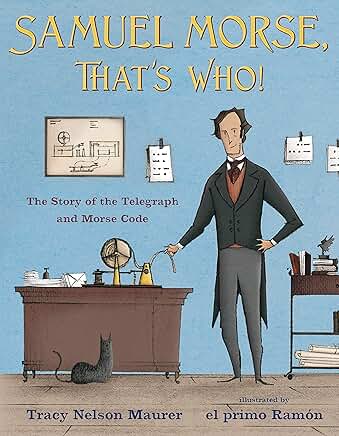
Learn About the Telegraph!

Practice Morse Code!


This post contains affiliate links to materials I truly use for homeschooling. Qualifying purchases provide me with revenue. Thank you for your support!

Tuesday, April 14, 2026

Educational Game: Robbin' Eggs!

I'm adding this math game to my series of posts about Educational Games!

previous posts:


Today I'm writing about Robbin' Eggs! by Haywire Group.


Here is a video tutorial on Robbin' Eggs!

Sadly, this game is no longer being made but it is well worth tracking down. Many thanks to my co-teacher, Ms. Megan, for recommending it to me!

I use it in the classroom after introducing negative numbers with Gnoming A Round and a hands-on manipulative (we use the Mortensen math material).

When children are ready to think of subtracting as adding a negative, we play Robbin' Eggs!


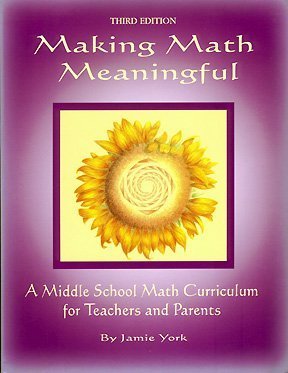
In the Waldorf scope & sequence, integers are part of grade 7 Algebra. In his middle school book, Jamie York strongly recommends starting children out with the idea of a bank account instead of a number line.

When you enter deposits and withdrawals into the bank, the bank keeps track of them. Each new transaction is a line item (addition means "and"). For a withdrawal, you are adding a negative amount. If you spend more than you have, you have a negative balance! If you deposit funds into the bank, sometimes you still have a negative balance (if it wasn't enough to bring you out of the red) and sometimes you have a positive balance.


Note: After playing Robbin' Eggs!, I have children practice adding and subtracting integers with a traditional worksheet (FREE at TpT).

While talking about this worksheet with a student the other day, I realized something: subtraction is always rewritten!

    subtracting a positive number is rewritten as adding a negative

    subtracting a negative number is rewritten as adding a positive


This post contains affiliate links to materials I truly use for homeschooling. Qualifying purchases provide me with revenue. Thank you for your support!

Monday, April 13, 2026

Fraction Skill-Building

After our Introduction to Fractions in March, we will work during April and May on skill-building. Children will continue to add concepts to their MLBs.

The Introduction to Fractions needs to be done very slowly and carefully to ensure there aren't enduring misunderstandings that show up later on!


I wanted to share the rest of my fractions planning for the year now since it is ready. If I make any changes to this as we go along, I will update it.

You will see that even though we went very slowly at the start, they will end up doing standard fifth grade fraction problems by the end of the ten weeks!


Themes Covered in Week 1

    Mon - K/W/L Chart

    Tue - 1/2, 1/4, 1/8

    Wed - Making Thirds & Halving Thirds

    Thu - Fractions of a Group, Equivalent Fractions (Houses on a Street)


Themes Covered in Week 2

    Mon - Fractions of a Number

    Tue - Puddle Question

    Wed - Reading a Ruler, Fractions in Lowest Terms

    Thu - Build-an-Animal


Themes Covered in Week 3

    Mon - Restaurant Simulation

    Tue - Coins as Fractions & Decimals

    Wed - Basic Operations with Fractions

    Thu - Converting Improper Fractions to Mixed Numbers


Themes Covered in Week 4

    Mon - Converting Mixed Numbers to Improper Fractions

    Tue - Elapsed Time

    Wed - Making Arrays

    Thu - Using Arrays to Simplify Fractions


week of April 6

Mon - Comparing Fractions

    recall Thursday's work with arrays

    look back at Fraction of a Group and find the equivalent fractions (2/4, 4/6) visually but also "prove it mathematically" on the board

    look back at Colorful Fraction Circles and see if you can find the equivalent fractions (4/8, 2/4, 5/10, 2/10)

    have children come up to the board to demonstrate the steps in how to convert each of these fractions to their simplest form

    what happens if you reduce 4/8 by dividing both numbers by 2? nothing, you'll just have to simplify it again by repeating the process

    so if there are multiple things you can divide the top and bottom number by, you should choose the largest one because that'll save you the most time

    notice that a unit fraction (with a 1 on top) is always in simplest form because its only factors are 1, and 1 isn't allowed in factor trees (YCCOM)

    have children work independently on Comparing Fractions worksheet
    https://www.superteacherworksheets.com/fractions/comparing-fractions-tape-diagrams_QWERT.pdf

    for the two equivalent fractions on that worksheet, we then used the chalkboard to "prove it mathematically"

    notice that for 6/8 = 3/4, we divide the top and bottom by 2

    but for 4/5 = 8/10, we multiply the top and bottom by 2

    we can make them larger by multiplying the top and bottom by the same number, and there are times in math when we want to do that!

    it's like Alice in Wonderland; you can make her bigger and smaller by nibbling and sipping, but she's still Alice while her size is changing

    why does it work? remember that the top number is how many and the bottom number is what kind. if you have a plan to eat 5 pieces of cake, but your mom cuts them in half to make twice as many (so now there are 10 and they are smaller) but you just adapt by eating twice as many, you have still had the same amount of cake!

    Arnold Schwarzenegger and the 2 ply toilet tissue fiasco!

    he switched to 1 ply at the government offices in California to save money during the budget crisis, and everyone promptly switched to using twice as much toilet tissue

    "if you're going to give half as much, I'm going to take twice as much"


    Carlyn Beccia book - which 6 of these 9 cures for Wounds worked? that's 2/3!


Tue - Add to MLB

    add the steps in making equivalent fractions to the MLB

    add new observations and new questions about fractions


Wed - Alice in Wonderland

    practice making equivalent fractions by either multiplying the top and bottom number by the same thing or dividing them

    go bigger and smaller just like Alice in Wonderland

    assignment: write three fractions that are equivalent to one another


Thu - Fact Families

    as I watched children working on yesterday's assignment, I realized that the class needed a review of Fact Families

    I had each child just choose a few multiplication facts that they were having trouble with and write out the fact families for them


week of Apr 13

Mon - +/- Fractions with Common Denominators

    have students practice addition and subtraction of fractions with common denominators by creating problems for classmates to solve (an answer key must be provided)

    a fun spin on this is "Secret Code," where the children come up with a fraction to represent each letter of the alphabet and then write a series of math problems for a friend to solve

    the answers to the problems spell out a secret message!

    this works best if improper fractions ("top-heavy fractions") are allowed and the answers do not have to be put in simplest form

    note: a very good way to see if children understand a skill is to have them create their own problems; if children understand that the denominator of a fraction is its name and does not represent an amount, they will resist the temptation to add or subtract them


Tue - Rounding Fractions

    practice Rounding Fractions to 0, 1/2, or 1

    observe, can children visualize the fractions in order to round them?
    who in the group still needs to see them, draw them, or build them?


Wed - Simplifying Fractions Mandala


Thu - "Of" Means "Times"

    explain that, in math, the word "of" means "times"

    sing the song,

      "Multiplying fractions
      Is no big problem
      Top times top over
      Bottom times bottom"

    do Fractions of a Group (a whole number has a denominator of 1)

    write an X over the word "of" to show that it actually means "times," then solve using multplication and simplify using skip counting

    do Multiplying Fractions (notice that the answers are very tiny! 1/3 of 1/4 is 1/12! cut up the Comparing Fractions worksheet to prove this)


week of Apr 20

Mon - First to 50

    play First to 50: Fractions of a Group Game with red counters

    print the 18 cards on cardstock so children can't see through them

    have the children make towers of 10 to easily count their score


Tue - Dividing IS Multiplying by the Reciprocal


Wed - Reciprocals of Mixed Numbers


Thu - Add to MLB

    add adding and subtracting fractions (with common denominators) and multiplying and dividing a fraction by a fraction to the MLB

    add new observations and new questions about fractions


week of Apr 27

Mon - Factor Trees

    read the introduction to YCCOM

    have fun by drawing factor trees and creating the artwork for them!


Tue - Finding the GCF

    do Simplifying Fractions

    how have you been solving these? have you ever found an equivalent fraction but it was still the wrong answer because it wasn't in lowest terms? how can you be absolutely sure you're dividing by the biggest possible number that goes into both, and there are no more steps?

    explain how to write factors in parentheses to find the GCF


Wed - Simplifying Fractions with the GCF


Thu - Add to MLB

    add simplifying by finding the greatest common factor to the MLB
    (use yesterday's worksheet to help you think of examples)

    add new observations and new questions about fractions

    bonus activity:
    write out the factors for the numbers from 1 to 100 in parentheses


week of May 4

Mon - Finding the LCM

    this is it! our final fractions skill! and then you will be able to do anything you ever need to with fractions

    what would happen if we wanted to add fractions from different sections of the box together?

    what if I ate half of my birthday cake during the daytime and then I got really hungry in the middle of the night and went back and ate 1/5 more?
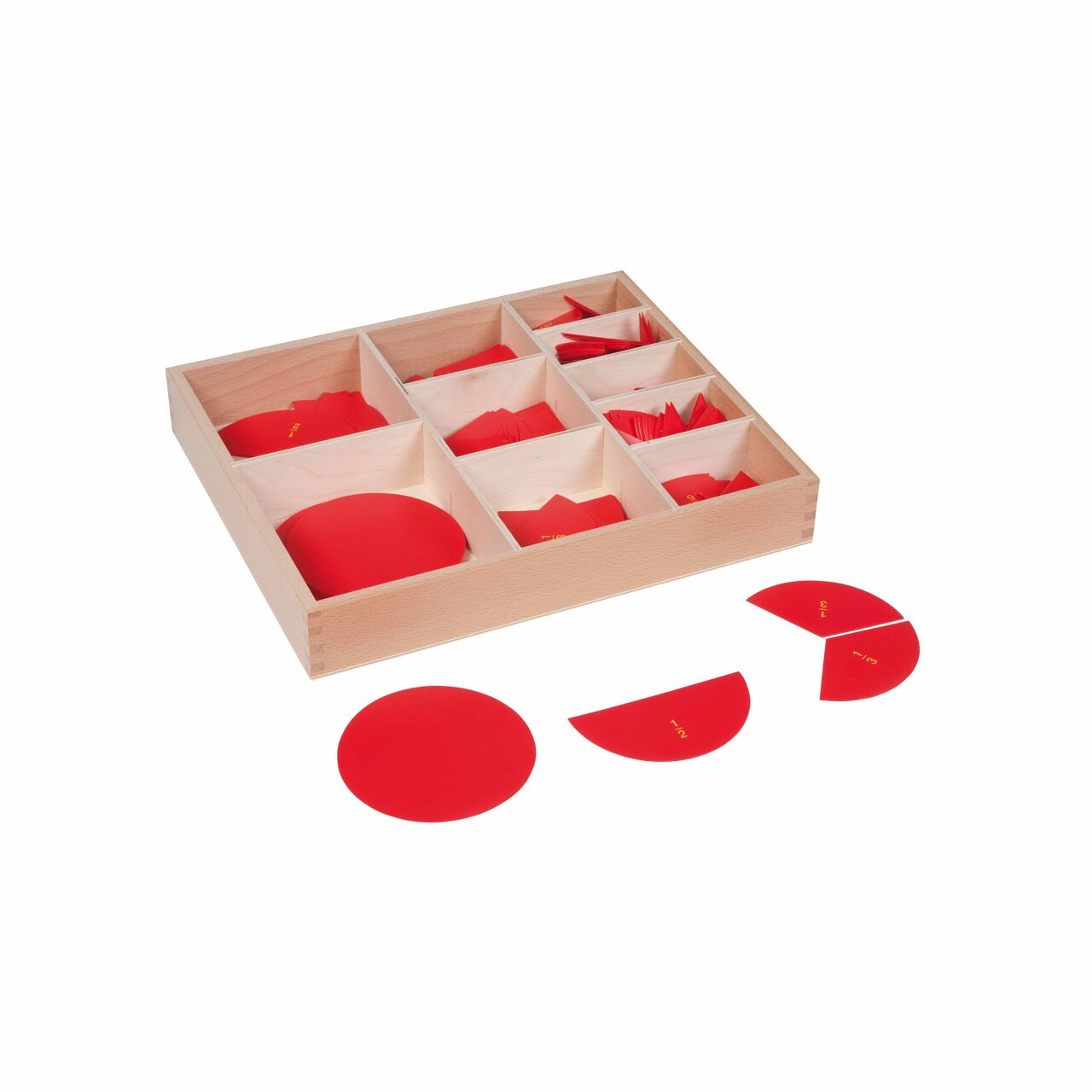
    yes, you could do it... but how would you express the answer?

    if you say well, 1/2 + 1/5 = 1/2 and 1/5 more, then you have basically just repeated the question

    the answer has to have only one denominator; therefore,
    you need those two fractions to share a name before you add them

    is this possible mathematically?

    absolutely! we know how to make fractions smaller by dividing both parts by the same number but we can also make them bigger by multiplying, and the fractions will still be equivalent

    here we need to figure out not what factors but what multiples two numbers have in common (they had trouble with this concept, so we ended up calling it "skip count" instead of multiple)

    as we will still have to simplify our answer at the end of the process, it saves time to go with the smallest common multiple (if I turn 1/2 into 50/100 and 1/5 into 20/100, I will get 70/100 and then reduce... if I turn 1/2 into 5/10 and 1/5 into 2/10, I will get 7/10 right away)

    begin Lowest Common Denominator task cards


Tue - Lowest Common Denominator

    review by doing a problem together on the board

    finish yesterday's set of task cards


Wed - +/- Fractions with Unlike Denominators


Thu - +/- Mixed Numbers with Unlike Denominators


week of May 11

Mon - Add to MLB

    write in adding and subtracting fractions with different denominators to the MLB

    add new observations and new questions about fractions


Tue - Brain Drawings


Wed - Word Problems


Thu - Quiz

    assess the class by giving Fractions Operations Review as a quiz (meaning students have to work independently and without help)

    open book notes are allowed... so, are the notes they put in their MLB helpful to them? does anything need to be revised or expanded before we add the MLBs to the porfolio boxes? if so, update it now


week of May 18

Error Analysis


This post contains affiliate links to materials I truly use for homeschooling. Qualifying purchases provide me with revenue. Thank you for your support!