Showing posts with label multiplication facts. Show all posts

Friday, April 3, 2026

Introduction to Fractions week 4

We are going to continue to study Fractions in Morning Math throughout April (while we do a Personal Narratives block in our Main Lesson time).

The Introduction to Fractions needs to be done very slowly and carefully to ensure there aren't enduring misunderstandings that show up later on!

Themes Covered in Week 1

    Mon - K/W/L Chart

    Tue - 1/2, 1/4, 1/8

    Wed - Making Thirds & Halving Thirds

    Thu - Fractions of a Group, Equivalent Fractions (Houses on a Street)


Themes Covered in Week 2

    Mon - Fractions of a Number

    Tue - Puddle Question

    Wed - Reading a Ruler, Fractions in Lowest Terms

    Thu - Build-an-Animal


Themes Covered in Week 3

    Mon - Restaurant Simulation

    Tue - Coins as Fractions & Decimals

    Wed - Basic Operations with Fractions

    Thu - Converting Improper Fractions to Mixed Numbers


Here are some Notes & Photos from week 4:

Mon - Converting Mixed Numbers to Improper Fractions


Tue - Elapsed Time

    read The King, the Dragon, and the Witch by Jerome Corsi

    review reading an analog clock and look at a clock as a fraction
    (half hour, quarter hour, 3/4 hour past = 1/4 hour till) and note that one minute is 1/60 of an hour and five minutes is 1/12 of an hour

    do Elapsed Time practice or finish up yesterday's work as needed


Wed - Making Arrays

    add new observations and new questions about fractions to the MLB

    lay the foundation for tomorrow's lesson with Around the Room x, ÷


Thu - Using Arrays to Simplify Fractions

    read Six Dots: A Story of Young Louis Braille by Jen Bryant
    (for Monday's special guest... but it also ties in so well with arrays!)

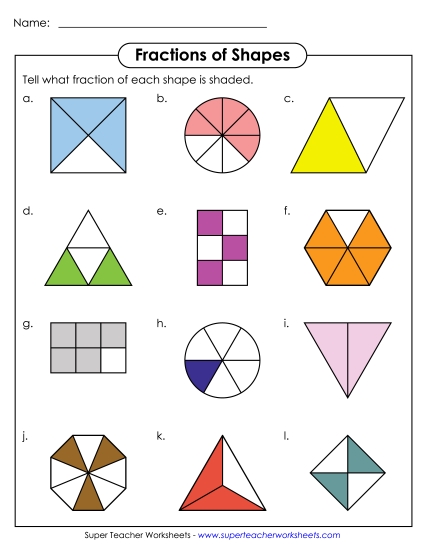
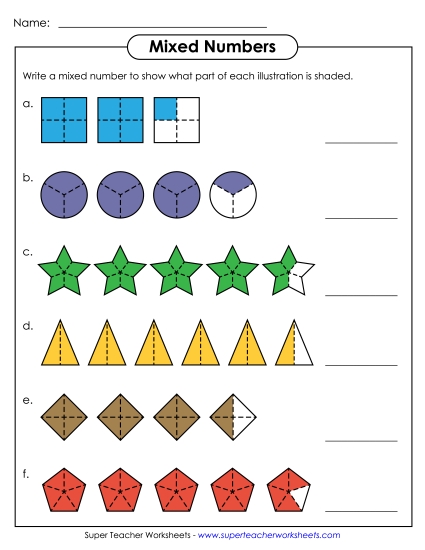
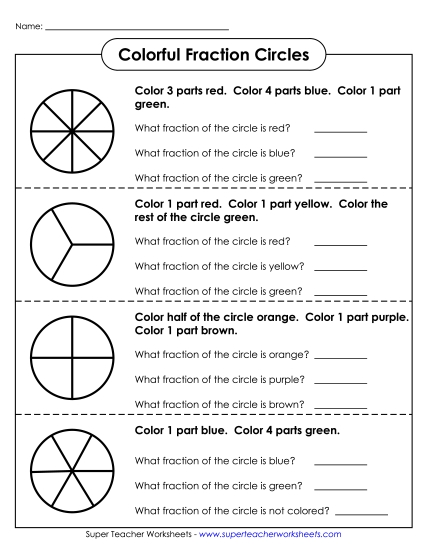
    have students review fractions by doing Fraction of a Group and Colorful Fraction Circles independently

    use small stickers (check your office supply stash!) to create an array

    revisit arrays using the example on my poster:

    explain that 8 dots out of 32 dots is the same as saying 1 row out of 4 rows... and, mathematically, we would write this as 8/32 = 1/4

    is there a way to figure out equivalent fractions without having to make a visual each time? yes!

    show students how you can multiply or divide your fraction using a "special form of 1" (ie. a fraction which has the same numerator and denominator) to get a new -- and equivalent -- fraction!

    have students make arrays of their own using tiny stickers and then write equivalent fractions

    show them how to "double check it mathematically"
    4/12 is the same as 1/3
    because 4 divided by 4 is 1, and 12 divided by 4 is 3


I got the idea of the sticker arrays from this TpT lesson using Emoji Arrays. It is SUCH an easy way for children to create their own arrays. Plus, once you have actually made them yourself, you start to see arrays everywhere!


This post contains affiliate links to materials I truly use for homeschooling. Qualifying purchases provide me with revenue. Thank you for your support!

Thursday, January 30, 2025

Rules for Multiples

Using the Prime Climb gameboard to help us discover a rule for the 4s!


Here are all the divisibilty rules we know so far:

A number is divisible by 2 if it is even.

A number is divisible by 4 if you halve it and get an even number.


A number is divisible by 3 if the digits add up to 3, 6, or 9.

A number is divisible by 6 if it is even and the digits add up to 3, 6, or 9.

A number is divisible by 9 if the digits add up to 9.


A number is divisible by 5 if it ends in 0 or 5.

A number is divisible by 10 if it ends in 0.


For more on this topic, see my What IS Multiplication? post. We've really enjoyed using these Multiplication Fact Fluency Activities, in particular "Which Multiple Does Not Belong?"


This post contains affiliate links to materials I truly use for homeschooling. Qualifying purchases provide me with revenue. Thank you for your support!

Tuesday, February 21, 2023

"Monstrously" Cool Factor Trees

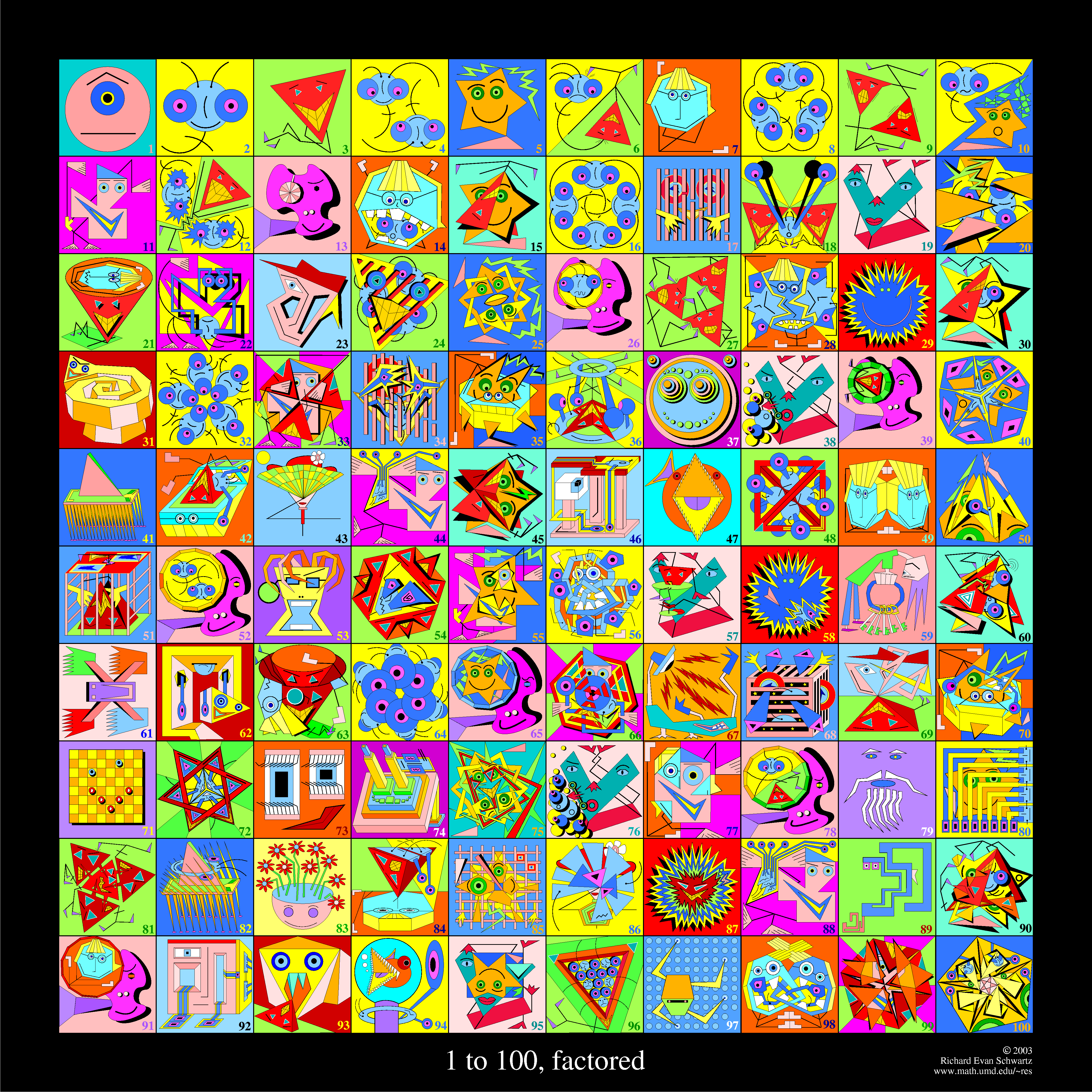
One of the most popular Math activities right now with my 10 and 11 year old students is illustrating prime and composite numbers inspired by You Can Count on Monsters, an amazing math book by Richard Evan Schwartz.


You Can Count on Monsters: The First 100 Numbers and Their Characters


In this Brown University article, he explains the process he went through to come up with this book. Here are all 100 numbers in a poster.

Special Note: The poster was one of the finalists in the 2003 N.S.F. Science and Engineering Visualization Challenge!

And children can so easily do this themeselves as a classroom activity! For each prime number, they design a unique monster. For a composite number, the children create a factor tree (factoring it all the way to the primes) and then do a drawing of those prime number monsters playing together.

Here is some of Natalie's artwork from December 2016.


9 = 3 x 3


10 = 2 x 5


15 = 3 x 5


21 = 3 x 7


44 = 2 x 2 x 11


77 = 7 x 11


It's addictively fun... and a great way to practice factor trees!


This post contains affiliate links to materials I truly use for homeschooling. Qualifying purchases provide me with revenue. Thank you for your support!

Monday, May 25, 2020

Math Lesson: The Garden Story

Zac and I continued to have stories all last week about planting and harvesting. One of them even inspired a lesson with a tutoring client...


"Peter's Story" & "The Little Red Hen"
from Movement for the Young Child
by Estelle Breyer


(available in its entirety free as a downloadable PDF from the Online Waldorf Library here)


A Log's Life

by Wendy Pfeffer


Up in the Garden and Down in the Dirt

by Kate Messner


Ant Cities

by Arthur Dorros


First Peas to the Table: How Thomas Jefferson Inspired a School Garden

by Susan Grigsby


Zac loves his ant farm and it is still going strong. We are supposed to give them a few crumbs of food and a few drops of water every 3 days. Not knowing what to feed them, we tried a bit of watermelon first and it was a disaster. So yesterday we gave them a few crumbs from our challah bread and they were thrilled. Zac and I decorated a little notebook (happily, I already had an ant rubber stamp) to keep track of our ant care notes.

Yesterday we also discovered that a bird is nesting in our nest box (placed on the art room window with entrance to the North)! We also found a new swarm in our bee swarm box (placed in the cypress tree with entrance to the South). That's two this year! They will be rehomed at Dayempur Farm.


After reading Up in the Garden and Down in the Dirt I was inspired to create a new lesson for the Grade 2 Shapes & Number Patterns block. I like the Waldorf first grade math content very much and we do the Quality of Numbers and Math Gnomes blocks, but in second grade I like to bring in the Montessori materials for Shapes & Number Patterns and Column Algorithms. They are wonderful -- colorful, completely individualized, and hands-on -- and coordinate beautifully with the Waldorf approach.

This lesson uses the Colored Bead Bar material. You can either use the bar bars for the Checker Board (and some GBM 10 bars) or the bead bars for the Decanomial.

We first read the story together and then looked at places where you could have multiplication in it... the same quantity over and over and over.

I thought of a few examples. These were planting the garden (if you plant a row of three strawberry plants and you have x rows), harvesting the produce (if every tomato plant gives the same number of tomatoes and you have x tomato plants), and also the ants coming to collect food for the long winter (if every ant collects seven bread crumbs and you have x ants).

She was very inspired by the different colors of bead bars and enjoyed laying out the beads and "planting her garden"!

dark blue - blueberry bushes
9 blueberry bushes per row, two rows, 9 x 2 = 18
(in 2nd grade you begin to put the answer at the end of the equation)

pink - peach trees
3 peach trees per row, three rows, 3 x 3 = 9

red - strawberry plants
1 strawberry plant per row, five rows, 1 x 5 = 5

purple - blackberry bushes
6 blackberry bushes per row, three rows, 6 x 3 = 18

gold - pear trees
10 pear trees in a row, four rows, 10 x 4 = 40

It would be fun to lay out a garden on your mat that used all ten colors!


We also did a bit with the ants.

white - breadcrumbs

If each ant brings seven bread crumbs down to storage for the winter, and there are seven ants, how many bread crumbs do they collect in all?

7 x 7 = 49


I found it was difficult for her to switch from planting to harvesting so I wouldn't do that in the same lesson. Do planting one day and then revisit the story and do harvesting the next day.

To switch from each bead on the bar is a peach TREE and they're planted in a row, to the whole bead bar represents the peach tree and each bead is a PEACH that we collect, is too much of a mental shift without a sleep in between. The ants collecting food counts as a kind of harvesting too, mentally, and I realized right away that it was a big shift. In this case, each bead bar represents what the ANT'S CAPACITY is. It would be the same kind of problem as if you had a basket or a wheelbarrow and the colored bead bars were representing what they can hold and then you are making multiple trips (which is another way you could work with this story).

So I recommend this story and these kinds of problems, but just remember that a physical representation is a good thing to have, and it can be flexible and represent more than one concept, but don't shift to having it represent more than one concept too quickly when a skill is new.


This post contains affiliate links to materials I truly use for homeschooling. Qualifying purchases provide me with revenue. Thank you for your support!
Tuesday, January 3, 2017

MLB Pages - Business Math

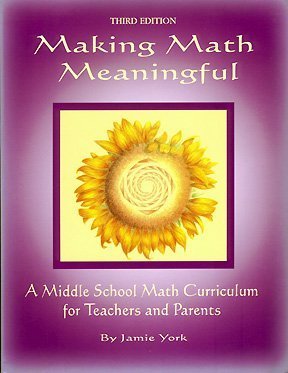
I knew from Jamie York's work that there was a sixth grade main lesson called Business Math. He explains this in his list of main lesson topics for middle school. I didn't know last December, when I tried this, that another great resource is a free book from the Online Waldorf Library (published high-quality Waldorf curriculum books made available for download as free PDFs) called Mathematics Lessons for the Sixth Grade by Ernst Schuberth.


I no doubt could have done a more Waldorf-y job with this block had I used both of these resources, but I simply took it as an opportunity before Christmas Break to review fractions, decimals, percents, and graphing. It took more time than I thought to review all four operations with fractions and with decimals, because I discovered that the girls really didn't understand at all (coming from a year at a local school). I was glad that I slowed down and spent more time on this topic. No doubt we would have gotten more done if we had rushed. But that's never the best solution!

My favorite activity? We did a GREAT data collection project as a family, creating and then administering a survey based on an authentic research question, and compiling the results and graphing our quantitative data, and then doing a follow-up interview with two study participants to gather qualitative data.

These are my blog posts from that time:


Since it was December and things are always hectic in December, I had both of my daughters (grade 6 and grade 8) do this block together.


Here is what we did. I'm happy to answer questions about any of the pages. The factor trees were inspired by Richard Evans Schwartz's You Can Count on Monsters: The First 100 Monsters and Their Characters. This involves factoring composite numbers down to their primes and creating an artistic representation of them. It REALLY helps you assess whether your child understands factoring.


We got HUGE main lesson books for this... 19 inches wide, 13 1/2 inches tall. Click on any picture to enlarge it and scroll through the pages with ease.


This post contains affiliate links to the materials I actually use for homeschooling. I hope you find them helpful. Thank you for your support!