Showing posts with label Zoology. Show all posts

Thursday, May 21, 2026

Zoology: Bison and Moose

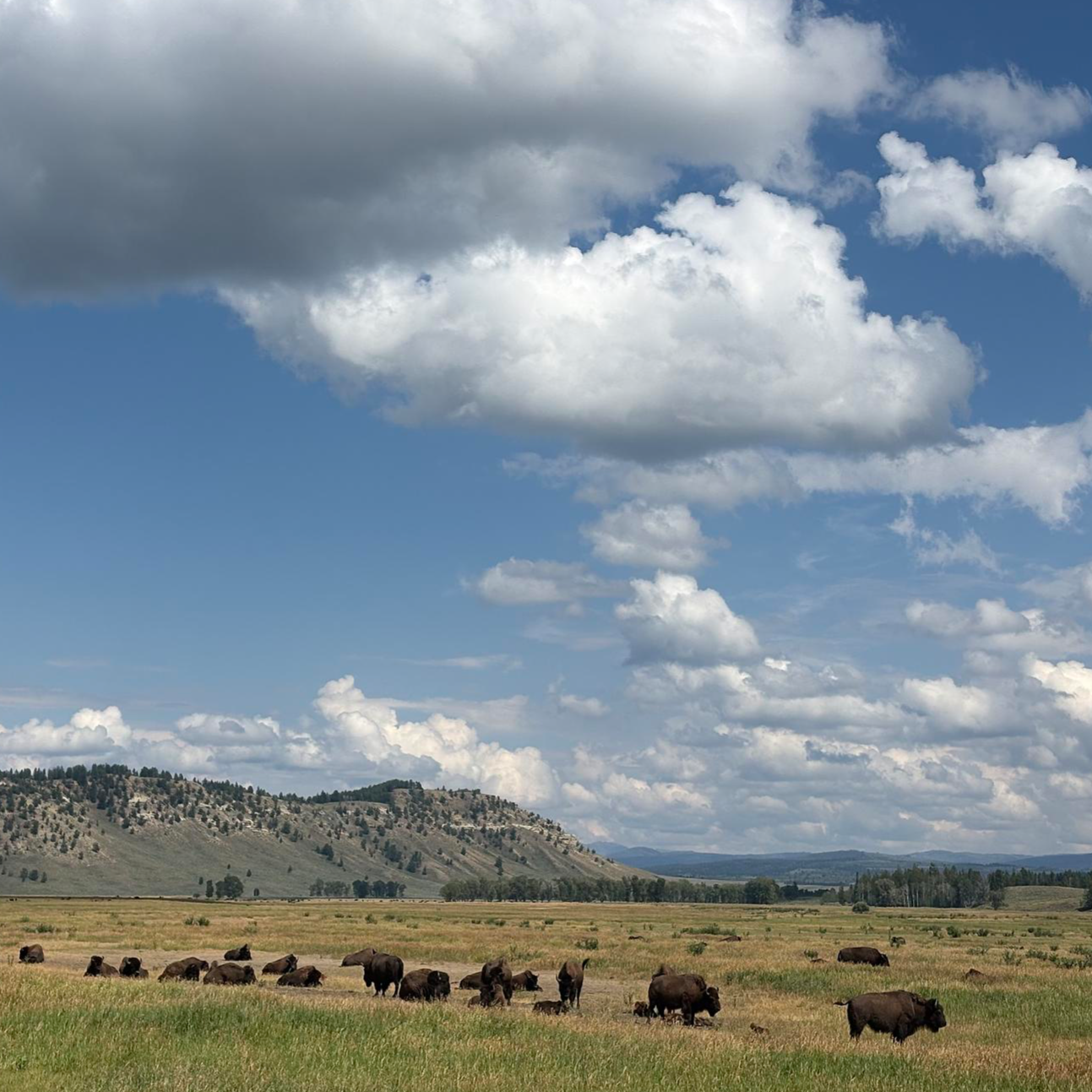
Wrapping up Zoology II with two amazing animals native to North America: bison and moose.

Here is my booklist, with notes for these two ungulates (hooved mammals) in particular and ruminants (4 stomachs!) in general.


Ruminants


Bison


Moose


This post contains affiliate links to materials I truly use for homeschooling. Qualifying purchases provide me with revenue. Thank you for your support!

Monday, May 18, 2026

Zoology: The Orca

I first became interested in adding the Orca to the Waldorf Man & Animal block when I was doing a consulting project for a client who lives in Australia. She wanted her Zoology blocks to feature only Australian animals.

In case you're curious, here is what we came up with:

    Block I: Form

    Giant Cuttlefish (Sepia apama)
    tadpoles
    Giant Clam (Tridacna gigas)
    Giant Gippsland Earthworm (Megascolides australis)
    Leopard Seal (Hydrurga leptonyx)
    Red Kangaroo (Osphranter rufus)
    Wedge-tailed Eagle (Aquila audax)


    Block II: Function

    Platypus (Ornithorhynchus anatinus)
    Orca (Orcinus orca)
    Saltwater Crocodile (Crocodylus porosus)
    Cow (Bos taurus, Bos indicus)


I wrote to her:

    Marsha Johnson said that the three animals we pick to do in the second block of Man and Animal should represent thinking / feeling / willing as well as nervous system / cardiovascular / metabolic.

    I didn't include a social insect -- which Kovacs covers in his Drawing from the Book of Nature -- but it just occurred to me that the Orca is a nice blend of cardiovascular health (apex predator) and social consciousness. So I will focus on the Orca as an intelligent and social creature. It seems to have a lot of Feeling but also Intellect.

    Then the Saltwater Crocodile is a blend of the cardiovascular health (still an apex predator, and with a very interesting heart) and the digestive forces of the Cow. It seems like a very willful beast with strong digestive forces!

    Platypus - all nervous system
    Orca - intelligent, social, lots of caring (thinking + feeling)
    Crocodile - strong heart, independent, determined (feeling + willing)
    Cow - a placid beast that is nothing but digestion :-)


I also found in my notes this interesting tidbit:

    Fun Fact I just learned about the platypus.
    It has no stomach!

    That's very funny because I chose it as a Nerve/Sense animal but it will tie in at the end with the Cow and the Digestive System. So I would wait to talk about the stomach of the platypus (and the orca and the crocodile... our big carnivores) until we get to the cow. Then we can go back and look at everyone's stomachs. Or lack thereof.


Fast forward to the present, where I am doing the Orca myself in Zoology, as an example of a cardiovascular system animal that is also very intelligent and social. I do so appreciate having my own notes to look back on!

Because there are so many interesting animals (like the Platypus), children get to choose an animal and research and write an Animal Report. That is one of our main projects these last two weeks of the school year, as we wrap up Art History, Philosophy, Fractions, Personal Narratives, and odds & ends.


Here is the Orca booklist that I recommended to her (and will use myself) as well as any references to the Orca that I found in previous blog posts:


This post contains affiliate links to materials I truly use for homeschooling. Qualifying purchases provide me with revenue. Thank you for your support!

Saturday, May 9, 2026

Lion Booklist (and Birthday!)

The main lesson block topic for May is Zoology II and we are on the Lion!

In a stroke of absolutely perfect timing, my youngest student finished knitting her Lion on Thursday. She was extremely proud. 😊

pattern is in A First Book of Knitting for Children

Happy Birthday, little Lion!


Here is my list of Lion books:


On Thursday, we reviewed the biomes of Africa with the Africa Puzzle Map and looked at the three part cards for the animals of the African Grasslands.

    Note: Both of these beautiful materials are from Waseca Biomes.

    If you are interested in their three part cards with examples of plants, invertebrates, fish, amphibians, reptiles, and mammals for all of the biomes on all of the continents in the world, here is the list.


After imagining the African Savannah, we read Young Lions by Toshi Yoshida and drew the "Lion" lesson from Drawing Simple Animal Forms.


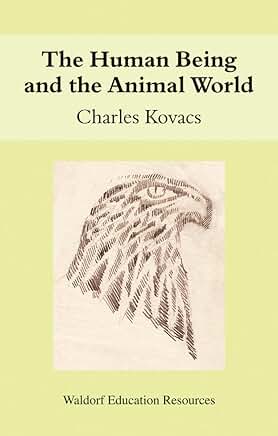
On Monday, we will read the "Lion" chapter from The Human Being and the Animal World by Charles Kovacs (chap 13), and add Lion to the MLB.


I also want to do a Dog for our Zoology block, so I've chosen the Rhodesian Ridgeback. In Zoology II, we look at specific animals that serve as pure examples of a highly developed physiological system. The human being also has all of these systems but in a much more balanced way! The Chimpunk was our first animal (Nervous System). The Lion is Cardiovascular System... and so is the Rhodesian Ridgeback, a massive dog bred to hunt lions.

On Tuesday, we will read an excerpt from Facing the Lion: Growing Up Maasai on the African Savanna by Joseph Lemasolai Lekuton.

What qualities would it take -- physically and emotionally -- to hunt a lion?


On Wednesday, we will brainstorm. If there was a dog that was specifically bred to hunt lions, what attributes would it most likely have? We can talk about the Cardiovascular System more specifically (this will be a review for my students who did the Human Body in Science Club all year), and then learn about the Rhodesian Ridgeback. It is truly a remarkable dog!

Happily, there is a Rhodesian Ridgeback tile in the very lovely Dog BINGO, so we will play that as well.


This post contains affiliate links to materials I truly use for homeschooling. Qualifying purchases provide me with revenue. Thank you for your support!
Monday, January 26, 2026

Knitted Doll (Grade 4)

It's very cold and snowy here today, so I finally finished up my knitted doll!

In my Handwork Teacher Training, this was suggested as a third grade project, but I think it works really well in grade 4 as part of the Zoology block (to go with chapter 1 of Kovacs). A doll + wardrobe are the final patterns in A First Book of Knitting for Children, but I particularly like this one because it encourages children to make their dolls unique.

It also goes spectacularly well with the Kovacs chapter, and I really noticed the children looking at human proportions to see how big to make the head and how long to make the arms.


Thank you to Nicole for this "pattern" and the lovely wording!


you will need worsted weight yarn in a variety of colors (shoe color, clothing colors, skin color, hair color, accessory colors) and corresponding knitting needles

    "I can't give you a pattern for this because people are different sizes"

    "we come in all different colors and so do our dolls”

    "we come in all different sizes and so do our dolls”


you will begin at one of the doll’s feet

cast on 12 stitches

knit until the leg is as long as you would like, then cast on for a second

knit second leg, then join them by knitting across all rows

knit torso as long as you want it to be

knit the head smaller — fewer stitches, fewer rows — than you did the torso

k2tog across the entire row, then use the gathering stitch to complete the head

now you will make two arms

cast on 10 stitches for arms in shirt color

knit until the arm is as long as you would like, switch to hand color at end of arm and then use the gathering stitch to complete the arm

notes:

    for a smaller doll, cast on 10 instead of 12 stitches for the legs (in which case use 8 stitches instead of 10 stitches for the arms)

    for a variety of textures, you could use garter stitch for skin but use stockinette stitch (knit a row, purl a row) for the shoes and clothing

    the doll can be made so that he/she is completely clothed already (for slower knitters) OR made with skin and undergarments like tights/undies and then you can have fun inventing and knitting separate clothing and accessories

    do NOT make the doll all in skin color such that he/she is naked


This post contains affiliate links to materials I truly use for homeschooling. Qualifying purchases provide me with revenue. Thank you for your support!

Sunday, January 25, 2026

Poisonous or Venomous?

Maybe you already know that Seth Meyers has spent a lot of time on this. But just recently, a Jackal wrote in with the best explanation I've ever heard... and since it's good to know when teaching Zoology (grade 4) and Botany (grade 5), I thought I would share it!

If you bite it and you die, it's poisonous.

If it bites you and you die, it's venomous.


Another tip for poisonous is to think about Snow White and the apple.

And for venomous, someone pointed out that the letter V looks like fangs!

the poisoned apple for Snow White
(I needle-felted this back in April 2016)

Monday, January 12, 2026

Illinois Exotic Species Coloring Book

Looking through my resources for the Southern Illinois block (grade 4 Local Geography, History & Industry), I came across this lovely coloring book.

Printed on nice heavy card, these beautiful illustrations come with helpful information on the back. Some of them would work very well in other blocks too, such as "Night Crawler" for Zoology, "Queen Anne's Lace" for Botany, or "Teasel" for Fibers & Clothing (teasers were an early tool used to card wool).

Here is the complete list:

    Dame's Rocket

    Eurasian Watermilfoil

    Rusty Crayfish

    Buckthorn

    Japanese Beetle

    Musk Thistle

    Ruffe

    Round Goby

    German Yellowjacket

    European Starling

    Rock Dove

    House Sparrow

    Reed Canary Grass

    Gypsy Moth

    Chinese Mantis

    Goldfish

    Common Carp

    Daphnia

    Zebra Mussel

    Asian Tiger Mosquito

    Mute Swam

    Multiflora Rose

    Night Crawler

    Kudzu

    Asian Longhorned Beetle

    Teasel

    Garlic Mustard

    Purple Loosestrife

    Honey Bee

    Wild Parsnip

    Multicolored Asian Lady Beetle

    Queen Anne's Lace

    Monk Parakeet

    European Corn Borer

    Norway Rat

    House Mouse

    Ring-necked Pheasant


The book's introduction clarifies the difference between an exotic species and an invasive species.

Written by Michelle Garland, Carolyn P. Nixon, and Philip L. Nixon
Illustrated by Carolyn P. Nixon and Loren Kirkwood

Saturday, November 1, 2025

The Seal Painting

Yesterday was Halloween, and Zac and I were looking back through photos from October 31st to see what costume he had worn each year...

And we discovered something amazing!

Come to find out that his beloved big sister Leah painted her famous Seal Painting for Zoology on October 30th, 2015.


We gasped and looked at the chalkboard. Yep. Ten years -- to the day -- later, Zac was painting his Seal Painting for Zoology. October 30th, 2025!

This painting is a favorite Zoology activity, and I just love how Leah's turned out. It is inspired by the Live Education lesson Animals Among the Elements.

Photos of every page of Leah's two Man & Animal MLBs are in the blog here.

Inside In: X-Rays of Nature's Hidden World

Ms. Megan just recommended this book to me and I'm obsessed with it!

Inside In: X-Rays of Nature's Hidden World
photography by Arie van 't Riet


We have a lot of human and animal X-rays for the light table, but this book takes things to a whole other level. A must-have purchase for Zoology!

So that I remember about this book as a resource, I'm making a list of all the animals included in it. That way it will show up when I search the blog.


Arthropods and Mollusks

    scorpion, giant prawn, bumblebee, dragonfly, butterfly, centipede, snail


Fish

    eel, silver pomfret, roach, perch, garfish, barracuda, small-spotted catshark, John Dory, anglerfish, catfish, sole, ray, seahorse


Amphibians

    marsh frog, tree frog


Reptiles

    tegu, bearded dragon, long-tailed grass lizard, monitor lizard, python, crocodile, chameleon, red-eared slider turtle, constrictor


Birds

    barn owl, wagtail, long-eared owl, buzzard, pheasant, jay, duck, magpie, jay, crow, blackbird, thrush, starling


Mammals

    bat, mouse, rat, shrew, vole, rabbit, hare, mole, hedgehog, weasel, squirrel, fox, deer, squirrel monkey


This post contains affiliate links to materials I truly use for homeschooling. Qualifying purchases provide me with revenue. Thank you for your support!

Monday, October 27, 2025

Common Garter Snake

There are many fascinating snakes in the world; we are looking at two.

On Thursday we learned about the Prairie Rattlesnake by reading Patulous, the Prairie Rattlesnake by Jonathan Kahn. Jonathan wrote and illustrated this national award-winning book when he was just nine years old!

Today our topic is the Common Garter Snake. Here is what we are doing:


I have a complete blog post listing all of the wintering animals covered in All Creation Waits. This is an extraordinary book, and works well as a classroom read aloud if you live in the temperate forest biome of North America (we do not read the final chapter, which is very religious). Each day in December, as we read about an animal at snack, we hang up the ornament of that animal. It's a lovely tradition!

Here are all the Advent Tree Photos.


This post contains affiliate links to materials I truly use for homeschooling. Qualifying purchases provide me with revenue. Thank you for your support!