The Introduction to Fractions needs to be done very slowly and carefully to ensure there aren't enduring misunderstandings that show up later on!

I wanted to share the rest of my fractions planning for the year now since it is ready. If I make any changes to this as we go along, I will update it.
You will see that even though we went very slowly at the start, they will end up doing standard fifth grade fraction problems by the end of the ten weeks!
- Mon - K/W/L Chart
Tue - 1/2, 1/4, 1/8
Wed - Making Thirds & Halving Thirds
Thu - Fractions of a Group, Equivalent Fractions (Houses on a Street)
- Mon - Fractions of a Number
Tue - Puddle Question
Wed - Reading a Ruler, Fractions in Lowest Terms
Thu - Build-an-Animal
- Mon - Restaurant Simulation
Tue - Coins as Fractions & Decimals
Wed - Basic Operations with Fractions
Thu - Converting Improper Fractions to Mixed Numbers
- Mon - Converting Mixed Numbers to Improper Fractions
Tue - Elapsed Time
Wed - Making Arrays
Thu - Using Arrays to Simplify Fractions
week of April 6
Mon - Comparing Fractions
-
recall Thursday's work with arrays
look back at Fraction of a Group and find the equivalent fractions (2/4, 4/6) visually but also "prove it mathematically" on the board
look back at Colorful Fraction Circles and see if you can find the equivalent fractions (4/8, 2/4, 5/10, 2/10)
have children come up to the board to demonstrate the steps in how to convert each of these fractions to their simplest form
what happens if you reduce 4/8 by dividing both numbers by 2? nothing, you'll just have to simplify it again by repeating the process
so if there are multiple things you can divide the top and bottom number by, you should choose the largest one because that'll save you the most time
notice that a unit fraction (with a 1 on top) is always in simplest form because its only factors are 1, and 1 isn't allowed in factor trees (YCCOM)
have children work independently on Comparing Fractions worksheet
https://www.superteacherworksheets.com/fractions/comparing-fractions-tape-diagrams_QWERT.pdf
for the two equivalent fractions on that worksheet, we then used the chalkboard to "prove it mathematically"
notice that for 6/8 = 3/4, we divide the top and bottom by 2
but for 4/5 = 8/10, we multiply the top and bottom by 2
we can make them larger by multiplying the top and bottom by the same number, and there are times in math when we want to do that!
it's like Alice in Wonderland; you can make her bigger and smaller by nibbling and sipping, but she's still Alice while her size is changing
why does it work? remember that the top number is how many and the bottom number is what kind. if you have a plan to eat 5 pieces of cake, but your mom cuts them in half to make twice as many (so now there are 10 and they are smaller) but you just adapt by eating twice as many, you have still had the same amount of cake!
Arnold Schwarzenegger and the 2 ply toilet tissue fiasco!
he switched to 1 ply at the government offices in California to save money during the budget crisis, and everyone promptly switched to using twice as much toilet tissue
"if you're going to give half as much, I'm going to take twice as much"

Tue - Add to MLB
- add the steps in making equivalent fractions to the MLB
add new observations and new questions about fractions
Wed - Alice in Wonderland

practice making equivalent fractions by either multiplying the top and bottom number by the same thing or dividing them
go bigger and smaller just like Alice in Wonderland
assignment: write three fractions that are equivalent to one another
Thu - Fact Families
- as I watched children working on yesterday's assignment, I realized that the class needed a review of Fact Families
I had each child just choose a few multiplication facts that they were having trouble with and write out the fact families for them

week of Apr 13
Mon - +/- Fractions with Common Denominators
- have students practice addition and subtraction of fractions with common denominators by creating problems for classmates to solve (an answer key must be provided)
a fun spin on this is "Secret Code," where the children come up with a fraction to represent each letter of the alphabet and then write a series of math problems for a friend to solve
the answers to the problems spell out a secret message!
this works best if improper fractions ("top-heavy fractions") are allowed and the answers do not have to be put in simplest form
note: a very good way to see if children understand a skill is to have them create their own problems; if children understand that the denominator of a fraction is its name and does not represent an amount, they will resist the temptation to add or subtract them
Tue - Rounding Fractions
- practice Rounding Fractions to 0, 1/2, or 1
observe, can children visualize the fractions in order to round them?
who in the group still needs to see them, draw them, or build them?
Wed - Simplifying Fractions Mandala
- solve and color the Simplifying Fractions Mandala
read Fractions in Disguise by Edward Einhorn

Thu - "Of" Means "Times"
- explain that, in math, the word "of" means "times"
sing the song,
- "Multiplying fractions
Is no big problem
Top times top over
Bottom times bottom"
do Fractions of a Group (a whole number has a denominator of 1)
write an X over the word "of" to show that it actually means "times," then solve using multplication and simplify using skip counting
do Multiplying Fractions (notice that the answers are very tiny! 1/3 of 1/4 is 1/12! cut up the Comparing Fractions worksheet to prove this)
week of Apr 20
Mon - First to 50
- play First to 50: Fractions of a Group Game with red counters
print the 18 cards on cardstock so children can't see through them
have the children make towers of 10 to easily count their score


Tue - Dividing IS Multiplying by the Reciprocal
- recall Fractions of a Group worksheet and yesterday's game
is it true that 1/3 of 12 can be written as 1/3 x 12 OR as 12 ÷ 3?
Wed - Reciprocals of Mixed Numbers
- explain the process for finding the reciprocals of mixed numbers
Thu - Add to MLB
- add adding and subtracting fractions (with common denominators) and multiplying and dividing a fraction by a fraction to the MLB
add new observations and new questions about fractions
week of Apr 27
Mon - Factor Trees
- read the introduction to YCCOM
have fun by drawing factor trees and creating the artwork for them!
Tue - Finding the GCF
- do Simplifying Fractions
how have you been solving these? have you ever found an equivalent fraction but it was still the wrong answer because it wasn't in lowest terms? how can you be absolutely sure you're dividing by the biggest possible number that goes into both, and there are no more steps?
explain how to write factors in parentheses to find the GCF

Wed - Simplifying Fractions with the GCF
- practice Simplifying Fractions with the GCF
Thu - Add to MLB
-
add simplifying by finding the greatest common factor to the MLB
(use yesterday's worksheet to help you think of examples)
add new observations and new questions about fractions
bonus activity:
write out the factors for the numbers from 1 to 100 in parentheses
week of May 4
Mon - Finding the LCM
- this is it! our final fractions skill! and then you will be able to do anything you ever need to with fractions
what would happen if we wanted to add fractions from different sections of the box together?
what if I ate half of my birthday cake during the daytime and then I got really hungry in the middle of the night and went back and ate 1/5 more?
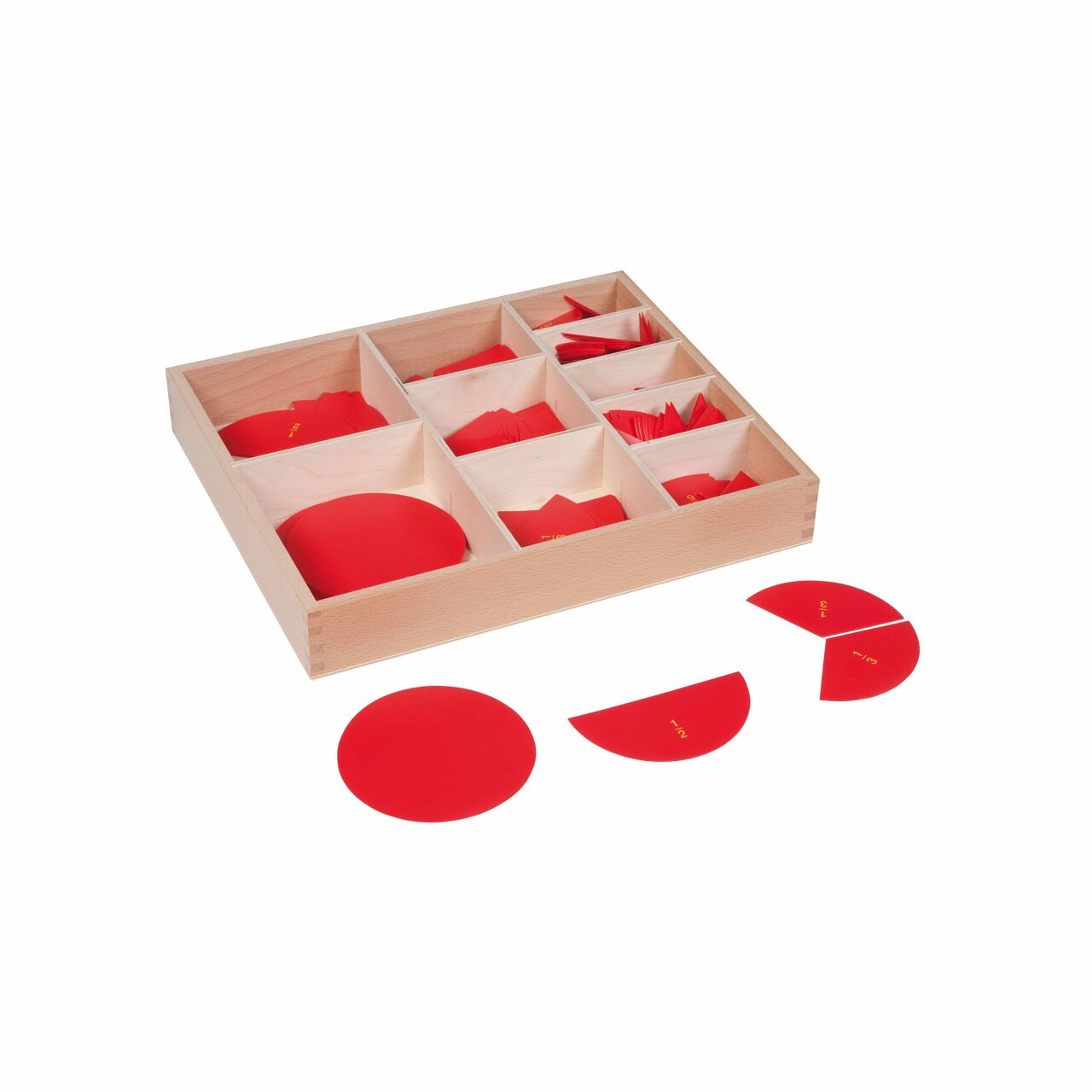
yes, you could do it... but how would you express the answer?
if you say well, 1/2 + 1/5 = 1/2 and 1/5 more, then you have basically just repeated the question
the answer has to have only one denominator; therefore,
you need those two fractions to share a name before you add them
is this possible mathematically?
absolutely! we know how to make fractions smaller by dividing both parts by the same number but we can also make them bigger by multiplying, and the fractions will still be equivalent
here we need to figure out not what factors but what multiples two numbers have in common (they had trouble with this concept, so we ended up calling it "skip count" instead of multiple)
as we will still have to simplify our answer at the end of the process, it saves time to go with the smallest common multiple (if I turn 1/2 into 50/100 and 1/5 into 20/100, I will get 70/100 and then reduce... if I turn 1/2 into 5/10 and 1/5 into 2/10, I will get 7/10 right away)
begin Lowest Common Denominator task cards
Tue - Lowest Common Denominator
- review by doing a problem together on the board
finish yesterday's set of task cards
Wed - +/- Fractions with Unlike Denominators
- review by doing a problem together on the board
do Adding and Subtracting Fractions With Unlike Denominators Task Cards
Thu - +/- Mixed Numbers with Unlike Denominators
- review by doing a problem together on the board
do Adding and Subtracting Fractions and Mixed Numbers Task Cards
week of May 11
Mon - Add to MLB
- write in adding and subtracting fractions with different denominators to the MLB
add new observations and new questions about fractions
Tue - Brain Drawings
- do Addition of Fractions with Visual Representation
add to MLB or post them up on the wall!
bonus activity:
going from 1 to 100, write out as many skip counts as you want for each number
Wed - Word Problems
- did you have any questions about fractions that we didn't answer?
do Fraction Task Cards (Addition, Subtraction, Multiplication, Division)
Thu - Quiz
- assess the class by giving Fractions Operations Review as a quiz (meaning students have to work independently and without help)
open book notes are allowed... so, are the notes they put in their MLB helpful to them? does anything need to be revised or expanded before we add the MLBs to the porfolio boxes? if so, update it now
week of May 18
Error Analysis
- To wrap up 10 busy weeks of this topic, I'll give the children Fraction Operations Error Analysis. This is a really fun way for them to assess themselves, and see if they have achieved total mastery of the skills!
I love Error Analysis and have written an entire blog post about it!

This post contains affiliate links to materials I truly use for homeschooling. Qualifying purchases provide me with revenue. Thank you for your support!





 Immersive Experience
 Immersive Experience
 Immersive Experience
 Immersive Experience


No comments:
Post a Comment