Without exception, I would recommend Jamie York's excellent book for Middle School Math.
Making Math Meaningful: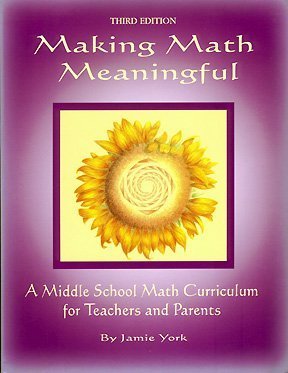
A Middle School Math Curriculum for Teachers and Parents
The process Jamie recommends requires rewriting the number multiple times, so just know that it will likely take your child one sheet of paper for each prime factorization problem.
Let's take 270,000 as our example.
270,000
300 ⋅ 900
2 ⋅ 150 ⋅ 900
2 ⋅ 50 ⋅ 3 ⋅ 900
Get the idea?
It is a lot of rewriting, but the children can easily see that all of these rows will still multiply together to equal 270,000, which they CANNOT see with a factor tree. You just keep going until the whole thing is prime numbers.
2 ⋅ 25 ⋅ 2 ⋅ 3 ⋅ 900
2 ⋅ 5 ⋅ 5 ⋅ 2 ⋅ 3 ⋅ 900
2 ⋅ 5 ⋅ 5 ⋅ 2 ⋅ 3 ⋅ 3 ⋅ 300
2 ⋅ 5 ⋅ 5 ⋅ 2 ⋅ 3 ⋅ 3 ⋅ 2 ⋅ 150
While it may be tempting for us as adults to start to put the prime factors in order from smallest to largest, don't have a child do that. They need to get an idea of where these numbers are coming from! Plus, you want to be able to go back and check their work if they get the wrong answer at the end.
2 ⋅ 5 ⋅ 5 ⋅ 2 ⋅ 3 ⋅ 3 ⋅ 2 ⋅ 6 ⋅ 25
2 ⋅ 5 ⋅ 5 ⋅ 2 ⋅ 3 ⋅ 3 ⋅ 2 ⋅ 2 ⋅ 3 ⋅ 25
2 ⋅ 5 ⋅ 5 ⋅ 2 ⋅ 3 ⋅ 3 ⋅ 2 ⋅ 2 ⋅ 3 ⋅ 5 ⋅ 5
24 ⋅ 33 ⋅ 54
When you are ready for factor trees, I love

You Can Count on Monsters: The First 100 Numbers and Their Characters
by Richard Evan Schwartz
See my past blog post on how to draw these "Monstrously" Cool Factor Trees

This post contains affiliate links to materials I truly use for homeschooling. Qualifying purchases provide me with revenue. Thank you for your support!






 Immersive Experience
 Immersive Experience
 Immersive Experience
 Immersive Experience


No comments:
Post a Comment