Some opponents to Structured Word Inquiry (SWI) argue that teaching morphology from the beginning is too complicated and children can't understand it. They argue that phonemes are more important anyway.
English spelling is actually NOT primarily about representing sounds... the primary job of spelling in English is to represent meaning... and bringing attention early on to how words are built can help children tremendously.
Any little child who creates the word hurted (hurt + ed) already understands morphemes.
So explicitly addressing that words have parts is not bringing something to them that they haven't already considered. It's not beyond their scope. Children are born expecting that the language they speak will have predictible patterns and young learners are already seeking to uncover them.
Here are some more examples:
The goblin is running because something is pitpat-ing
This is so race-y (playing with a toy car)
The backyard is so play-ful
I think he's a kind of a fix-ment man (carrying a ladder)
I'm a good sock-er (getting dressed)
I was sharpening this pencil and then I sharpened it some more and I de-sharpened it
We could just un-attach the fence
I'm blood-ing
I rule-d the school kids not to go upstairs
That's too hurts-y (walking barefoot)
I hold-ed the door open
I'm going to choose my un-favorite clothing
It was a way filling-er dinner
You are a good paying attention-er
In the morning you're not as active. In the afternoon you're outside playing more move-ily.
I wonder if Illinois is going to get ancient-ed
It look progress-ive (making progress)
He fell off the bed cuteness-ly
Those are all from Zac. A friend shared with me a word that her child created when he felt so mad he wanted to kick something. He described it as feeling kicker-ty. Love that!!!
If you write down the precious things your children say when they are learning to talk, you'll quickly see that these little phrases have something in common. And that's experimenting with morphemes!
Leah as an infant, wired for language Natalie as a toddler, experimenting with speech
I think SWI is incredibly important and gives much better results than traditional literacy instruction. If you have questions about how to bring SWI into a Montessori- or Waldorf-based homeschool or classroom environment, let's chat!!! https://waldorfcurriculum.com/new_website/contact.html
This summer a tutoring client and I are going through the Magnificent Modern Art course from Art History Kids together. It's been really interesting so far. Art History isn't something I ever really learned about, so it's new to me. And so, of course, I'm going to keep some notes here as we go along!
watch the March 26, 1989 Barn Dance episode of Reading Rainbow before doing video 3 (focus on painting) to see a violin being made
today Zac and I just happened to go to the University Museum at SIU and we saw a piece of art by DJ Kennedy which Zac said reminded him of Violin and Sheet Music! it was titled Belleville Big Band
I found a book that we can cut up which shows a head from many different perspectives (I Know a Shy Fellow Who Swallowed a Cello by Barbara Garriel) so it will be perfect to use in a Cubist collage project
"In the spring of 1907, Georges Braque visited the studio of Pablo Picasso to view Picasso's notorious work Les Demoiselles d'Avignon (1907). Impressed with what he saw, Braque quickly befriended Picasso. In the years that followed (1907-1914), Picasso and Braque were essentially inseparable."
"Picasso and Braque forged a relationship that was part intimate friendship, part rivalry, and part two-man excursion into the unknown. The two artists were constantly in each other's studio, scrutinizing each other's work while challenging, motivating, and encouraging each other."
I couldn't figure out why Braque isn't included in the "Friends and Influences from Picasso's Life" section of Picasso and Minou, but I think it must be because this book ends with the very beginning of Cubism. It focuses more on Picasso's Blue Period and Pink Period.
This post contains affiliate links to materials I truly use for homeschooling. Qualifying purchases provide me with revenue. Thank you for your support!
I got this lesson idea from the recent Word Torque conference. The inquiry is whether any word can be given the un- prefix. You set up stations and the children go around the room, doing and then undoing the given action.
Can you paint and then un-paint a picture ?
Here are some examples that would be really fun:
cut and un-cut a feather
tie and un-tie a ribbon
staple and un-staple paper
bite and un-bite cheese
sing and un-sing a song
break and un-break a cracker
squish and un-squish a marshmallow
lock and un-lock a lock
string and un-string beads
stack and un-stack blocks
When you are done, you discuss whether you can un- everything!
In Waldorf, this activity would go in Grade 2. Although Steiner did not propose this, it is now common to do a Word Families block in second grade. It is the perfect time to begin a little bit of SWI! There are things that we wait until after the nine year change to do, however, so be thoughtful about that. My colleague Virginia Berg and I have an article -- "Sparking Curiosity Through Spelling" -- in the current issue of the Research Bulletin about this.
I'm also available for consultations about how to bring SWI into the Waldorf environment. Feel free to contact me!
I think that Jazz is key for 1st and 2nd grade in Waldorf education. Last year I was working my way through reading all of the picture books I bought about Jazz, and I was really excited to find reference to the pentatonic scale!
"A blending of two musical traditions, African and European, contributed to the development of jazz. African music, with its five-tone, or pentatonic, scales and complex rhythms came to North America during the slave trade."
(from the introduction to Jazz by Walter Dean Myers)
The more I read about Jazz, the happier I felt about choosing this as a music topic to do with students early on. For one, I felt better knowing that it connects to the "pre-approved" pentatonic scale.
And, there's a more important reason. I attended the very first Racism in Waldorf Education online conference at Sunbridge last November (and it was sold out so quickly they scheduled a second one... and then a third). One of the major themes was how the Waldorf scope & sequence is inherently so Eurocentric.
We also talked about the new and complex questions about raising children who are not only not racist but are actively anti-racist.
I think that it would be a wonderful thing if we start off our children's schooling right away in First Grade with celebrating the stories and music of Black musicians.
However, to be honest, I never took the time to sort out musical selections for each of these artists, and so I never did read the books to my First Grade students. I am making this a priority for our Summer between grades 1 & 2, inspired -- in part -- by the work of Henri Matisse. Matisse often compared "the rhythm of cutting paper to the spirit of jazz music" and Using Art to Create Art: Creative Activities Using Masterpieces by Wendy Libby suggests listening to Jazz music while doing Matisse-inspired paper cutouts. Love that!
So I'm revisiting my earlier blog post
Fun with Music and copying over the Jazz picture books and adding in links to the music.
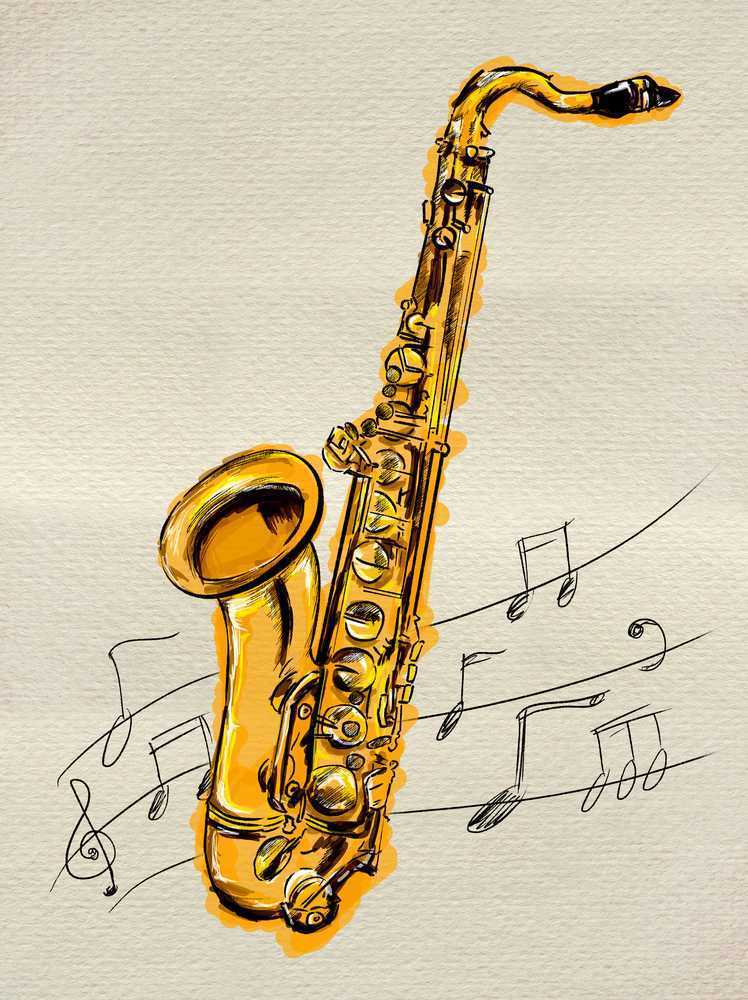
If you wanted to, you could even do "J is for Jazz" in the First Grade Capital Letters block! A saxophone looks just like a J.
TO INTRODUCE JAZZ
The 5 O'Clock Band by Troy "Trombone Shorty" Andrews
modern book, really brings to life the culture of New Orleans
good follow-ups would be:
find the city of New Orleans on a map
take a riverboat cruise listen to "When the Saints Go Marching In"
read a book about Louis Armstrong
eat some of the foods mentioned in the book (red beans and rice, andouille sausage,
collard greens, okra with tomatoes)
"Giant Steps" was composed and recorded during Coltrane's 1959 sessions for Atlantic Records, his first for the label. The original recording features Coltrane on tenor saxophone, Paul Chambers on double bass, Tommy Flanagan on piano, and Art Taylor on drums.
This post contains affiliate links to materials I truly use for homeschooling. Qualifying purchases provide me with revenue. Thank you for your support!
Waldorf curriculum conversations...
Integration and places of intersection of Waldorf ideas with traditional approaches, homeschooling, Montessori and Reggio methods, and academia. Linked to waldorfcurriculum.com. Amazon Affiliate links are included in both my blog and my website.
Follow This Blog
Simply go to follow.it and type in the address of this blog (switzerite.blogspot.com).