We are going to make a Chicken Mummy from a Cornish game hen as part of Ancient Egypt. We've already done our Papyrus Kit (not too complicated) and so it's time to move on to Mummies!
Some thoughts:
Ancient Egypt is 932 in the Dewey Decimal system. Resources are easy to find.
Charles Kovacs' book only has one Ancient Egyptian myth. But it does a nice job of explaining Egyptian culture and the flooding of the Nile river and so on. The best thing that I found from it was the explanation of the Nile river delta (like fingers at the end of an arm) and the marshy region there. It was a good lead-in to the Papyrus Kit.
Making a chicken mummy is not hard. These directions suggest soaking your Cornish game hen in rubbing alcohol to be sure it is clean and sanitized. This eliminates a later smell (aside from the smell of rubbing alcohol). The Blog "What Will We Do Today?" gives the most detailed instructions and plenty of photos for lots of crafts, including How to Mummify a Chicken.
Most important things to know are that you buy:
lots of Kosher salt (10-12 boxes)
a frozen cornish game hen
a package of Ziploc freezer bags
a bottle of rubbing alcohol
Some people add baking soda to their salt mixture. Some people add spices.
A KEY TIP:
Since you don't get to touch the mummy while it soaks in the salt, and play with it, and see what the salt is doing and how it is working, I have us "mummify cucumber slices" first. Simply slice up a cucumber and put it on a cutting board. Sprinkle with salt. Then the kids can mess with them as much as they want. The salt will soak up the liquid in the cucumber and get wet. Then change the salt. This helps your students to see the process first hand before you do it with a chicken.
Tuesday, January 31, 2012

Monday, January 23, 2012
2012 Newbery and Caldecott Announced
They tweeted it before they updated their website with a press release!
It was driving me crazy, all morning, waiting for the announcement from Dallas.
Here's the press release.
Here's the webcast if you want to watch it "live". You can in fact sign up to see the webcast live but we were too late.
If you are a Twitter person you can follow them at @ALAyma.
2012 Newbery winner
Dead End in Norvelt

2012 Newbery honors
Inside Out and Back Again

Breaking Stalin's Nose

2012 Caldecott winner
A Ball for Daisy

2012 Caldecott Honors
Blackout

Grandpa Green

Me . . . Jane

We are so excited to have an autographed copy of this year's Newbery winner! We had previously purchased it on a recommendation from the good folks at Politics and Prose, in Washington DC.
Congratulations to all the winners!
It was driving me crazy, all morning, waiting for the announcement from Dallas.
Here's the press release.
Here's the webcast if you want to watch it "live". You can in fact sign up to see the webcast live but we were too late.
If you are a Twitter person you can follow them at @ALAyma.
2012 Newbery winner
Dead End in Norvelt
2012 Newbery honors
Inside Out and Back Again
Breaking Stalin's Nose
2012 Caldecott winner
A Ball for Daisy
2012 Caldecott Honors
Blackout
Grandpa Green
Me . . . Jane
We are so excited to have an autographed copy of this year's Newbery winner! We had previously purchased it on a recommendation from the good folks at Politics and Prose, in Washington DC.
Congratulations to all the winners!
Thursday, January 19, 2012
Ancient Persia
We ended up spending this entire week on Ancient Persia instead of pushing forward into Ancient Babylon. The kids absolutely LOVE Ancient Mythologies: India, Persia, Babylon, Egypt by Charles Kovacs. We are using a red MLB since I use red for Cultural lessons (History/Geography).
After the story of Zarathustra I shared another legend which is better geared towards younger kids (1st/2nd grade) and helpful if you are homeschooling multiple ages and want to have your children together for some lessons. It is by Tomie dePaola: The Legend of the Persian Carpet.

I gave the children a box of prisms to explore after the legend. Another good follow-up would be dyeing your own wool. This is a good book to have in your Handwork arsenal as well, or in the back of your mind for 3rd grade Spinning & Weaving.
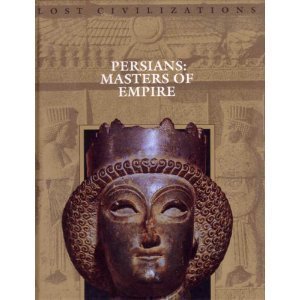
The Time-Life book series "Lost Civilizations" has nice resources for lots of ancient cultures and has a volume specifically on Persia: Persians: Masters of the Empire. It would be a good book for teacher background or to have on hand for photos of archaeological digs and artifacts that have been uncovered.
In Cooking this week we did a Persian dish: Lentil Polow with Apricots, Cherries, and Pistachios. It was delicious! You can serve the pistachios on the side for kids who have allergies.
Don't forget Strauss... Also sprach Zarathustra, Op. 30 (Thus Spoke Zarathustra or Thus Spake Zarathustra) is a tone poem by Richard Strauss, composed in 1896. A chunk of it was used as the opening theme to 2001: A Space Odyssey: and you can listen to it here. Would it be a useful thing to expose students to? I will leave that to your own discretion.
Next week... Ancient Babylon!
After the story of Zarathustra I shared another legend which is better geared towards younger kids (1st/2nd grade) and helpful if you are homeschooling multiple ages and want to have your children together for some lessons. It is by Tomie dePaola: The Legend of the Persian Carpet.
I gave the children a box of prisms to explore after the legend. Another good follow-up would be dyeing your own wool. This is a good book to have in your Handwork arsenal as well, or in the back of your mind for 3rd grade Spinning & Weaving.
The Time-Life book series "Lost Civilizations" has nice resources for lots of ancient cultures and has a volume specifically on Persia: Persians: Masters of the Empire. It would be a good book for teacher background or to have on hand for photos of archaeological digs and artifacts that have been uncovered.
In Cooking this week we did a Persian dish: Lentil Polow with Apricots, Cherries, and Pistachios. It was delicious! You can serve the pistachios on the side for kids who have allergies.
Don't forget Strauss... Also sprach Zarathustra, Op. 30 (Thus Spoke Zarathustra or Thus Spake Zarathustra) is a tone poem by Richard Strauss, composed in 1896. A chunk of it was used as the opening theme to 2001: A Space Odyssey: and you can listen to it here. Would it be a useful thing to expose students to? I will leave that to your own discretion.
Next week... Ancient Babylon!
Wednesday, January 4, 2012
Felt Flower Tutorial
Link to share: http://clasheen.wordpress.com/2011/12/24/felt-flower-tutorial-at-last/
So much fun! We are trying this on Thursday. I looked in the Winter book for inspiration and found that they suggested the wool process for this time of year.


So much fun! We are trying this on Thursday. I looked in the Winter book for inspiration and found that they suggested the wool process for this time of year.
Wednesday, December 21, 2011
I Have a Dream
We are spending the first two weeks of January on Ancient India. The second week will focus mainly on Buddhism and then I realized: that following Monday is Dr. Martin Luther King Day! So on Friday, January 13 we will talk about Dr. King and tie it in. He was also a person of peace.
There is a gorgeous picture book of his most famous speech:


Sit-In: How Four Friends Stood Up by Sitting Down is another excellent choice for this day and a good time for us to read this nominee for the MD Black-Eyed Susan Award.

Another amazing resource (but more suitable for oldest children) is The Children's March , a truly powerful film about the Civil Rights Movement.

There is a gorgeous picture book of his most famous speech:
Sit-In: How Four Friends Stood Up by Sitting Down
is another excellent choice for this day and a good time for us to read this nominee for the MD Black-Eyed Susan Award.Another amazing resource (but more suitable for oldest children) is The Children's March
, a truly powerful film about the Civil Rights Movement.
Buddhism
I am currently writing and planning my Ancient Mythologies unit using Charles Kovacs' excellent book. I was searching online for children's books on Buddhism, to follow one of the legends from India, and found this great Listmania! List on Buddhism for Kids . I would also like to add these titles by Thich Nhat Hanh:


The teacher next door had her students all make meditation beads from polymer clay and they were gorgeous; I will have to ask her how they did it. In Montessori you always have a Peace table in the classroom, so we already have a Buddha statue set up with meditation beads. We also all have yoga mats at school so that we can practice yoga.
Fly Free! , a nominee for the Maryland Black-Eyed Susan award this year, is also a great choice for this topic.

And, luckily, we have a classmate who just returned from visiting her family in India who can come in and talk about what it is like to live there!
We are doing India, Persia, Babylon, and Egypt through Mythology. (We've already covered Greek Mythology -- began the year with it.) Then Greece and Rome transition into History, as is the Waldorf way.
. I would also like to add these titles by Thich Nhat Hanh:The teacher next door had her students all make meditation beads from polymer clay and they were gorgeous; I will have to ask her how they did it. In Montessori you always have a Peace table in the classroom, so we already have a Buddha statue set up with meditation beads. We also all have yoga mats at school so that we can practice yoga.
Fly Free!
, a nominee for the Maryland Black-Eyed Susan award this year, is also a great choice for this topic.And, luckily, we have a classmate who just returned from visiting her family in India who can come in and talk about what it is like to live there!
We are doing India, Persia, Babylon, and Egypt through Mythology. (We've already covered Greek Mythology -- began the year with it.) Then Greece and Rome transition into History, as is the Waldorf way.
Sunday, December 4, 2011
Ken Robinson & Maria Montessori
For one of my classes we had to watch this TED lecture by Ken Robinson: Bring on the Learning Revolution. I thought it was magnificent and would recommend this short video to everyone. Although not specifically about Waldorf education, many of the quotes are strikingly relevant:
"Education, in a way, dislocates many people from their talents."
"Human resources, like natural resources, are often buried deep... you have to create circumstances where they show themselves."
"A 3 year old is not half a 6 year old."
"We have built our education system on the model of fast food... where everything is standardized... it's impoverishing our spirits and our energies as much as fast food is depleting our physical bodies."
"Human talent is tremendously diverse."
"Human flourishing is not a mechanical process, it's an organic process."
"The reason so many people are opting out of education is because it doesn't feed their spirit."
Speaking of spirit, I was writing a paper for another class and looking up some quotes from Maria Montessori. I'm always struck by how much she talks about the spiritual world -- quite similar to Rudolf Steiner -- but those quotes aren't often shared by supporters of her method who have instead placed all their chips on the Early Academics portion of her philosophy. Here is some food for thought from Montessori:
on spirit
“Our goal is not so much the imparting of knowledge as the unveiling and developing of spiritual energy.”
- The Child in the Family :: The Clio Montessori Series, 1996 :: p. 63
“During this early period, education must be understood as a help to the unfolding of the child’s inborn psychic powers. This means that we cannot use the orthodox methods of teaching...”
- The Absorbent Mind :: Clio Press Limited, 1994 :: p. 4
“The child is truly a miraculous being, and this should be felt deeply by the educator.”
- The Absorbent Mind :: Clio Press Limited, 1994 :: p. 121
on imitation
”A child is an eager observer and is particularly attracted by the actions of the adults and wants to imitate them. In this regard an adult can have a kind of mission. He can be an inspiration for the child’s actions, a kind of open book wherein a child can learn how to direct his own movements. But an adult, if he is to afford proper guidance, must always be calm and act slowly so that the child who is watching him can clearly see his actions in all their particulars.”
- The Secret of Childhood :: Fides Publishers, 1966 :: p. 93
on toys
“But in those countries where the toy making industry is less advanced, you will find children with quite different tastes. They are also calmer, more sensible and happy. Their one idea is to take part in the activities going on about them.”
- The Absorbent Mind :: Clio Press Limited, 1994 :: p. 154
"Education, in a way, dislocates many people from their talents."
"Human resources, like natural resources, are often buried deep... you have to create circumstances where they show themselves."
"A 3 year old is not half a 6 year old."
"We have built our education system on the model of fast food... where everything is standardized... it's impoverishing our spirits and our energies as much as fast food is depleting our physical bodies."
"Human talent is tremendously diverse."
"Human flourishing is not a mechanical process, it's an organic process."
"The reason so many people are opting out of education is because it doesn't feed their spirit."
Speaking of spirit, I was writing a paper for another class and looking up some quotes from Maria Montessori. I'm always struck by how much she talks about the spiritual world -- quite similar to Rudolf Steiner -- but those quotes aren't often shared by supporters of her method who have instead placed all their chips on the Early Academics portion of her philosophy. Here is some food for thought from Montessori:
on spirit
“Our goal is not so much the imparting of knowledge as the unveiling and developing of spiritual energy.”
- The Child in the Family :: The Clio Montessori Series, 1996 :: p. 63
“During this early period, education must be understood as a help to the unfolding of the child’s inborn psychic powers. This means that we cannot use the orthodox methods of teaching...”
- The Absorbent Mind :: Clio Press Limited, 1994 :: p. 4
“The child is truly a miraculous being, and this should be felt deeply by the educator.”
- The Absorbent Mind :: Clio Press Limited, 1994 :: p. 121
on imitation
”A child is an eager observer and is particularly attracted by the actions of the adults and wants to imitate them. In this regard an adult can have a kind of mission. He can be an inspiration for the child’s actions, a kind of open book wherein a child can learn how to direct his own movements. But an adult, if he is to afford proper guidance, must always be calm and act slowly so that the child who is watching him can clearly see his actions in all their particulars.”
- The Secret of Childhood :: Fides Publishers, 1966 :: p. 93
on toys
“But in those countries where the toy making industry is less advanced, you will find children with quite different tastes. They are also calmer, more sensible and happy. Their one idea is to take part in the activities going on about them.”
- The Absorbent Mind :: Clio Press Limited, 1994 :: p. 154
Subscribe to:
Posts (Atom)


 Immersive Experience
 Immersive Experience
 Immersive Experience
 Immersive Experience


