Showing posts sorted by relevance for query fish printing. Sort by date Show all posts

Wednesday, February 13, 2008

Volcano & Fish Printing Notes

Our volcano model of stacked nesting mixing bowls (upside down) with a small cup on top (right side up) covered in tin foil and placed on a cookie sheet with wooden trees around worked beautifully. Here is the recipe:

Pour into vessel
1/4 cup water
1/4 cup white vinegar
a few drops clear dishwashing liquid
a few drops red food coloring

When it is time for the "explosion," pour in 1 T baking soda very quickly.


The children in her class were very impressed with the volcano model and enjoyed Natalie's presentation quite a bit. The fish printing also went over big. This was a new project for me and here are the notes:

1. thin paint (or calligraphy ink) works best

2. thin paper such as newsprint (or rice paper) works best

3. a foam brush works better than a foam roller for quickly covering the fish but still preserving detail and not overpowering it with paint. If your fish has too much paint on it do two prints and keep the second

4. having the children choose which hand will hold the paper steady on the fish and which will slowly and carefully press all the parts of the fish before they lay their paper on the fish is a good idea

5. so is having them write their name on the back of the paper first

6. rubber fish are a fantastic invention (otherwise you have to use EXTREMELY fresh dead fish which can be hard to get hold of)

7. two rubber fish is plenty. Set up two fish printing stations instead of having to pick up wet painty/inky fish with your hands when the child decides she wants to do the other one

8. set the fish on a cafeteria tray for easy cleanup


Acorn Naturalists is a good source for replica fish as well as other goodies for the naturalist in us all; they also sell a complete Fish Printing Starter Kit.


UPDATE 06/02/2017: Acorn Naturalists is no longer the supplier I recommend... I get my Gyotaku Fish Printing Replicas from Dick Blick.

Thursday, June 8, 2017

Summer Camp Planning - Paleozoic IV - Devonian

Please note, if you have arrived at this post out of chronological order, that this is part of my overall From Lava to Life summer camp planning.

At the bottom of the post I've updated with the actual lesson notes after teaching it... if you find my brainstorm-jumble frustrating, I hope this added information will help! Please feel free to contact me with any questions!


Already Owned:


Bought for Camp:


Planning:

    read Devonian book from

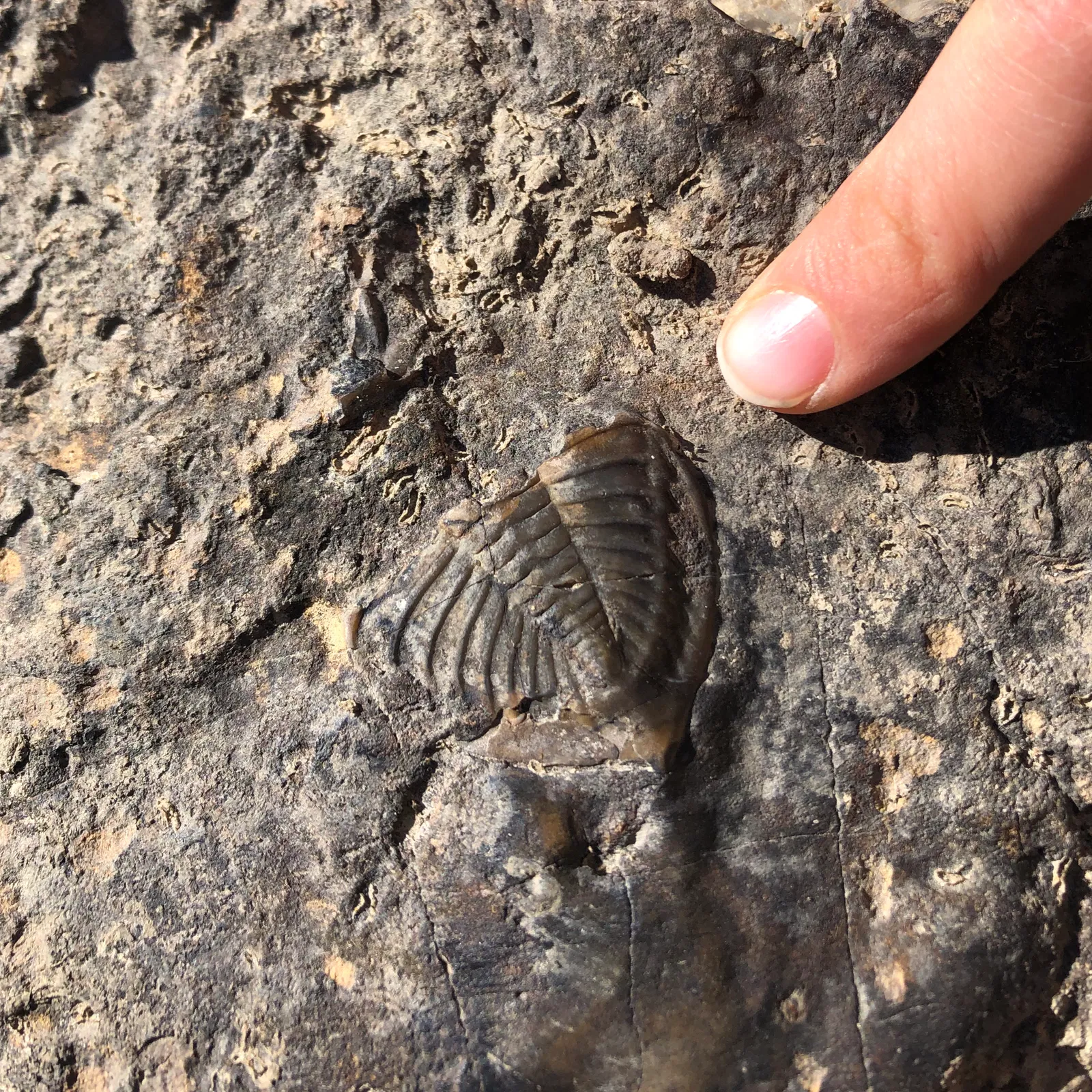
    fossils from collection: coral, orthocera, crinoid

    fish collage aluminum foil Age of Fishes for museum art

    individual fish printing for calendar art

    The Devonian Period: The Age of Fish. The Devonian Period of the Paleozoic Era lasted from 417 million years ago to 354 million years ago. It is named for Devon, England where the old red sandstone of the Devonian was first studied.

    quilling those curly things - ammonites

    prep Friday morning:

    • set out Devonian Period book, fossils, Why Frogs are Wet
    • set out glue dots and organize each child's calendar artwork sequentially so it can be glued in today
    • set up large bin of water, plastic bag for Waseca Biomes demonstration of fish fins
    • review past fish printing notes from blog
    • set up fish printing station - large cafeteria tray, foam brushes, Stockmar primary blue paint, large men's dress shirt for smock (button up the back, roll up sleeves), collection of rubber fish, newsprint
    • set out yesterday's trilobite artwork, chalk pastels, clear hairspray


Implementation:

FRIDAY AM - color trilobites with chalk pastels, hang trilobites out on the clothesline and spray with clear hairspray, read Why Frogs are Wet (the 1968 version), glue dot finished arwork into calendars, work on Ordovician and Silurian posters and hang them up, pin centipede and spider onto curtain near Silurian poster, read Devonian Period book and look at fossils, fish printing (most popular choices were bass, flounder, and piranha), hang fish prints out on the clothesline to dry


Reflection:

Trilobites turned out awesome... better than I had even hoped!

I think reading the general Frogs book before the Devonian Period book worked well. It gives kids a better image of the process from fish to amphibian, and how amphibians are still so tied to the water. I see when linking to Amazon that the new version of this book has made some changes to the text, so I suggest getting the original.


This post contains affiliate links to the materials I actually use for homeschooling. I hope you find them helpful. Thank you for your support!

Tuesday, June 13, 2023

Fish Tales

On Friday we have a camp group taking a field trip to the Little Grassy Fish Hatchery so we will learn some facts about fish beforehand and do fish printing. I chose rubber fish (from Dick Blick) which are found in our area:

Bass
Bluegill
Trout

My camp counselors have been thoroughly trained that all lessons require stories to introduce them, so one of my staff came up to me and asked me for recommendations of books about fish, ie. something they could read to introduce the fish printing activity. And I couldn't think of ANY off hand!

So now I'm on a mission to find books about fish... not general books but ones where you actually learn something about a particular species. If you know of any, please share!

According to the website, "Black Crappie, Largemouth Bass, Redear Sunfish, Bluegill, Blue Catfish, and Channel Catfish are currently being hatched and/or reared at Little Grassy Fish Hatchery."


I'd love to find a channel catfish book, since we will see a lot at the hatchery, but I haven't found one yet with good writing. I've already ruled out the poorly-written books Carl's Fish Farm (read on YouTube), Calvin the Catfish, and Facts About the Blue Catfish.

I wish there were more books like Pagoo (hermit crab) and Minn of the Mississippi (snapping turtle), both by Holling Clancy Holling!


P.S. Books with fish poems can be useful. I like in the swim by Douglas Florian and chapter 3, "The Aquarium," of Ogden Nash's Zoo.


P.P.S. I did find two fun & interesting general books about fish. They are Fish Everywhere by Britta Teckentrup and Freaky, Funky Fish: Odd Facts About Fascinating Fish by Debra Kempf Shumaker (and she has a companion book called Peculiar Primates: Fun Facts About These Curious Creatures).


This post contains affiliate links to materials I truly use for homeschooling. Qualifying purchases provide me with revenue. Thank you for your support!

Sunday, July 15, 2007

Fish Printing

Fish printing is a little bit gross but the results are very beautiful. If you have an older child who you are also homeschooling, you might want to get into the history of fish printing with these very nice lesson plans from the Kennedy Center. For example, I didn't know until I went to search for it, that Gyotaku (gyo=fish, taku=rubbing) was invented in the early 1800's in Japan by the fishermen to record their catch. They could document the size and type of fish caught and still take it back to be sold or eaten.

I also found, while searching, that the Printmaking Council of New Jersey will come to your house and help you throw a Japanese fish printing-themed birthday party. They also offer papermaking and soapmaking (melt and pour). So, if you live in New Jersey, I guess you lucked out!!!

Sunday, June 12, 2011

Gyotaku Fish Printing

I'm so excited... today at last I am buying rubber fish for fish printing! This has been a dream of mine for several years.

"Cast from real fish, these rubber replicas are life size, ranging from 6" (starfish) to 12" long (trout), and are flat on one side."

You can buy them in sets (4 piece fish set, 9 piece fish set) or mix-and-match to create your own perfect combination. I'm getting a set of six fish: angel fish, bass, blue gill, flounder, perch, walleye.

Thursday, June 8, 2017

Summer Camp Planning - Paleozoic II - Ordovician

Please note, if you have arrived at this post out of chronological order, that this is part of my overall From Lava to Life summer camp planning.

At the bottom of the post I've updated with the actual lesson notes after teaching it... if you find my brainstorm-jumble frustrating, I hope this added information will help! Please feel free to contact me with any questions!


Already Owned:


Bought for Camp:


Planning:

    Ordovician Period Information and Facts - National Geographic

    read Ordovician book from

    fossil from collection: bryozoan

    the time period that took place 488 to 443 million years ago

    "During the Ordovician period, part of the Paleozoic era, a rich variety of marine life flourished in the vast seas and the first primitive plants began to appear on land—before the second largest mass extinction of all time ended the period."

    good time to hit plate tectonics, since the first day is already pretty full

    nautiloids

    fish becoming more widespread - fish printing now or in the Age of Fishes? - I do have the rubber starfish which we can print

    horseshoe crabs!

    these animals are so cool but intimidating to draw

    "There is also evidence that the first primitive plants began to appear on the previously barren land. These first steps toward life on land were cut short by the freezing conditions that gripped the planet toward the end of the Ordovician. This resulted in the second largest mass extinction of all time, wiping out at least half of all marine animal species about 443 million years ago."

    maybe a pie chart of how much of life died? or early plants as the art? instead of trying to draw horseshoe crabs

    get a fish for the classroom

    webbed hand experiment - plastic bag - aquarium

    prep Tuesday night:

    • November artwork - trilobites - india ink, glue bottles with good lids, pencil, examples of trilobites, chalk pastels (tomorrow)
    • set out Ordovician book and fossil
    • prepare plate tectonics lesson, pieces to cut and move, This Dynamic Planet map
    • gather fish printing supplies - starfish, liquid watercolors, foam brush, newsprint
    • gather supplies for second mass extinction pie chart


Implementation:

WEDNESDAY PM - read Ordovician Period book


Reflection:


This post contains affiliate links to the materials I actually use for homeschooling. I hope you find them helpful. Thank you for your support!

Friday, April 23, 2021

Week of April 19

Some quick notes & links about our Outdoor Classroom activities this week!

Current Main Lesson Blocks:
Jataka Tales
Ancient Mythology: Egypt


Monday, April 19


Tuesday, April 20

  • School Meeting / Community Building: sort out the very complicated rules for "Facial Hair," a spunky variation on tag which involves a salon, a barber, survivors, and a mechanic (they used the practice we've adopted for our Philosophy discussions of having the child who is talking call on the next child to speak -- instead of me moderating the discussion -- because only the person who's talking knows when he/she is truly finished and is ready for someone else to take a turn)
  • Early Childhood: recall tropical foods from yesterday and look at their seeds (mango, papaya), start an avocado tree from an avocado seed, start a pineapple plant from a pineapple top
  • Nature: read Yucky Worms by Vivian French, look at Giant Gippsland Earthworm in Actual Size by Steve Jenkins (and my lifesize knitted version), revisit and tweak our vermicomposting bin setup, share information about the invasive species of worm which is being found in Southern Illinois and how it can be identified, look at the large earthworm we collected on Friday and identify it positively (it is a jumping worm), report to the University of Illinois Extension Forester

    Jumping worms spreading throughout Illinois, confirmed in southern counties
    WSIL - April 15, 2021

    The "crazy worms" remaking forests aren't your friendly neighborhood garden worms. Then again, those aren't so great either.
    The Atlantic - January 23, 2020

    Invasive Species Bulletin - Jumping Worms (PDF)
    Cornell University Cooperative Extension

    Invasive Species Bulletin - Jumping Worms (PDF)
    University of Illinois Extension

    Knitting Pattern - Giant Gippsland Earthworm (PDF)

  • Analogies / Ratios: explain analogies and their relationship to ratios, write down the recipe for a Mustard Extraction, measure the mass of the ground mustard which I had on hand and decide whether the recipe needed to be scaled and if so how to keep the proportion, prepare and do the Mustard Extraction to see what earthworms are living in our soil

    the cocoons of the jumping worm are black and tiny; in fact, they are the size of a mustard seed (show some whole mustard seeds as well)

    recall that yesterday we went on a hike at Chautauqua Bottoms and I had each child line up and brush their boots before and after strictly out of habit BUT if there was a jumping worm living in our yard and we inadvertently were carrying the cocoons on our boots, we truly did prevent the spread of an invasive species to the Wildflower Glade!

    Our Recommendations for How to Do a Mustard Extraction

    set up a hula hoop to be a frame

    spread straw around the hula hoop for the children to sit upon

    if your ground is very dry and cracked, begin by pouring a liter of clean water in the area of your extraction

    add 10 grams of ground mustard to 1 liter of water and shake vigorously to combine, then pour the mixture very slowly in the area of your extraction (inside the hula hoop) and wait five minutes

    repeat the previous step

    count the number of worms; the mustard will irritate their skin, but not harm them, and they will come up out of the soil to escape it

  • LE: do first step of DIY Scratch Art the Easy Way for the eyes in the pitch-black cave

    9 x 12 inch Bristol, oil pastels, black acrylic paint, foam brush, stylus

    it works best to cover the paper smoothly with only one layer of black paint (resisting the temptation to go back over thin spots while they are still wet, as the brush will only pick up the paint) and then do a second layer of black after the first has dried

  • UE: make watercolor resist map of Egypt (use oil pastels for the desert and watercolor paint for the Mediterranean Sea, Red Sea, and Nile River and Delta), recall "Seth - God of Deserts, Storms, War, and Chaos" and add to MLB, hear "Nephthys and the Four Sons of Horus - Goddess of the Dead and Guardians of the Dead" and look at picture of canopic jars


Wednesday, April 21

  • Nature: read A Log's Life by Wendy Pfeffer while sitting outside right by a neighbor's large oak tree (it has a lot of impact that way!) and discuss how there are many more decomposers besides earthworms
  • EC: read Seeds Move! by Robin Page, drop a coconut in water to see if it floats, crack it open using the Bang Method (sadly our coconut cracked open too easily because it was rotten... I got 4 more fresh coconuts for tomorrow and they are sitting overnight in the freezer)

    How to Open a Coconut: 4 Easy Methods

    SWI for the word < coconut >
    yes, it is coco + nut
    do you know what < coco > signifies?

  • Gardening Projects: explain what peat is (review of the Carboniferous Period, fern forests, photosynthesis, and coal) and demonstrate how to rehydrate Jiffy peat pellets for our seed starting next week
  • LE: complete second step in Scratch Art and add to MLB (two children put it on the front cover and two put it inside the front cover), write rough draft of summary for "The Monkday and the Crocodile"
  • UE: make decisions about a shift to our daily work schedule, finish adding Seth to MLB, put map of Egypt in MLB using foam squares, set up cucumbers in salt experiment and review the process of mummification, choose our mummification projects for this year (individual apples and a group fish), use jeweler's loupes to look at tiny details in the illustrations in Buried Blueprints: Maps and Sketches of Lost Worlds and Mysterious Places by Albert Lorenz (specifically, the page showing the construction of a necropolis for Ramses II)
  • End of the Day: today at the end of the day the older children were getting lessons on Sudoku and beginning to solve puzzles... and everyone got an Audubon postcard to take home!


Thursday, April 22

  • Behind the Scenes: order more red wigglers for our vermicomposting system, order red harvester ants and replacement sand for ant farm
  • EC: rehydrate remaining Jilly peat pellets in a large bucket of warm water, read Seeds and More Seeds by Millicent E. Selsam, find a dandelion seed on a child's boot and pop it in one of our newly expanded peat pellets (if you plant a dandelion seed, will it grow into a dandelion plant?), look at seeds in a bell pepper, pass around sugar snap peas for dissection, find the peas neatly lined up inside as well as distinguish between the blossom end and stem end, do "Five Little Peas" fingerplay from A Child's Seasonal Treasury by Betty Jones
  • Practical Life / SWI: revisit the word < coconut > and find the little face on your team's coconut

    today the children worked in partners since I had so many coconuts this time...
    one of our four today was not good for eating, so always buy extra!

    we were excited to try pre-scored ("Groovy" brand) coconuts and they already come in a little mesh bag, perfect for the Bang Method

    frozen overnight, as recommended in our instructions, we found that a coconut breaks quite well (3 or 4 tries, enough work to be satisfying but not so much as to make everyone miserable) and we didn't have to drain the coconut liquid first as a bonus, because it was frozen!

    enjoy canned coconut milk in Dixie cups with little paper umbrellas, and taste our fresh coconut meat

    the funniest moment of the afternoon was when one boy excitedly took a bite and then screwed up his face and said, "Wait, I forgot I don't like coconut!"

  • Ratios / Equivalent Fractions: revisit ratios and consider their relationship to finding equivalent fractions, review recipe for Oobleck (2 parts cornstarch : 1 part water), practice scaling the recipe up and down using both standard and non-standard units of measurement, measure the volume of our package of cornstarch

    hmmmmmmm....

    our unit of measurement was a beaten up pan from the mud kitchen

    "What's half of 1 1/2 old beaten up pans?"

    an 8 year old promptly calls out, "3/4!"

    yes, that's correct!

    mix up and play with Oobleck contentedly

    "somehow liquid Oobleck can crack"

    "it solidized on your hand because you pushed it"

    "the pressure was morphing it"

    "if you throw it, it liquidizes in mid-air"

    "you gotta keep this moving. there has to be friction"

    "my ratio is back!" (he was adding more water after it dried out)

  • Nature: notice bees going into and out of the bee swarm trap and contact the beekeeper
  • Mistake of the Day: viviparous (I contacted Doug Harper of etymonline yesterday to tell him that I found a word that he left out of his dictionary... and he kindly pointed out that I was wrong... it didn't come up because I had misspelled it when I typed it in!!!!)
  • Script: emblem < n >

    n, m, r, k, h, b, p

  • LE: decide to wait on fish printing until tomorrow so that the youngest children can participate
  • UE: recall the Four Sons of Horus and choose which canopic jar figure each student would like to make, look at Pyramid by David Macaulay, hear "Anubis, God of Mummification" and start Apple Mummies (PDF) in quart ziploc bags

    next week we will begin the group project of mummifying a fish

    I recommend the 1983 Sesame Street special "Don't Eat the Pictures" to go along with the idea of having your heart weighed against a feather to see which is lighter... fascinating! I have it on VHS cassette but you can also see it on Youtube, although the picture is not of a very high quality. To skip to the weighing, start at 44:00.


Friday, April 23

  • EC: fun with Oobleck (2 containers of cornstarch), participate in fish printing, read More Potatoes! by Millicent E. Selsam and plan new plant-starting experiments for next week (celery, sweet potato)
  • Art / Fish Printing: we did fish printing this morning with rubber fish, acrylic ink (Turqoise and Silver Pearl), a foam brush, and newsprint

    for Lower Elementary, this was a piece of artwork for the MLB to accompany the story of "The Deceitful Heron"

    for Upper Elementary, this was a piece of artwork for the MLB to accompany notes about our fish mummification project

  • LE / Art / Photography: arrange and photograph still life for Monday's painting of figs, add "The Monkey and the Crocodile" to MLB
  • UE / Art / Clay: make canopic jar lids using self hardening clay, hear "Serqet, Goddess of Scorpions"

    How to Make Canopic Jars - Ancient Egypt Craft for Kids
    imagininghistory.co.uk

    Imsety the human protects the liver

    Duamutef the jackal protects the stomach

    Hapi the baboon protects the lungs

    Qebehsenuef the falcon protects the intestines

    In my cupboard I had some Greek wildflower & thyme honey from the International Grocery Store... and it is the perfect shape for a canopic jar! Happily, they still carry the brand so I bought three more and will transfer all the honey to a different container and wash out the jars for our project. Our plan is to paint the front of each jar white and add hieroglyphs, but to leave the glass clear on the back so that you can turn it around and see which organ it contains (we will draw pictures of the organs and paste them inside the jars facing outward).

  • Board Games: at the end of the day, the Lower Elementary students played Who Pooped? A Matching and Memory Game and the Upper Elementary students played Passing Through the Netherworld: The Meaning and Play of Senet, an Ancient Egyptian Funerary Game


This post contains affiliate links to materials I truly use for homeschooling. Qualifying purchases provide me with revenue. Thank you for your support!