Friday, April 4, 2025

Fishing Trip

We have been having so much fun visiting a different local farm each month (my spin on the classic Waldorf grade 3 Farming block). For March, we dove (no pun intended) into Illinois aquaculture!

Here are some pictures from our morning at Little Grassy Fish Hatchery.

a tour of the facility

we learn about the process for raising channel catfish

time to go fishing in the stock ponds!

the first fish!

everything was catch and release

we finish with picnic lunches outside on a beautiful day


A great follow up to this field trip would be Minn of the Mississippi by Holling Clancy Holling, which we will read after we finish our current lunchtime read aloud story, Cheaper by the Dozen!


This post contains affiliate links to materials I truly use for homeschooling. Qualifying purchases provide me with revenue. Thank you for your support!

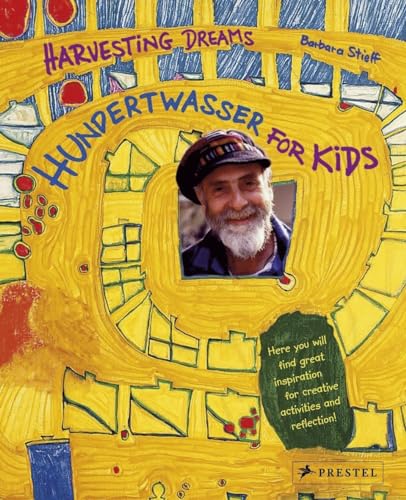
Art History - Friedensreich Hundertwasser

In my Art History 2024-2025 blog post, I decided that April would be Friedensreich Hundertwasser.

Here are some resources and planning notes for this incredible artist!


Friedensreich Hundertwasser
1928 - 2000


also

Art History Kids - April 2024

    The Five Skins, p.23

    1st skin, p.22 - Your Body
    Self portrait

    2nd skin, pp.24-25 - Your Clothes
    Dress up, be a fashion designer, clothing collage, make paper dolls

    3rd skin, pp.26-27 - Your House
    Blocks, cardboard box "window rights"

    4th skin, p.28 - Your Identity
    Design a stamp

    5th skin, p.29 - Your Planet
    Create a poster with an environmental message


Art History Kids - April 2019

    Week 1 Project
    1st skin, p.11

    Week 2 Project
    2nd skin, pp.6-7

    Week 3 Project
    3rd skin, p.8

    Week 4 Project
    4th skin, pp.2-4

    Week 5 Project
    5th skin, p.6


https://hundertwasser.com/en

All Species Puppet Parade 2022 - Earth Day

Carbondale "At the Table" Dinner & Dialogue Series - Earth Month

future field trip possibility - SIU's Green Roof!


I recommend joining Lotus Stewart's Art History Kids website (The Studio) and getting access to her past lesson plans. I like her work, and find it's really helpful to have so many ideas that I can use as a jumping off point.


week of Apr 7 / Skin 1

Tue

    divide children into small groups

    give each group five examples of Hundertwasser's work
    (examples from coloring book as well as Apr 2024, pp.9-18)

    have each group make a Word Cloud of their conversation
    (Apr 2019, week 2, p.1)

    bring groups together and compare the word clouds

    "Let's Meet the Artist" discussion
    (Apr 2019, week 2, p.2)

    nature walk to Chautauqua Bottoms to look at the wildflowers


Thu


week of Apr 14 / Skin 2

Mon

    do 2nd skin activity - Paper Dolls
    (Apr 2019, week 2, pp.6-7)

    OR make and decorate Jumping Jacks (PDF)

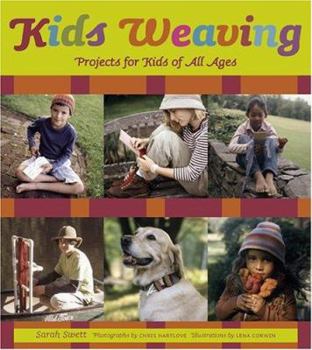
      next time I will do the "Dancing Map Dolls" from Kids Weaving by Sarah Swett for 2nd skin instead


week of Apr 21 / Skin 3

Mon


Tue

    Earth Day

    AM

    read The Boy Who Grew a Forest: The True Story of Jadav Payeng by Sophia Gholz

    "Quote to Ponder" discussion
    (Apr 2019, week 3, p.2)

    "Earth Day" discussion
    (Apr 2019, week 4, p.3)

    recall our Cob Bread Oven and building with recycled objects
    (Apr 2019, week 3, p.6)

    look at dot matrix paper, tear it at the perforations, take the strips off the edges, add it to our school papers so that it will not be wasted


    PM

    do activities from Earth Day SWI packet from Fiona Hamilton
    pp.1, 5, 6


week of Apr 28 / Skin 4

Tue


week of May 5 / Skin 5

Tue


In addition to the Art History lesson for my regular school group (age 7-13), I'll have a Monday afternoon Art History class for early childhood (age 5-7). I think the "littles" will love Hundertwasser!

    week 1 - self portrait
    week 2 - paper dolls
    week 3 - cardboard box "window rights"
    week 4 - stamp design

    there are also ideas for small children in this activity book:


This post contains affiliate links to materials I truly use for homeschooling. Qualifying purchases provide me with revenue. Thank you for your support!

Thursday, April 3, 2025

Stinging Nettle Special Guest

The two oldest students had a Geometry block in March instead of a Measurement block (they calculated the area of our circular garden for us!) but they still adopted a plant. They will be caring for our patch of Stinging Nettle, planted in May 2021 as part of our Botany: Herbal Medicines block. This is food, medicine, and also a fiber plant!


Many thanks to our special guest, Emrys, for coming in to the classroom -- on Sep 10, 2024 -- to explain how stinging nettle can be harvested for fiber.

Here are my notes from that presentation:


Emrys gave a great presentation on how to process stinging nettle for fiber!

They and I first went out to my garden and picked some examples of the plant:  one stalk that was juicy, fresh & green (and sting-y) and one stalk that was dried out with empty seed heads on it.  They also brought us a huge armful of dried stalks that stood through the winter in their garden before They cut them down.  These were ready to use!

Emrys put the green stalk on a towel on the floor and let the children get as close as they wanted to it.  Some touched it.  They explained that the stem as well as the underside and the top of the leaf can sting you.  It can sting you even when it's dried, if the tiny needles are still on it.  They showed the children where the dried stalk had its flower and seeds (in catkins).  The seeds had already fallen off.

They explained that you can use the fiber right away (strip all the leaves and all the spikes off the stem) and make cordage with it.  Stinging nettle has a woody core.  The fiber is around the outside of the core.  BUT if you want a soft fiber, like something that you would want close to your skin, you have to rett the stalks.  Otherwise you're basically using rope as a clothing fiber!

You can water rett it but They said the smell is awful.  They didn't recommend it... but in that method you cut the green stalks and submerge them under water for a week.  The microbes loosen the bonds in the bundles of fibers so that the more woody layers release more easily, and the softest finest fiber is freed up for you to use.

Preferably, do the long slow gentle process of simply leaving the stinging nettle to stand all winter in your garden!  The microbes will again do their work, but there's no smell.  Simply let the stalks stay on their roots in the place where they grew.  Before the new growth comes back, cut the old stalks down.  They just used scissors.  They said to keep an eye on the weather but you would cut it late Feb / early Mar.  I made a mental note that it sounds like it's around the time that the sap stops running in the sugar maple trees.

The finer fiber you can get in the spring is the fiber you want by your skin.

Take the dried stalks and break them open (like you would with flax).  We just used our hands to do this.  The kids loved it.  Emrys also said you can put the stalks in a bag on the floor and dance vigorously on them!  Then we played with it and pulled the large pieces of woody material off until we found the loose delicate fibers inside.  They are very fine, like spider silk.  Once you have a bundle of fluffy fiber free of debris, card it!  

From there, you would spin it!  We are going to ask our next spinning wheel special guest if he/she would be willing to try some on the wheel.  The children were very proud of the little pile of soft fluffy fibers that they made.

It was incredible that such a hostile plant has such coziness hidden inside it.


Tuesday, April 1, 2025

Growing Notes: Cotton, Flax, Indigo

Today is Tuesday, April 1st and we are putting something in the ground!

For convenience, I'm going to keep the growing notes for all three plants in one blog post, but the flax goes in first.

The children have worked hard on their plant research for several days.

And many thanks to LR and SW -- the Geometry folks -- for measuring the diameter and calculating the area of our circular garden bed! We are reusing the area fenced off for our Three Sisters Garden last year.


Flax

seeds donated by Ms. Bridget

direct sown (dusted with flour first) on April 1

Apr 28 - sketch seedlings, weed garden bed

Bridget also sent us some lovely examples of her flax fiber from last year


Indigo

seeds purchased from Hudson Valley Seed Company on March 25

    Japanese Indigo (Persicaria tinctoria)

direct sown on April 28


Cotton

seeds harvested from whole plants brought in last year by Ms. Grace

direct sown on April 28


Sep 25, 2024

Mar 24, 2025


UPDATES May 29, 2025

The flax is high and gloriously happy!

We did an experiment with the indigo seeds, where we turned over the soil in half the garden bed but left the other half no-till. We learned that indigo seeds grow best in turned-over soil. They germinated and are growing well!

The cotton did nothing. I will have to learn more about how to grow cotton. Perhaps this is one of those seeds that needs to be nicked with a razor.