-
Grade 1 Archetypal Professions block
- Circle Time - Opening Verse, sing ABC's, play Go Go Gorilla, do 2 times table beanbag game, play Blink!, solve a story problem with the math gnomes and gems
- finsh blue MLB - number pages, write table of contents, decorate front and back covers
- begin new block
- look at the Tools of the Trade for tailor/seamstress
- read The Purple Coat by Amy Hest
- read "The Boy Isaac" and "The Sacrifice of Isaac" from Journey to the Promised Land: The Path of the People of Israel from Abraham's Calling to David's Dream by Jakob Streit (also available for free as a downloadable PDF from The Online Waldorf Library)
- discuss Islamic and Jewish festivals & traditions (Eid al-Adha and Rosh Hashanah) which reference this story
- read chapter 55, "A Great Story-Teller" from A Child's History of the World by V.M. Hillyer (published by Appleton-Century-Crofts, 1951)
plus...beginning The Wise Enchanter as a lunchtime read-aloud story, beginning the Hundred Dresses project


Grade 3 Old Testament Stories block


Grade 7 Age of Exploration / Renaissance & Reformation block


Tuesday, Apr 5
-
Grade 1 Archetypal Professions block
- Circle Time
- look at the Tools of the Trade for weaver
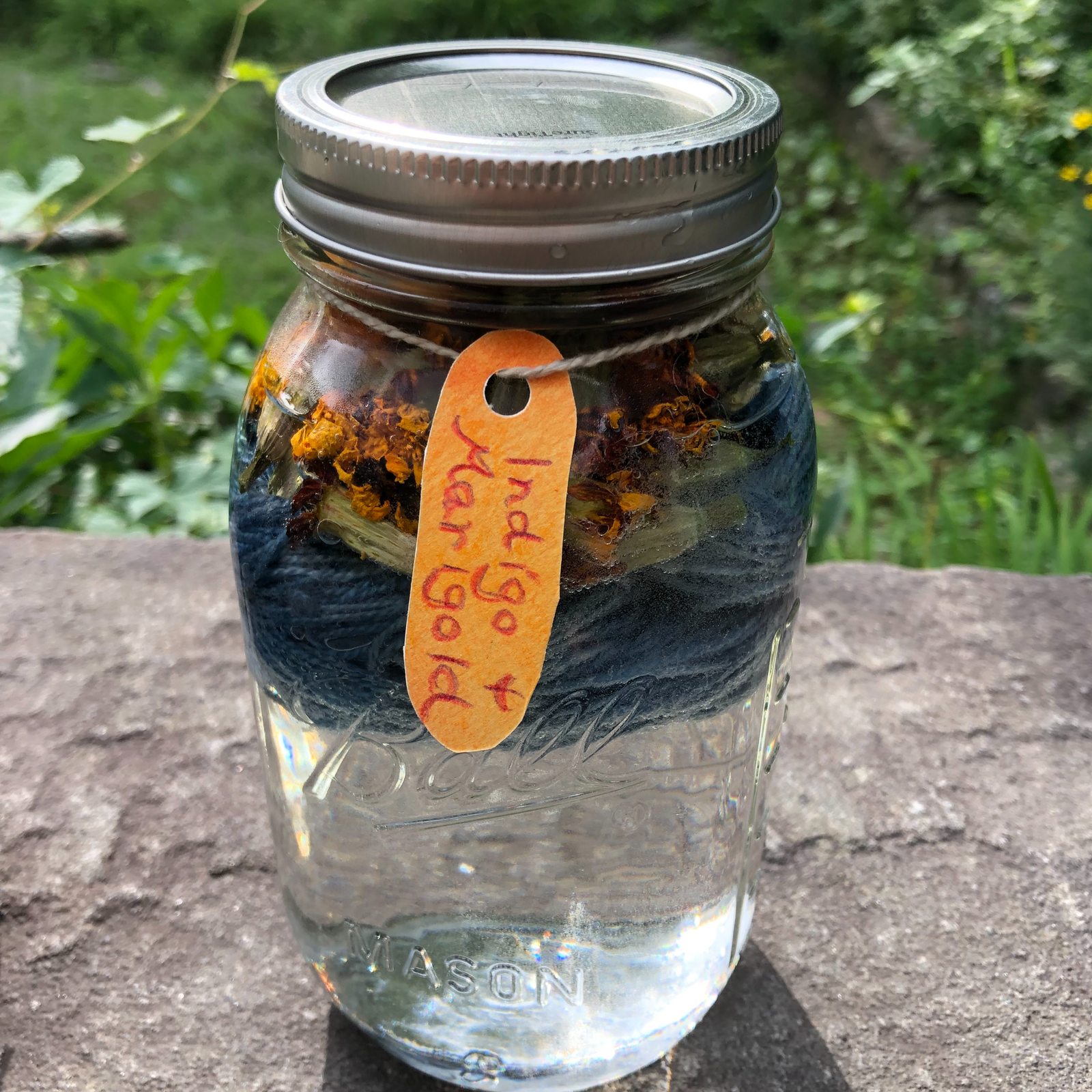
- talk about how all of the wool yarn in our display was dyed with natural dyes
- look at pictures of natural dyestuffs in Thérèse Makes a Tapestry by Alexandra S.D. Hinrichs, match indigo and madder pictures with our indigo and madder yarn, look at saffron and cochineal
- look at weaving tools in Thérèse Makes a Tapestry, take turns weaving the Nine Norse Worlds tapestry on our 48 inch Harrisville Friendly Tapestry Loom
- share examples of other yarns I've plant-dyed (mint, blueberry, turmeric, etc.)
- dye white wool yarn in the crockpot with onion skins
- MLB - add illustration and sentence for either tailor/seamstress or weaver
- read "Sarah" chapter from Daughters of Fire: Heroines of the Bible by Fran Manushkin
- read chapter 56, " 'Thing-a-ma-jigger' and 'What-cher-ma-call-it'; or, a Magic Needle and a Magic Powder" from A Child's History of the World
- recall making a floating compass (experiment from Physics is Fun! A Sourcebook for Teachers by Roberto Trostli)


Grade 3 Old Testament Stories block


Grade 7 Age of Exploration / Renaissance & Reformation block


plus...
first discussion of "How the Camel Got His Hump" in JGB


Wednesday, Apr 6
-
Grade 1 Archetypal Professions block
- read The Goat in the Rug by Charles Blood and Martin Link
- look at results of dyeing wool yarn with onion skins (red + yellow), repeat but use only red onion skins so that we can compare the color
- do a small individual weaving on a cardboard loom
- MLB - rough draft the Binding of Isaac for MLB
- read "Rebecca" chapter from Daughters of Fire
- MLB - rough draft of Marco Polo, gunpowder, magnetic compass
- read A Single Pebble: A Story of the Silk Road by Bonnie Christensen, read The Silk Route: 7,000 Miles of History by John Major at home


Grade 3 Old Testament Stories block
Grade 7 Age of Exploration / Renaissance & Reformation block


Thursday, Apr 7
- Circle Time - Opening Verse, sing ABC's, play Check the Oven!
- look at results of dyeing wool yarn with only red onion skins
- look at Tools of the Trade for blacksmith
- read excerpts from Colonial People: The Blacksmith by Bobbie Kalman
- examine the tiny details in a hand-forged eating spoon
- MLB - rough draft of Jacob and Esau
- read "Leah and Rachel" chapter from Daughters of Fire
- read Traveling Man: The Journey of Ibn Battuta 1325-1354 by James Rumford
Grade 1 Archetypal Professions block


Grade 3 Old Testament Stories block
Grade 7 Age of Exploration / Renaissance & Reformation block


plus...
making and eating Jacob's Lentil Stew


This post contains affiliate links to materials I truly use for homeschooling. Qualifying purchases provide me with revenue. Thank you for your support!




 Immersive Experience
 Immersive Experience
 Immersive Experience
 Immersive Experience


