Tuesday, April 12, 2022

Week 29 Highlights

Monday, Apr 11


Tuesday, Apr 12

    Grade 1 Archetypal Professions block

  • MLB - add illustration and sentence for blacksmith
  • read chapter 3 "C" of The Wise Enchanter: A Journey Through the Alphabet by Shelley Davidow (lunchtime read aloud story)
  • look at the Tools of the Trade for fisherman
  • read One, Two, Three, Going to Sea by Alain
  • Form Drawing - practice running form of waves, add to MLB for fisherman

  • Grade 3 Old Testament Stories block

  • finish "The Pharaoh's Dream" and read "The Years of Famine" and "The Long Journey to Egypt" from Journey to the Promised Land
  • MLB - rough draft of Joseph
  • look at Joseph's family tree in The Timechart of Biblical History

  • Grade 7 Age of Exploration / Renaissance & Reformation block

  • add Marco Polo and Ibn Battuta to MLB
  • read first 6 chapters of Mapping the World with Art by Ellen Johnston McHenry at home

    1. The Very Earliest Maps
    2. Strabo and Eratosthenes
    3. Lines on the Globe
    4. Claudius Ptolemy
    5. The Dark Ages of Western Mapmaking
    6. Marco Polo and Ibn Battuta


  • plus...

    first discussion of "Kanga and Baby Roo Come to the Forest, and Piglet Has a Bath" in JGB


Wednesday, Apr 13

    Grade 1 Archetypal Professions block

  • read chapter 4 "D" of The Wise Enchanter and play Dog Bingo
  • review Fisherman and look at a vintage Japanese fishing float from California (large beautiful hollow glass ball) which was my Auntie's
  • read The Elves and the Shoemaker and look at pictures of the tools

  • Grade 3 Old Testament Stories block

  • begin the story of Moses

    one student read Moses retold by Margaret Hodges

    one student read "A New Pharaoh," "Birth and Childhood," "The Burning Coals," "Moses and the Egyptian," "Moses in Midian," "The Battle with the Pharaoh," and "The Exodus" through p.111 from Journey to the Promised Land


    Grade 7 Age of Exploration / Renaissance & Reformation block

  • add map comparing the journeys of Marco Polo and Ibn Battuta to MLB
  • read chapter 16 "Zheng He" from Mapping the World with Art and Chee-lin: The Story of a Giraffe by James Rumford


Thursday, Apr 14

    Grade 1 Archetypal Professions block

  • read chapter 5 "E" of The Wise Enchanter
  • Circle Time - Opening Verse, sing ABCs, do 2 times table beanbag game (up to 20 and back down), play Step to It estimation game
  • review Shoemaker and look at leather pieces and sewing awl
  • use needle-felted puppets of Cobbler and Miss Mousie to perform poem "The Kind Mousie" by Natalie Joan (A Child's Seasonal Treasury by Betty Jones, p.71)
  • MLB - add illustration and sentence for cobbler
  • discuss the Protector and read Lucky Ducklings by Eva Moore

  • Grade 3 Old Testament Stories block

  • learn about the Jewish holiday of Passover (which begins at sundown tomorrow Apr 15)
  • read Miriam's Cup: A Passover Story by Fran Manuschkin
  • look at a Moses basket and the Moses Waldorf doll I made in 2008-2009 (using Black Boucle hair and Mocha skin from Magic Cabin)
  • one student read Welcoming Elijah: A Passover Tale with a Tail by Leslea Newman
  • one student read The Passover Lamb by Linda Elovitz Marshall and The Four Questions by Lynne Sharon Schwartz
  • pass out copies of In Every Generation: A PJ Library Family Haggadah and look at the parts of the Passover Seder in more detail

  • Grade 7 Age of Exploration / Renaissance & Reformation block

  • add Zheng Hu to MLB
  • read chapter 57, "Thelon Gest Wart Hate Verwas" and chapter 58, "Print and Powder or Off with the Old, On with the New" from A Child's History of the World by V.M. Hillyer (published by Appleton-Century-Crofts, 1951)


This post contains affiliate links to materials I truly use for homeschooling. Qualifying purchases provide me with revenue. Thank you for your support!

The Ever Forward - 2022

It's been fun to learn about the Ever Forward in connection with our look at Engineering Disasters in Science Club, and now I actually am working with a student who wants to go deeper into all the details of the salvage operation. Just making a few notes here for myself as to what we look at each day!


Fri, Apr 8

    brainstorm list of questions about the disaster

    look at map of the Chesapeake Bay

    look at photos from Nick (Apr 2)


Tue, Apr 12

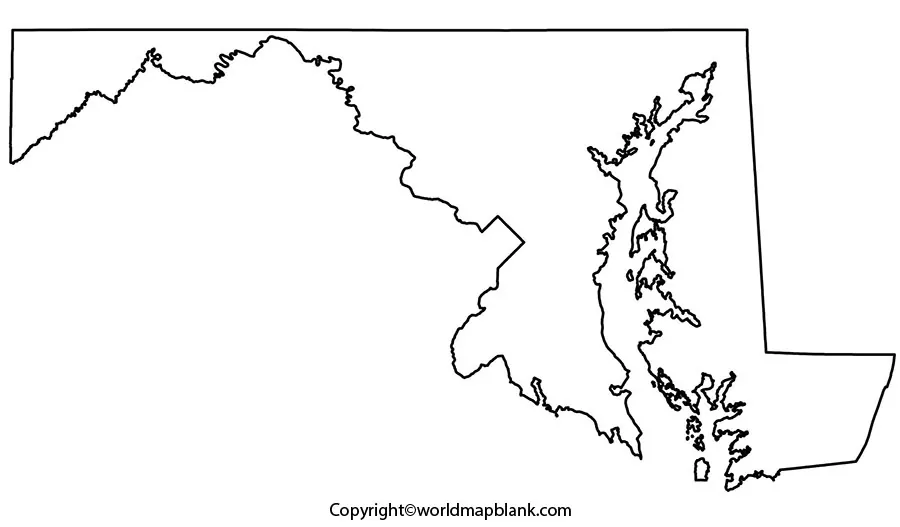
    use oil pastel map transfer technique to add map of Maryland to MLB

    watch news item from WJZ (Mar 29)

    "Ever Forward? Cargo Ship Doesn't Budge In First Refloat Attempt"

      FUN FACTS:
      4 hours, 5 tugboats, 24 feet of mud

    look at photos from Lori of low tide (Mar 29)

    begin Timeline for MLB
    Mar 13 - ship gets stuck
    Mar 29 - first refloat attempt


Wed, Apr 13

    discuss the relationship between Tides and Moon Phases and make flip book

    watch What Is Going On with Shipping? w/Sal Mercogliano (Mar 31)
    watch to 9:30

    "Ever Forward 2nd Refloat Failed - March 30, 2022"

      FUN FACTS:
      7 tugboats vs. a vessel that went aground with 15,000 to 20,000 tons of grounding force

    add to Timeline for MLB
    Mar 30 - second refloat attempt


Thu, Apr 14

    use my FleetMon acct to look at the position of the Ever Forward

    use FleetMon Explorer to view the vessels currently surrounding the Ever Forward

    read some of the facts from the excellent article Behind the Efforts to Free the Ever Forward (Mar 28)

      FUN FACTS:
      the crew's 27 members remain on board

      one of two dredges on scene, the Dale Pyatt, is the largest clamshell dredge in the western hemisphere

    read correspondence -- question from Miriam (Mar 29) and answer from Richard (Mar 30) -- about why they didn't just unload the ship

    watch news item from GMA (Apr 5)

    "Container ship has been stuck in Chesapeake Bay for weeks"

    add to MLB -
    "The Ever Forward is in 24 feet of water. She needs 42 feet of water."

    recall "The Exxon Valdez Oil Spill" and experiment #27, Double Hulls, from The Book of Massively Epic Engineering Disasters

    watch footage from WBAL (Apr 11)

    "Baltimore receives containers removed from Ever Forward"

      FUN FACTS:
      2 barges that can each hold up to 23 containers

      43 containers removed Apr 10; they are hoping for 100 per day (weather dependent)

      approximately 500 of the total 4,964 containers on board are expected to be offloaded prior to the next refloating attempt

    add to Timeline for MLB
    Apr 9 - container removal begins


Fri, Apr 15


Tue, Apr 19

    add color photo of the Ever Forward to MLB and add facts:

      1,095-foot ship
      4,964 containers on board
      multiple tugs
      two anchored pull barges
      two dredgers - Oyster Bay, Dale Pyatt
      206,280 cubic yards dredged material

    look at her itinerary before Baltimore, find Panama Canal on globe

    watch news item from WJZ (Apr 15)

    "Over 300 Containers Removed So Far From Ever Forward"

    read article Container Removal from Ever Forward Increases to Meet High Tides

    read "Potential for Impact on Shipping" excerpt from Behind the Efforts to Free the Ever Forward

    look at photos of mud from FOX 5 DC and FOX 45 Baltimore photo 3 (Mar 29)

    find a colored pencil/marker that is the same olive color as the mud, color a swatch in MLB, write "Chesapeake Bay mud is very thick"

    add to Timeline for MLB
    Apr 5 - dredging ends


Wed, Apr 20


Thu, Apr 21

    Capsized! How Sailboats Stay Upright experiments

      for each child:

      three wine corks

      two rubber bands

      three toothpicks

      craft foam

      aluminum foil

      scissors

      finish nails

      a sink, bathtub, or a large container you can fill with water

    look at From Ever Given to Ever Forward article by Sal Mercogliano and discuss some of the points he raises

    watch What Is Going On with Shipping? w/Sal Mercogliano (Apr 16)

    "Ever Forward - April 17 Refloat Scheduled"

      FUN FACTS:
      15 tons is the avg weight for a loaded container (30,000 lbs)

      6:24 am is the highest tide for Apr 17 (1.31 ft)

    add to Timeline for MLB
    Apr 16 - container removal ends
    Apr 17 - third refloat attempt


Mon, Apr 25


Tue, Apr 26

    look at Washington Post photo of Ever Foward on the move (Apr 17)

    add color photo of the Ever Forward refloat to MLB

    look at timeline example from Delmarva Now article

    review the timeline events we've recorded thus far and put them in the correct order, add timeline to MLB

    explain that I had one of my 7th graders solve this math problem:

      if the Ever Forward was lightened by 15 million pounds when the containers were removed, and this was 8% of her weight, how much did she weigh before the containers came off?

      the easiest way to solve this problem is to set it up as a proportion and cross-multiply

      the relationship between 8 and 100 (ie. 8%) is the same as the relationship between 15 million and a mystery number

      8 / 100 = 15,000,000 / w

      15,000,000 x 100 = 8w

      1,500,000,000 / 8 = 187,500,000

      the total weight of the Ever Forward before the containers were removed was 187.5 million pounds

      WOW!

    look back at details of the original salvage plan and note that the ballast water was removed throughout this process, not all at once

    use Etymonline to look at the etymology of < ballast >


Wed, Apr 27


Thu, Apr 28

    review her list of questions from Apr 8 and answer them

    add list of questions and their answers to the MLB


Fri, Apr 29


This post contains affiliate links to materials I truly use for homeschooling. Qualifying purchases provide me with revenue. Thank you for your support!

Monday, April 11, 2022

Science Club - The Titanic

Saturday was our fifth session of Science Club! Topic:


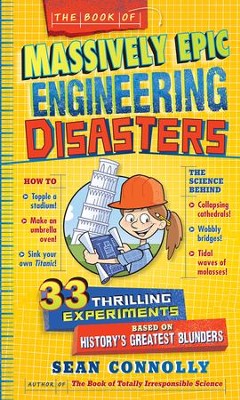
The Book of Massively Epic Engineering Disasters:
33 Thrilling Experiments Based on History's Greatest Blunders

by Sean Connolly


I wrote a blog post previously with my planning notes when doing this block on Zoom. Now I get to do it IRL with a group of students!

For each disaster I'll share my up-to-date notes and some photos. In this session we learned about the sinking of the Titanic in April 1912.


- recall last week's disaster (Tay Bridge) and look at facts and images from the "Disaster Above the River Tay" article in "The Highlander" magazine Jan/Feb 2020 issue (thank you to the parent who brought this in to share!)

- review our previous exploration of center of gravity & discuss Egg Spinning

- sink/float explorations (walk around the yard and find one think you think will sink and one thing you think will float, bring them back and test them, organize sink/float items into two piles)

float pile - leaves, sticks, flowers, cardboard

sink pile - rocks


- why do things sink? the children agreed it was because they are heavy

- is it possible to have two things that have the same mass but one thing sinks and one thing floats? some children said yes and some said no

- look at two items which both have a mass of 11 grams

wooden pencil floats

Teifoc brick roofing tile sinks


- explain formula for density

density is the relationship between an object's mass and its volume


- shake Ocean Bottle vigorously, watch how the oil separates back out and floats on top of the water even when the bottle is placed upside down (vegetable oil has a density of 0.92 g/mL, water has a density of 1.0 g/mL)

- discuss how density relates to why rotten eggs float

- do Floating and Sinking Pop Cans Experiment

    for each group (set up one):

    large bucket or container

    water

    variety of unopened 12 oz soda cans, some regular and some diet


Note: I discovered that it is important to use newly purchased & fresh soda!

When I first did this experiment several years ago I was so impressed with it and I thought, well, I'll just hang on to these cans of soda. Put them in with my experiment things. Soda doesn't require refrigeration so they won't go bad. Why spend the money to buy them again? However, I discovered -- much to my dismay -- that several of the brands of soda (all DIET, notably) had leaked all over the floor of the closet in the Science Room. The cans appeared to be completely unopened but they were empty and there were liquid stains and mold all over the brown paper bag and my beautiful hardwood floor. It is a mystery to me as to how they leaked, but they did.

So, then I thought, I'll still keep them (I really hate to waste money) and I'll just have the sense to line the box with plastic next time. That way if they leak, no problem. However, of the cans which still seemed full, one which contained regular soda floated when we did the experiment, and it shouldn't have. Only the diet drinks should float. This caused our experiment to have failed results. My conclusion? Be sure to buy your soda cans each time you do this experiment and just pour them out and recycle them afterwards.


- read The Titanic: Lost... and Found by Judy Donnelly


- do experiment #11 "Overflow!" from The Book of Massively Epic Engineering Disasters

    for each group (set up two):

    large bucket or container

    water

    metal mini muffin pan

    pitcher, plastic bottle, or elephant watering can


He suggests a plastic ice cube tray, but I can't get ours to sink because of the plastic material. I think a metal mini muffin pan gives better results.

- do How Much Weight Can Aluminum Foil Boats Float? experiment

    for each group (set up two):

    large bucket or container

    water

    aluminum foil

    ruler

    cellophane tape

    100 pennies

    2 lb dry rice

    measuring cup

    calculator

    paper and pencil

    paper towels


This experiment is the next level above "who can make an aluminum foil boat design that holds the most weight?" which most of my students had done before. Here we are actually calculating the density of our boat right before it sinks. It should be very close to the density of water (1.0 g/mL). When you add that one additional penny, the density of your boat is suddenly greater than the density of water and whammo, down you go. In order to caculate the density of your boat, you need its volume, which you measure by filling the boat with dry rice. Measure the dry rice in mL. You also need its mass before sinking, which you measure by counting the number of pennies that are in it after it sinks, then subtracting one penny, then multiplying that number of pennies by 2.5. Each penny weighs 2.5 grams. Divide the mass by the volume, and you have the density! Don't forget to measure the mass of the boat itself and add it to your penny total. You can see on our notes that we forgot about the boat initially, then added it in and recalculated.


This experiment is interesting and -- although it is a real pain to lift up, and pour from, a fragile aluminum foil boat full of hundreds of tiny grains of rice without breaking the darn thing -- I think it is worth doing. For one thing, you are actually showing the students how to calculate density, which they appreciate. The other is that it led us to a really specific discussion of sources of error. The experiment description at Science Buddies states,

    "...both hulls should roughly have a density of 1 gram per cubic centimeter right before sinking. (Your densities may not have been exactly this, but may have ranged between 0.7 to 1.3 grams per cubic centimeter. Sources of error that you could try to get rid of to give you an answer closer to the actual density of water include more accurately calculating the volume of each hull, using something smaller than pennies, and including the hull's weight in your calculations.)"


We really noticed that something went wrong with the numbers at Big Boat. It was interesting to think about what might have happened, and what we would do differently if we did it again. At the time I figured they were moving too quickly and weren't placing the pennies in evenly. But just now, in the process of typing up these notes, I suddenly remembered that Big Boat was so heavy when it was full of two cups of rice that its prow split wide open as I was lifting it up in order to pour the rice into the measuring cup. The prow had to be repaired with tape. Maybe this structural weakness is why it sunk earlier than it should have. I think it went down before its time.


- pass out Science Club notebooks, have each child draw and write notes about his/her favorite experiment or about the disaster itself


- answer questions and share facts from 882 1/2 Amazing Answers to Your Questions About the Titanic by Hugh Brewster


This post contains affiliate links to materials I truly use for homeschooling. Qualifying purchases provide me with revenue. Thank you for your support!

Tuesday, April 5, 2022

The World of Weird Animals

Another list...

I have so enjoyed this creative and informative animal facts series by Jess Keating but I tend to forget that an animal is in there until after I've taught about it; in an effort to prevent that in the future, I thought I'd make a list.


Pink Is For Blobfish: Discovering the World's Perfectly Pink Animals

    Blobfish
    Antilles pinktoe tarantula
    Orchid mantis
    Barbigant's pygmy seahorse
    Roseate spoonbill
    Amazon river dolphin
    Pink fairy armadillo
    Southern blind snake
    Hopkins' rose nudibranch
    Naked mole rat
    Pink sea star
    Hippopotamus
    Pink slug
    Pink land iguana
    Dragon millipede
    Red uakari
    Hairy squat lobster


What Makes a Monster? Discovering the World's Scariest Creatures

    Aye-aye
    Vampire bat
    Honey badger
    Portuguese man-of-war
    Horror frog
    Greater honeyguide
    Cordyceps
    Deathstalker scorpion
    Black-tailed prairie dog
    Assassin bug
    Fangtooth moray eel
    Tyrant leech king
    Goblin shark
    Komodo dragon
    Japanese giant hornet
    Humboldt squid
    Human


Cute as an Axolotl: Discovering the World's Most Adorable Animals

    Axolotl
    Quokka
    Fairy penguin
    Pom-pom crab
    Rosy maple moth
    Chinese pangolin
    Diane's bare-hearted glass frog
    Pygmy hippopotamus
    Bee fly
    Japanese dwarf flying squirrel
    Blue dragon
    Kirk's dik-dik
    Pygmy rabbit
    Minute leaf chameleon
    Northern saw-whet owl
    Hummingbird bobtail squid
    Fennec fox


Gross as a Snot Otter: Discovering the World's Most Disgusting Animals

    Hellbender salamander
    Zombie worm
    Dumpy tree frog
    Maggot
    Northern giraffe
    Siberian chipmunk
    Pacific hagfish
    Star-nosed mole
    Roundhead parrotfish
    Marabou stork
    Spanish ribbed newt
    Common Surinam toad
    Northern fulmar
    Ringed caecilian
    Pacific herring
    Coastal dung beetle
    Giant California sea cucumber


Big as a Giant Snail: Discovering the World's Most Gigantic Animals

    Malabar giant squirrel
    Blue whale
    Giant African land snail
    Moose
    Leatherback sea turtle
    Southern cassowary
    Polar bear
    Atlas moth
    Capybara
    Harpy eagle
    Southern elephant seal
    Ocean sunfish
    Giant anteater
    Red kangaroo
    Green anaconda
    Kakapo
    Goliath birdeater


This post contains affiliate links to materials I truly use for homeschooling. Qualifying purchases provide me with revenue. Thank you for your support!