Wednesday, June 22, 2016

Breaking Down the Skills Needed to Write a Research Paper

Dinner tonight was Easy Grapefruit Corn and Mint Salad and we discovered that Zac loves avocados! It is a nice summery raw & vegan salad, although I suppose that serving it along venison steaks, as I did, removes some of the vegan-ness from the meal as a whole.

Summertime handwork lessons have been chugging along and we've enjoyed some great books like

and activities like weaving on an embroidery hoop, sewing felt gnomes, making knitting needles, designing creative artistic fantasy boats, and wet felting wool geodes. Lesson plans for each session are on the website.


It has been fun to decide how to structure the handwork so that the skills build on one another. Finger knitting with one finger (and adding the pieces to Zac's beautiful and colorful bamboo tipi with the sweet potato vine curling up it), finger knitting with four fingers, making homemade knitting needles with acorn caps on the ends, and then finally next week they will begin to knit little chickens! This is the simple pattern that Barbara Dewey taught me when I went to one of her Taproot Farm Teacher Training for Homeschoolers.


Cast on 20 stitches in a yellow wool yarn. Knit until piece forms a square. Cast off. Fold into a triangle and stuff. Sew up. Embellish as desired with eyes, comb, wattle, feet, etc.

Giving kids concrete steps to ensure success is what scaffolding is all about. I have a teacher colleague who teaches a combined 4th - 8th grade class and she has them do a large research paper each year as the culminating assignment of the school year. I've had all three of my daughters go through this process with her. Each time I've felt she was asking too much of them, but I couldn't put my finger on it. She has them pick the topic in February and the thing is due in May. The page requirements are less for the lower grades and the number of sources is less for the lower grades, but the whole thing is done in MLA format no matter how old you are. She gives mini lessons on citing your sources, avoiding plagiarism, and so on during the course of the research and writing process. It SOUNDS reasonable but it is not. This paper has tortured and tormented all of my children and when last year I decided we, as homeschoolers, should do this assignment alongside the school children, it turned out to be a huge mistake. I let both Natalie and Leah complete the research steps and initial draft of the paper, and then I discarded the idea because it wasn't working. Still, I couldn't figure out WHY. It just was too hard for them. It wasn't a reasonable expectation.

I've since concluded that scaffolding this research paper isn't just about allotting plenty of time and having it be shorter if you're younger. There are so many little steps that lead up to being able to write a paper in full-on MLA format, and this teacher wasn't giving the children the foundation to be successful. I don't love the Common Core but one of my textbooks from my Master's degree days (which was in the era of the roll-out of the Common Core) is actually the perfect resource to this problem, which plagues teachers from about 4th grade on up. The Research Paper.

Here is what Amy Benjamin says in Writing in the Content Areas:

She states in the section on Developing the Formal Academic Voice, that

    "Districts that are really serious about having students learn to write research papers have a scope and sequence that extends from late elementary grades through high school.

    "One of the biggest problems that students have with research papers is writing in the formal voice....

    "First, understand that a formal academic voice in writing takes time to develop, and not too many people ever achieve effectiveness or conciseness in this genre. This is not to imply that such a voice is 'bad,' merely that it is not natural and seldom taught. For it must be learned and practiced. As with any affectation, the novice is going to be halting at first.

    "It is the English teacher's job to teach students to transit from an informal to a formal voice register. The very ability to do that is a defining characteristic of an educated person. So it stands to reason that we do have to educate students to do this....

    "For some inexplicable reason, we've expected students to learn a manner of using language that they hardly ever encounter, even when reading a drily written textbook. Let's look at the problem of poor academic voice from the perspective of cognitive development.

    "Writing is not speech on paper, but many poor writers think it is. Who can blame them? They're still new at this thing called writing. They are at the stage where their writerly voices are only just emerging as distinct from their speaking voices. This means, developmentally, that they are nowhere near ready to write in the formal academic voice of a research paper. For many students, the proximal skill is to eliminate those features of speech that are not welcome in writerly prose. If you look at anchor papers representing substandard writing skills, you'll find many 'speechisms' that the writer needs to re-form into writerly language. Such students will write, 'Say you have...' when they present an example; they have difficulty deciding where one sentence ends and another begins; they are unsteady in their point of vice, jumping around from 'I' to 'you' with a smattering of 'one.' They insert informal expressions where they don't belong. But they think expressions like 'due to the fact' and 'in the way that' sound smart....

    "I am suggesting that teachers (1) understand that students need explicit instructions to develop the writerly voice and (2) show patience as students try out their new voices. I am suggesting that teachers abide by a 4-12 scope and sequence model that takes students gently through the developmental process of learning to write a research paper....

    "The harm in giving students research assignments that demand a writing skill beyond their evolution as writers is twofold: The students not only will become discouraged because of the teacher's frustration, but also will be denied the instruction they need to nurse their voices along naturally....

    "It is easily to be overly ambitious when it comes to research papers. We may overlook the developmental process and think that everyone should be able to produce a full-scale, ten-page, fully-documented research paper by the ninth grade [in Natalie's school it was a 15 page paper by 8th grade and a 25 page paper by 9th grade]. I know of institutions that claim bragging rights to seventh graders who are supposedly composing research treatises of upwards of twenty pages. I wouldn't be impressed by this, unless I saw the results, if I were you. A more prudent plan, and one more likely to lead to actual success in developing writers, is a scope and sequence model that layers skills one year at a time."


And, luckily for all of us homeschoolers, Amy Benjamin has created this scope & sequence, going backwards from Grade 12 and what the final goal is, to an outline, step-by-step, of what needs to happen at each grade level to get the child there. Here it is!

Scope and Sequence Model for Writing Research Papers
Grades 4-12

Grade 4
Summarizing fact-based written material from a single source

Grade 5
Paraphrasing fact-based written material from a single source
Putting together a summary of fact-based information that comes from two sources

Grade 6
Putting together a summary of fact-based information that comes from two sources, paraphrased information included, with running acknowledgement
Building a rudimentary bibliography of print and online sources for a topic

Grade 7
Understanding how to cite direct quotations through either running acknowledgement, in-text citation, or footnotes

Grade 8
Understanding that paraphrased information needs to be cited if it is not common knowledge
Integrating sourced information (summary, paraphrase, and direct quotations) with original commentary in a report of not more than one page with a simple bibliography and in-text citations; use of running acknowledgement as well as in-text citations

Grade 9
Writing a scaled-down version of an analytical paper, using a given list of sources

Grade 10
Writing a scaled-down version of an argumentation paper, using a given list of sources

Grade 11
Writing a full-scale documented analytical paper that conforms to a major style guide
Demonstrating an understanding that different style guides exist for different disciplines at the university level

Grade 12
Writing a full-scale documented argumentation paper that conforms to a major style guide
Demonstrating an understanding of the differences among the five major style guides: MLA, APA, Chicago, CBE, COS


Thank you Amy!

Sunday, June 19, 2016

Happy Father's Day

I was having a really hard time with Father's Day this year until yesterday, when I just decided to accept how I'm feeling and not try to talk myself out of it. All of my therapy is about finding my own voice. And then listening to it, following it, not second-guessing it. And they are right. How I'm feeling is perfectly valid.

Here's a great song for heartbreak, if you need such a thing:


Yesterday I printed out a picture of Zac at 12 months old and put it in a frame. It was adorable. This morning I painted his little hand and foot and made prints for his dad's baby book, put some French Onion Soup in the Slow Cooker along with plenty of red wine, and then I got dressed in olive cargo pants and a burnt orange athletic tank top so that I felt cute and happy, and I cleaned the entire garage. Yep. Happy Father's Day to me! I took everything out of it, swept it thoroughly, threw away all the trash, recycled all the recycling, stacked all the empty bins inside one another, put everything back in neatly, and set up two dehumidifiers and four mouse traps with peanut butter in them. I am dirty and sweaty and I feel great.

Next up, my therapeutic horseback riding. Out of all the things I've done, and read, this has been by far the most helpful. Every session I learn so much about myself in a hundred little ways. A horse is literally a mirror... and I recommend to any victim of domestic violence to make this their top priority in their counseling spectrum. And I appreciate all my friends who have checked in on me today.


My heart goes out to the widow next door who, I'm sure, has a difficult time with this holiday every year. I know I'm certainly not the only one celebrating alone. Today I'm celebrating three things:

    my little boy who is growing up so fast,

    his father who loves him and my hope that he chooses to come back into his life,

    and ME who is fulfilling both the mother and the father role at this point in time.

Tuesday, June 14, 2016

Raw Egg on Your Head / Probability

According to the Waldorf High School of Massachusetts Bay, probability is a topic for 9th grade, in particular, the study of "number of particular outcomes" in the Combinations & Permutations block:
    This course introduces the study of combinatorics. The students will tackle the challenge of identifying and counting the number of different possible ways in which the members of a set (whether they be people, playing cards, numbers, letters, or other discrete entities) can be grouped together subject to various constraints. The concept of “number of possible outcomes” raised by this work leads naturally into an exploration of some basic principles of probability. From this follows a discussion of how we can calculate or estimate probabilities in a wide variety of contexts in our lives. This includes estimating risks and understanding common fallacies in thinking about probability. Finally, we consider conditional probability, and how we can rationally update our estimates of probabilities as we gain new information about the world.

When I was watching Jimmy Kimmel a while back, he had a game with a guest where they had a carton with a dozen eggs. Eight were hard-boiled. Four were still raw. You took turns drawing an egg out of the carton and smashing it full speed on the top of your head. Whoever was the first to smash two raw eggs on themselves lost. He calls it Egg Russian Roulette.

Simple game.

Always seemed to me like it would be an incredibly fun introduction to Probability. You can SEE that your chances of getting egg on your head increase with every hard-cooked egg that smashes and causes no damage. You literally calculate mentally as you're picking up the egg (and picking it up and putting it back after you feel it is not allowed) what your chances are of being covered in slick egg innards. The audience is doing those mental calculations too.

Of course, you could do this by dropping the eggs out of the window onto your concrete patio, too, or throwing them at the barn door. There's no rule that says you have to smash them on yourself. But I think it would be fun and a lesson no 9th grader (or middle schooler) would ever forget.

Saturday, June 11, 2016

In a Planning Mood

I took Zac to the beach for the first time today! It was Cedar Lake, a little lake near us. He had an absolutely marvelous time. I just calmly held him on my hip and walked into the water very slowly and when it touched his feet, he figured it out immediately and started kicking. And splashing. He wasn't scared or nervous one bit. And I held him on my hip and walked all around, and then went into the shallow part and knelt down so he could stand, then went shallower and sat and held him on my lap and he felt the water and watched all the little fishes swim past us, and then we went to the very edge of the water and he grabbed handfuls of wet sand and piled them on my legs. Then we went into our shady spot and dried off and ate a snack. And came home!
It was perfect. He had such a great time!!!!!

Now he's napping soundly and I'm in a planning mood. First, I planned the menu and grocery list. I thought it might be fun to try some vegan recipes for a change (and I have lots of meat in the chest freezer including chicken, venison, and catfish so it clearly won't be an all-vegan week!) and to mess around with some new ingredients. Plus I have a friend who swears that when her son turned 2 he stopped eating anything that was new and so the rest of his life he has only had the things he had up until turning two. That's a good reason to expose your child to variety!

I thought I'd start with trying some new breakfast recipes. These are the ones that caught my eye:


And, not breakfast, but looks oh so scrumptious... Carrot Cake Jars from Love + Lemons.

I think it's hard to get excited about cooking when it's hot. So I also have a list of 23 Raw Summer Recipes that another friend sent me, and those may be on the list for next week!


Next up in the planning, the schedule for next school year. I like to have 12 blocks (three each of the four topics Math, Language, Cultural, and Science). This year we will be spending every Wednesday at a biodynamic farm so that eliminates some of the science (Botany, in particular) so I'm going to do eleven 3-week blocks and one 1-week block. The plan is to start school August 22nd and end May 19th, with a one week long Autumn break, a two week long Winter break, and a two week long Spring break. The one week block falls that week before Thanksgiving. I really want a long Spring break because I never have time for a long road trip with the girls. Their dad has them all of Christmas break and all 10 weeks of the summer. And, since we moved here, they've never been able to go back to MD to see friends and family. This year I realized, if I want to take two weeks off in order to travel, I have every right to plan that. It's homeschool, right? Flexibility is the point. You individualize it for the needs of the specific people in your family.

    August 22 - start of block one - 3 wks

    September 12 - start of block two - 3 wks

    October 3 - start of block three - 3 wks

    October 24 - start of block four - 3 wks

    November 14 - start of block five - 1 wk

    November 21 - start of Autumn Break - 1 wk

    November 28 - start of block six - 3 wks

    December 19 - start of Winter Break - 2 wks

    January 2 - start of block seven - 3 wks

    January 23 - start of block eight - 3 wks

    February 13 - start of block nine - 3 wks

    March 6 - start of Spring Break - 2 wks

    March 20 - start of block ten - 3 wks

    April 10 - start of block eleven - 3 wks

    May 1 - start of block twelve - 3 wks


Then I got on to planning what is in my Amazon shopping cart. This is what I'm saving up for:

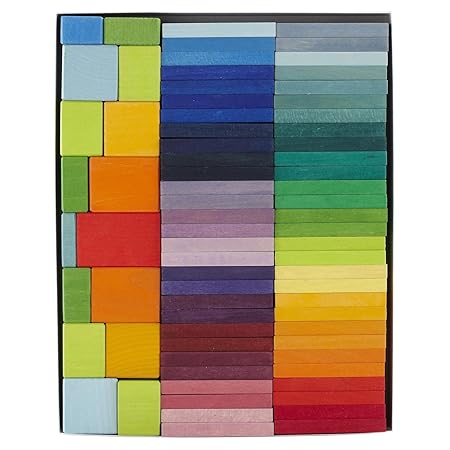
for the 12 month old toddler in our house

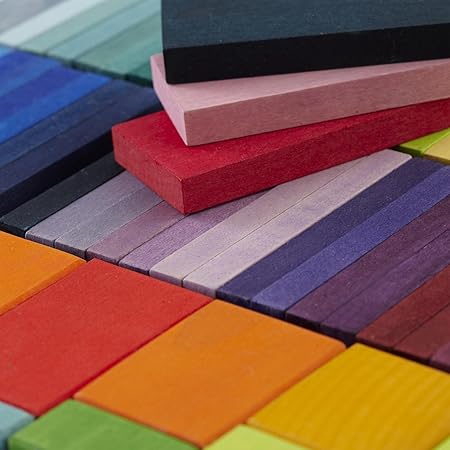
for my Handwork classes


    apparently they don't make this color anymore... stock up! wonderful for all those little white knitted Waldorf lambs!

for the upcoming homeschool year

for my Waldorf teacher training

Thursday, June 9, 2016

A GREAT Price on Pure Wool Yarn

We will shortly be beginning our knitting lessons and making our first in the line of Waldorf stuffed animals, the little white lamb.

I greatly prefer the Lion Brand Alpine Wool Yarn for these stuffed animals. The lamb is great in Vanilla. The lion is great in Cinnamon.

Amazon has the yarn for $8.29 as does the Lion Brand website. But JO-ANN Fabrics has it right now on their site (not in stores) for $5.24 a skein. Awesome! They don't have the colors I prefer for stuffed animals, only Chili, Olive, Blueberry, Bay Leaf, and Black Pepper. But it's still a great price for thick pure wool yarn so if you want colors for hats and scarves in the fall, maybe stock up now!

Their tweedy colors (Barley, Oatmeal) are not 100% wool, though. So be aware. Lion Brand also made a nice organic 100% cotton yarn called Nature's Choice, and I liked their Strawberry color for the Pig and Espresso for the Horse. Now discontinued. It's so hard when you find things and then they disappear!

I've never found a really nice thick grey yarn for the Elephant. I have had students use Paton's Classic Wool Yarn in Dark Grey, but the stitches are a bit too loose with their handmade needles and the stuffing comes out.

If anyone has recommendations, I'd love to hear them! I would also like to hear from people who are using yarn from smaller suppliers.


I realize that there are no really good reviews on Amazon for A First Book of Knitting for Children, so I will write one in the next day or so. By "really good," I mean a nice specific review that lists the exact animal patterns included. I always find that sort of thing incredibly helpful. But I will just quickly say here that this is the #1 best book for teaching your child to knit and I do recommend you use the "knitted cast on" for best results. I make the slip knot and cast on for the child for the first project, make the slip knot and show them the knitted cast on for the second project, and show them how to make that initial slip knot for the third project. And they are totally independent from there on!

A basket of wool stuffing is good to have in the classroom, or washed sheared wool and wool carders. I did the latter. Once when my kids were going through my wool so fast, I brought them some angora for a change. They loved that!

This book includes a doll made only with knit stitch, as well as a boy and girl using knit stitch and purl stitch. Plus lamb, lion, pig, elephant, horse with knit stitch only and cat, chicken, and sea otter using knit and purl stitch. Making a striped ball, knitting ribbing, making a pompom, and making your own wooden knitting needles are also included, as well as knit stitch verse, purl stitch verse, casting off verse, undoing a stitch, undoing a row, recovering a dropped stitch, shaping your knitting by decreasing, changing colors, sewing up, and stuffing projects.