Thursday, May 28, 2020

The Peoples of the Biomes

I was just putting my Inuit shelter and culture three-part cards back in my basket of Biome material from Waseca Biomes, when I realized that one of the sets from Oceania is the Maori people. It would have been nice if I remembered that when we were doing our Hawai'i class play in December!

So, I'm making some quick notes here as to which people are on which continent, and their biome. This is only one group of the Biomes cards; I'm not listing plant, invertebrate, fish, amphibian, reptile, bird, mammal here.


Antarctica - white

    polar - researchers


Europe - red

    polar - Saami
    mountains - the Basque
    grasslands - Ukrainians
    wetlands - people of Amsterdam
    temperate forest - people of the Black Forest


Africa - green

    mountains - the Konso
    grasslands - the Masai
    wetlands - the fellah of the Nile Delta
    tropical forest - the Efe pygmies
    desert - the !Kung


Oceania - brown

    mountains - the Maori people
    grasslands - ranchers
    wetlands - Aborigines of Ramingining
    temperate forest - people of Sydney
    tropical forest - Siawi people
    desert - the people of Coober Pedy


South America - pink

    mountains - the Quechua
    grasslands - people of Uruguay
    wetlands - people of the Pantanal
    temperate forest - people of Santiago
    tropical forest - Yanomani
    desert - miners of the Atacama


Asia - yellow

    polar - the Nenet
    mountains - the Dolpo
    grasslands - the Mongolians
    wetlands - the Ma'dan
    temperate forest - people of a commune
    tropical forest - people of Bangkok
    desert - people of the Thar


North America - orange

    polar - the Inuit
    mountains - Highland Maya people
    grasslands - Iowa farm family
    wetlands - Cajuns
    temperate forest - the Amish
    tropical forest - the Guna
    desert - the Diné


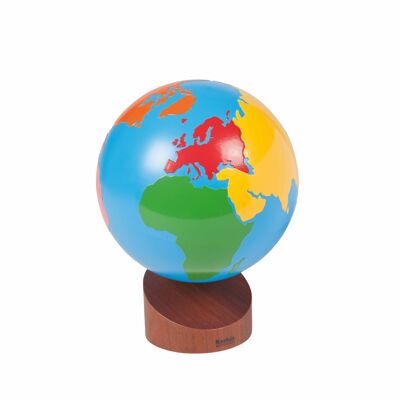
The colored border around these cards matches the color coding of the continents as seen on the Montessori Colored Globe of the Continents.


These cards are for simple research for younger children or a jumping off point for older children. They are great for the third grade block on Shelters in Waldorf. I especially like to lay out all of the people (or plants or animals) for a biome around the world, and see the similarities and differences!


If You Lived Here: Houses of the World

by Giles Laroche


This post contains affiliate links to materials I truly use for homeschooling. Qualifying purchases provide me with revenue. Thank you for your support!

Wednesday, May 27, 2020

Book Share May 27

Our quick social check-in once a week with friends to see what everyone's reading and if they would recommend it. This week's recommendations:


Bear Grylls Adventures: The Blizzard Challenge (book #1)

by Bear Grylls


1000 Animals

illustrated by Nikki Dyson


First Peas to the Table: How Thomas Jefferson Inspired a School Garden

by Susan Grigsby


This post contains affiliate links to materials I truly use for homeschooling. Qualifying purchases provide me with revenue. Thank you for your support!

Monday, May 25, 2020

Magnetism & Electricity in Science Club 2

Here are the notes from Magnetism & Electricity in Science Club 1. This second session wrapped up our Physics topic. Next... The Human Body.

Friday, May 22

Prior to Meeting

  • "Can You Get Electricity from a Lemon?"
    on page 61 of
    175 More Science Experiments to Amuse and Amaze Your Friends
  • "Circuit Challenge"
    on page 63 of the same
  • "A Five-Cent Flashlight:
    How can you make a flashlight with pennies?"
    on page 49 of
    Awesome Physics Experiments for Kids by Eric Colon
  • "Temporary Magnets:
    How can you turn everyday objects into temporary magnets?"
    on page 67 of the same
  • "Controlling Electromagnets:
    How can you create a temporary magnets using an electric current?"
    on page 59 of the same
  • "Solar-Powered Snack:
    Can you cook s'mores using energy from the Sun?"
    on page 90 of the same


During the Meeting


By the time we finished Science Club and Zac and I had demonstrated how to make the solar oven it was too late in the day. So we set it out at 8:30 the next morning with a sliced croissant in it with some chocolate chips on top. By 4:30 in the afternoon the temperature in the solar oven was at the very top of the thermometer (140 degrees) and the croissant was toasted and the chocolate was melty. We tried setting a croissant and chocolate setup beside it as the control, but animals ate it. So I wouldn't recommend that!


We didn't do this in class but if your child wants to see a circuit diagram, I recommend this video which shows the diagram for a Faraday flashlight.


This post contains affiliate links to materials I truly use for homeschooling. Qualifying purchases provide me with revenue. Thank you for your support!

Math Lesson: The Garden Story

Zac and I continued to have stories all last week about planting and harvesting. One of them even inspired a lesson with a tutoring client...


"Peter's Story" & "The Little Red Hen"
from Movement for the Young Child
by Estelle Breyer


(available in its entirety free as a downloadable PDF from the Online Waldorf Library here)


A Log's Life

by Wendy Pfeffer


Up in the Garden and Down in the Dirt

by Kate Messner


Ant Cities

by Arthur Dorros


First Peas to the Table: How Thomas Jefferson Inspired a School Garden

by Susan Grigsby


Zac loves his ant farm and it is still going strong. We are supposed to give them a few crumbs of food and a few drops of water every 3 days. Not knowing what to feed them, we tried a bit of watermelon first and it was a disaster. So yesterday we gave them a few crumbs from our challah bread and they were thrilled. Zac and I decorated a little notebook (happily, I already had an ant rubber stamp) to keep track of our ant care notes.

Yesterday we also discovered that a bird is nesting in our nest box (placed on the art room window with entrance to the North)! We also found a new swarm in our bee swarm box (placed in the cypress tree with entrance to the South). That's two this year! They will be rehomed at Dayempur Farm.


After reading Up in the Garden and Down in the Dirt I was inspired to create a new lesson for the Grade 2 Shapes & Number Patterns block. I like the Waldorf first grade math content very much and we do the Quality of Numbers and Math Gnomes blocks, but in second grade I like to bring in the Montessori materials for Shapes & Number Patterns and Column Algorithms. They are wonderful -- colorful, completely individualized, and hands-on -- and coordinate beautifully with the Waldorf approach.

This lesson uses the Colored Bead Bar material. You can either use the bar bars for the Checker Board (and some GBM 10 bars) or the bead bars for the Decanomial.

We first read the story together and then looked at places where you could have multiplication in it... the same quantity over and over and over.

I thought of a few examples. These were planting the garden (if you plant a row of three strawberry plants and you have x rows), harvesting the produce (if every tomato plant gives the same number of tomatoes and you have x tomato plants), and also the ants coming to collect food for the long winter (if every ant collects seven bread crumbs and you have x ants).

She was very inspired by the different colors of bead bars and enjoyed laying out the beads and "planting her garden"!

dark blue - blueberry bushes
9 blueberry bushes per row, two rows, 9 x 2 = 18
(in 2nd grade you begin to put the answer at the end of the equation)

pink - peach trees
3 peach trees per row, three rows, 3 x 3 = 9

red - strawberry plants
1 strawberry plant per row, five rows, 1 x 5 = 5

purple - blackberry bushes
6 blackberry bushes per row, three rows, 6 x 3 = 18

gold - pear trees
10 pear trees in a row, four rows, 10 x 4 = 40

It would be fun to lay out a garden on your mat that used all ten colors!


We also did a bit with the ants.

white - breadcrumbs

If each ant brings seven bread crumbs down to storage for the winter, and there are seven ants, how many bread crumbs do they collect in all?

7 x 7 = 49


I found it was difficult for her to switch from planting to harvesting so I wouldn't do that in the same lesson. Do planting one day and then revisit the story and do harvesting the next day.

To switch from each bead on the bar is a peach TREE and they're planted in a row, to the whole bead bar represents the peach tree and each bead is a PEACH that we collect, is too much of a mental shift without a sleep in between. The ants collecting food counts as a kind of harvesting too, mentally, and I realized right away that it was a big shift. In this case, each bead bar represents what the ANT'S CAPACITY is. It would be the same kind of problem as if you had a basket or a wheelbarrow and the colored bead bars were representing what they can hold and then you are making multiple trips (which is another way you could work with this story).

So I recommend this story and these kinds of problems, but just remember that a physical representation is a good thing to have, and it can be flexible and represent more than one concept, but don't shift to having it represent more than one concept too quickly when a skill is new.


This post contains affiliate links to materials I truly use for homeschooling. Qualifying purchases provide me with revenue. Thank you for your support!
Book Share May 20

All homeschooling kids ages 4+ are invited to join our Weekly Book Share!


It's a quick social check-in once a week with friends to see what everyone's reading and if they would recommend it. Last week's recommendations:


Adventures in Forgotten Valley

by Glyn Fewer


Miss Suzy

by Miriam Young


The Box-Car Children (book #1)

by Gertrude Chandler Warner


This post contains affiliate links to materials I truly use for homeschooling. Qualifying purchases provide me with revenue. Thank you for your support!

Sunday, May 24, 2020

Book Study of The Conscious Parent

Please let me know if you are interested in joining our upcoming Zoom weekly book study sessions of Shefali Tsabary's The Conscious Parent: Transforming Ourselves, Empowering Our Children.


UPDATE: Fridays at 5:30 pm turned out to not work for our group, so we are now meeting on Sundays at 10 am U.S. Central Time. We are restarting the book with chapter 1 this Sunday, June 21. That happens to be Father's Day!


This post contains affiliate links to materials I truly use for homeschooling. Qualifying purchases provide me with revenue. Thank you for your support!

Saturday, May 23, 2020

Writing Thank You Notes

I wish we had a better system in this country for writing thank you notes.

In fact, I think it would be really nice if someone made a book where, from the day you're born, you can keep track of all the presents you get. Not saying that every one of the things you're given will end up being precious to you, but for the things that are it would be so very nice to look back and remember, oh I got that when I was 2. Or you could look back at your mother's or grandmother's book and see what she got for wedding gifts.

What an incredible piece of memorabilia that would be and a record of your lifetime!!!!

All gifts, all holidays, all people who are dear to your heart. Have columns for the date, occasion, what it is, who gave it to you... and a little space for checking off that you wrote them a Thank You Note. That would make a real difference I think, in remembering to send them! A gentle nudge.

Anyway, if someone markets something like this let me know! I'd be first in line to buy it.

Having had four children I know that there are so many teeny tiny things you forget about a celebration. So I'm attempting to record them in my own little way. Our bedtime story the night before (On the Night You Were Born... and yes, this morning when we were out in the garden the geese really DID pass overhead and honk at us). We like to use Norah Romer's Birthday story for the birthday dinner (eaten from a special angel plate, of course, that we got years ago at Historic St. Mary's City when my girls were small); it goes well with the singing and the blowing out of candles on the birthday ring.


Our birthday breakfast of waffles. The Zoom call with relatives watching Zac open his gifts. Seeing the log cabins and the blue blue sky in MD. And how distracted my mom and aunt got when a skink passed by their feet lol.

For his birthday Zac got his ant farm (it was the first thing he went to look at when he got up in the morning), a spectacular stuffed griffin named Shard (a present from Becca), his first set of Legos (a present from Leah), a wooden frog puzzle (a present from Natalie), a mug shaped like an elephant, a stuffed beaver, a stuffed hedgehog, three new books, and birthday cards.


1000 Animals


Lift-the-flap Measuring Things


Lift-the-flap Construction and Demolition


Socially distanced birthdays are still possible, and special. Besides the family Zoom call, Zac had a friend come by with a card and some pretty things for our Nature table, and she sang him Happy Birthday from her carseat. It was so cute. And he is now running around in the yard with his beaver lovie in our old wooden doll buggy, carefully wrapped in a baby blanket. It's a beautiful sunny day. Just perfect for that pizza box solar oven experiment.

~ ~ ~

And later in the afternoon a tiny gift bag from another friend, with two adorable peg dolls in it, showed up on our doorstep! What a nice surprise.

So we learned that it is actually really fun to have a birthday this way, with things showing up throughout the day in your mailbox and at your door. It has a sort of a May Day vibe. Thank you to everyone who gave us gifts!

~ ~ ~

We aren't doing a birthday cake this year. Zac really wants to bake challah bread, so we are doing that instead! His book this month from the PJ Library was Clarence's Topsy-Turvy Shabbat by Jennifer Tzivia MacLeod. And he got really curious about challah. We only have spelt flour because of the pandemic shortages, so we are making Fluffy Vegan Whole Spelt Challah.


Clarence's Topsy-Turvy Shabbat


We love PJ Library and Zac always looks forward to his surprise book each month! I love that it's free and that we are learning a ton about Judaism through being a part of it. The books they choose are always really nice too.


This post contains affiliate links to materials I truly use for homeschooling. Qualifying purchases provide me with revenue. Thank you for your support!