Tuesday, February 21, 2023

"Monstrously" Cool Factor Trees

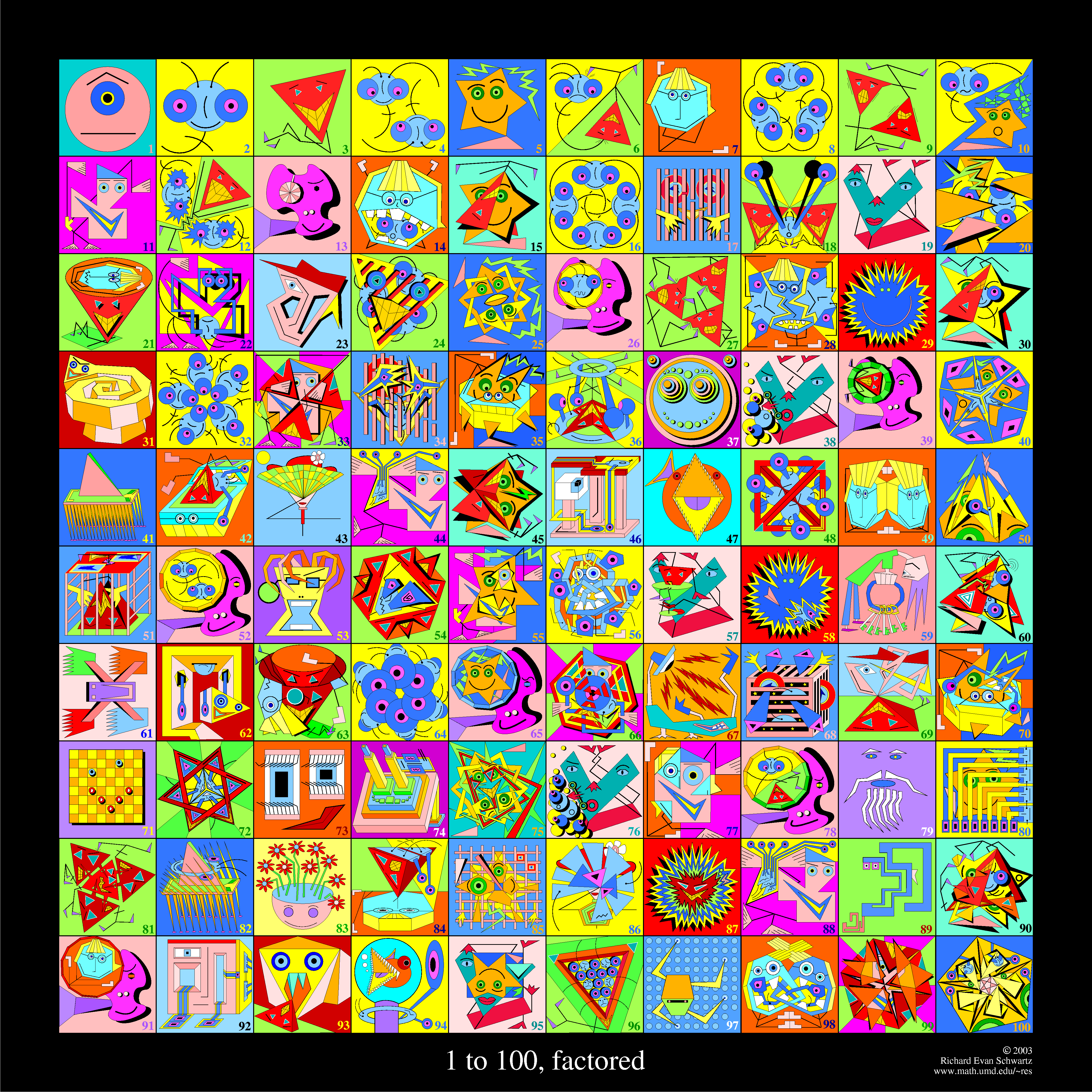
One of the most popular Math activities right now with my 10 and 11 year old students is illustrating prime and composite numbers inspired by You Can Count on Monsters, an amazing math book by Richard Evan Schwartz.


You Can Count on Monsters: The First 100 Numbers and Their Characters


In this Brown University article, he explains the process he went through to come up with this book. Here are all 100 numbers in a poster.

Special Note: The poster was one of the finalists in the 2003 N.S.F. Science and Engineering Visualization Challenge!

And children can so easily do this themeselves as a classroom activity! For each prime number, they design a unique monster. For a composite number, the children create a factor tree (factoring it all the way to the primes) and then do a drawing of those prime number monsters playing together.

Here is some of Natalie's artwork from December 2016.


9 = 3 x 3


10 = 2 x 5


15 = 3 x 5


21 = 3 x 7


44 = 2 x 2 x 11


77 = 7 x 11


It's addictively fun... and a great way to practice factor trees!


This post contains affiliate links to materials I truly use for homeschooling. Qualifying purchases provide me with revenue. Thank you for your support!

Saturday, February 18, 2023

North American Geography: Mexico

In grade 5, Waldorf students are supposed to do a geography study of their home continent. For us, that's North America. Sadly, however, we always seem to spend all our time on U.S. States & Capitals, so I'd like to make some notes on other North American countries. I'm working with a student who has requested Greenland and Mexico, so that's what we will do!


Mexico

Day 1

read The Princess and the Warrior: A Tale of Two Volcanoes by Duncan Tonatiuh


Day 2

write list of goals for our Mexico study

begin to learn some color names in Spanish with a Summer Color by Number (FREE on TpT)

relationships we found between Spanish color words and English ones:
azul - azure
rosa - rose
amarillo - amber
verde - verdant, verdigris

interesting note:
marrón means brown because it is related to the French word for chestnut


Day 3

look up additional color words she was interested in (light green, dark pink)

discover that in Spanish the adjective can follow the noun

review the Montessori Grammar symbols for parts of speech

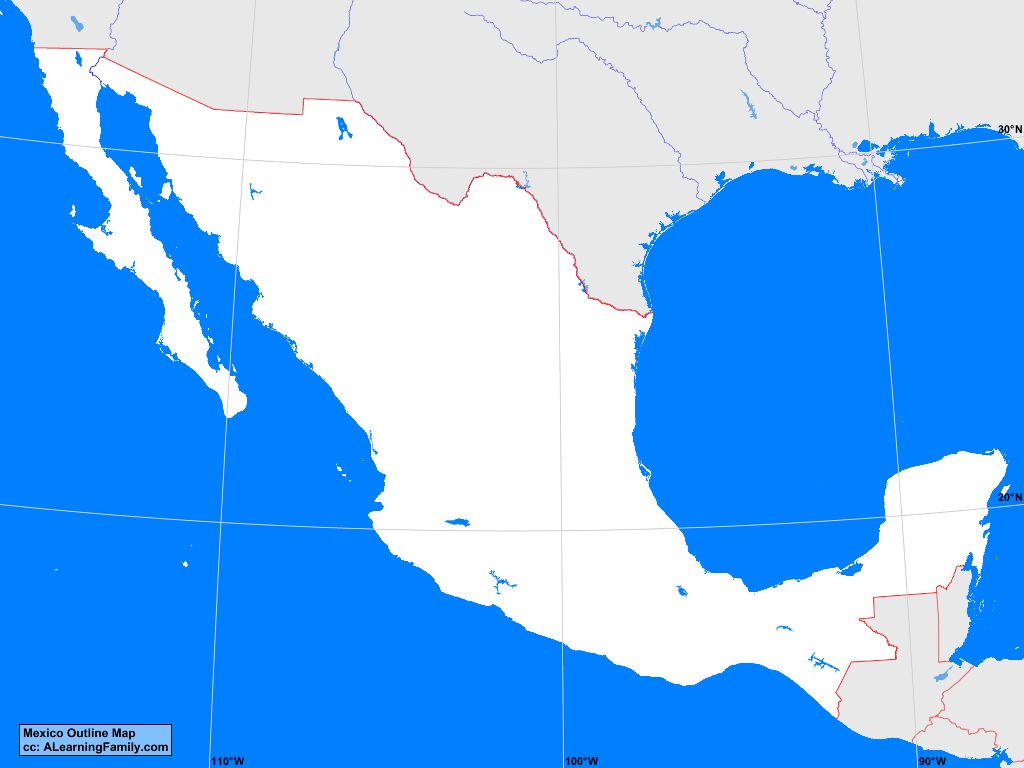
look at a map of Mexico and find the Gulf of Mexico, the Caribbean Sea, the Gulf of California, and the Pacific Ocean

find Baja and make a list of questions about learning to surf

invent and solve a long multiplication problem (using the Golden Mat and the Colored Bead Bars) about a three night hotel stay at $468.00 / night


Day 4

begin to plan imaginary trip to Baja Mexico, make a list of possible expenses, decide to focus on Meals for today

look at exchange rate between Mexican Peso and Canadian Dollar (right now 1 Canadian Dollar = 13.25 Pesos)

look at menus (Restaurant La Pasadita, Thrifty Ice Cream) and convert 15 pesos for a soda and 75 pesos for an ice cream sundae to Canadian Dollars


Day 5

use oil pastel map transfer method to make an outline map of Mexico, label Baja Peninsula

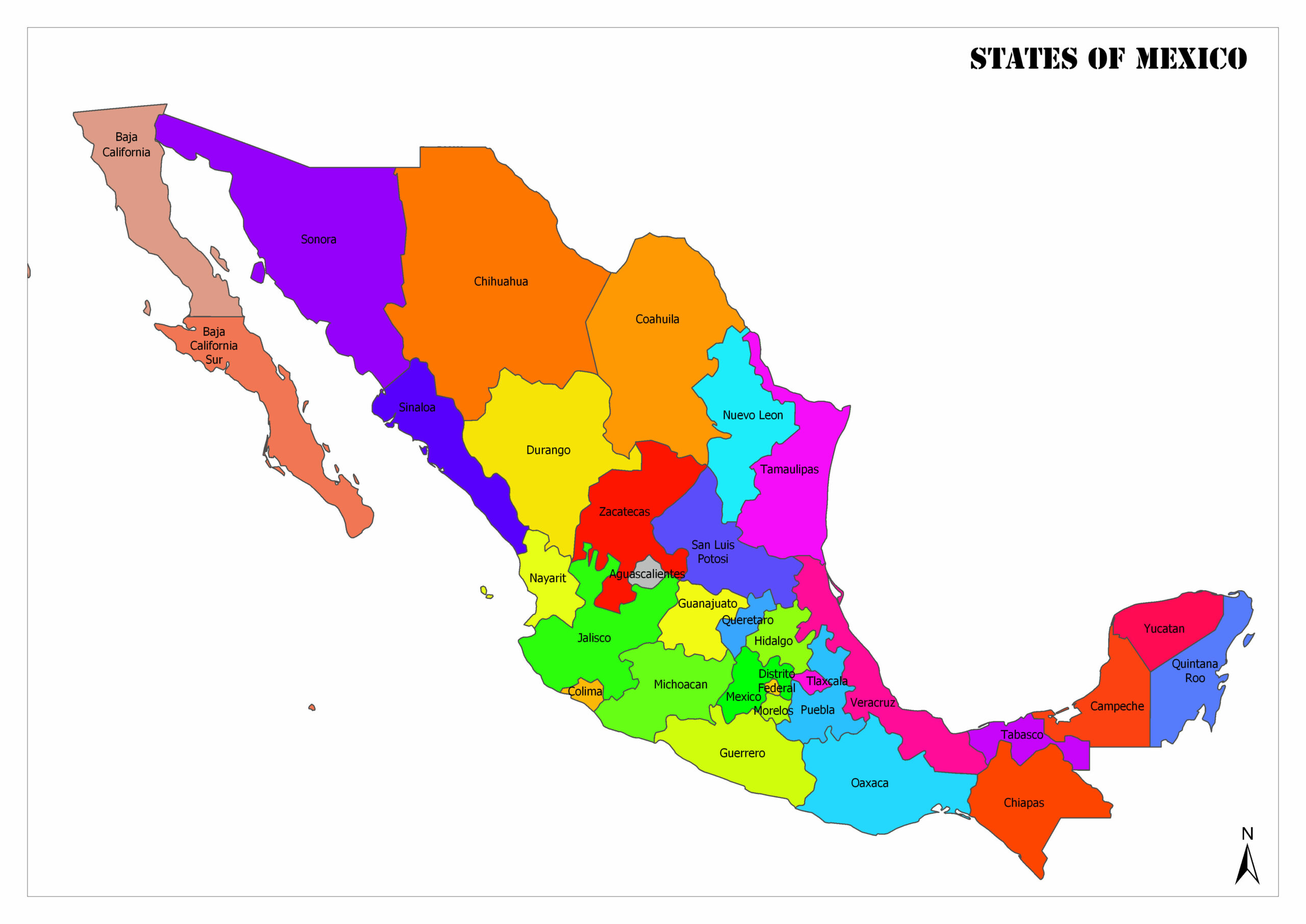
look at several political maps of Mexico

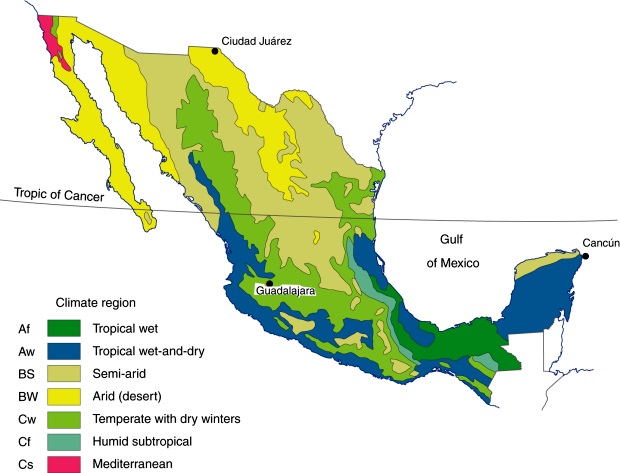
look at several biome maps of Mexico

print a second copy of the outline map of Mexico (your first copy will be ruined because of the transfer technique), use colored pencils or crayons to color it as a biome map of Mexico (don't forget to include a map key!)


Day 6

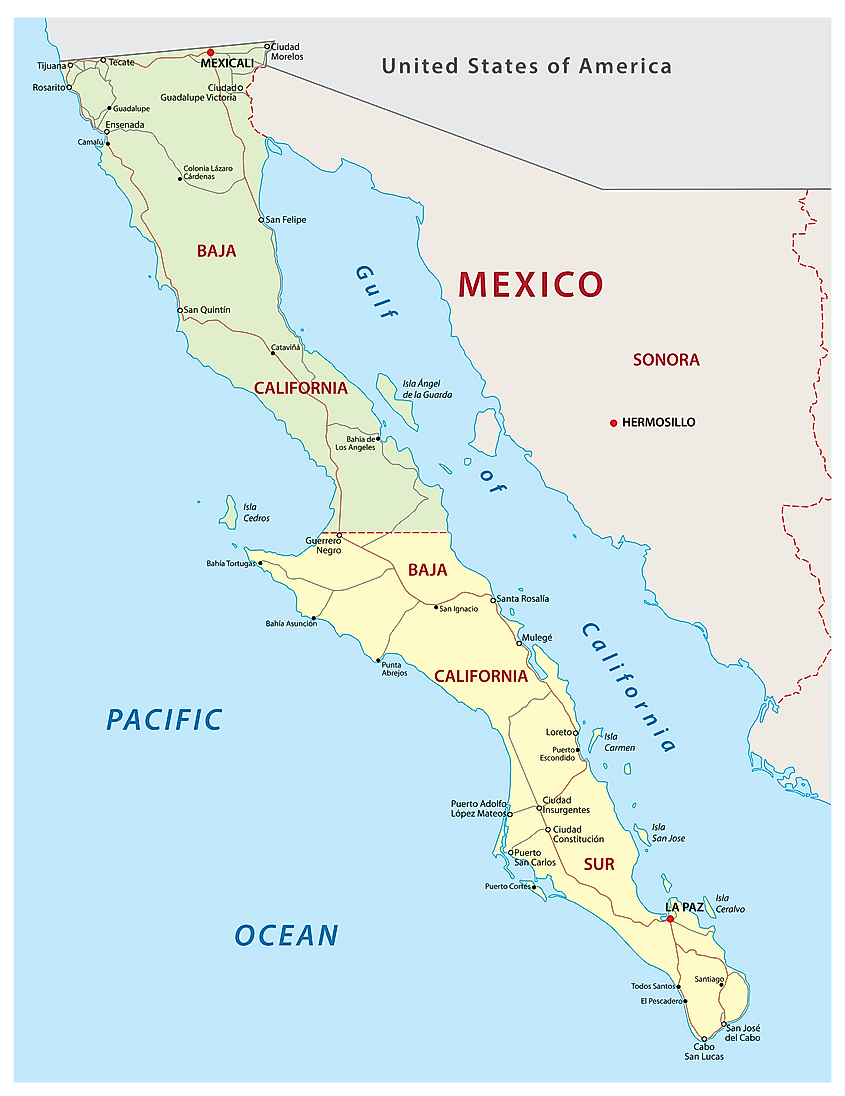
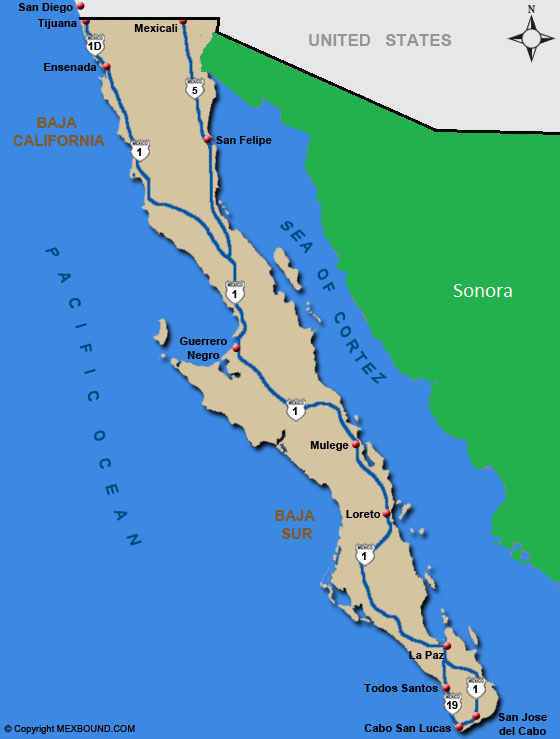
look at map of Baja Peninsula airports

decide that between the two states on the Baja Pensinsula, we would visit Baja California Sur

choose an airport (Los Cabos Airport | SJD San José del Cabo International Airport)

research the cost of surfing lessons! (purecabo.com)

from May to October, people surf the Sea of Cortez
(this is the best time to go, as the water is warmer)

November to April are the months best for the Pacific side


Day 7

choose a family-friendly hike (CASCADA SOL DE MAYO, SANTIAGO) and find Rancho Ecologico Sol De Mayo on the map

brainstorm animals that we might see on the hike (remembering that the overall biome is desert but this is a waterfall and oasis)

read blog post Rancho Ecologico Sol De Mayo and look at photographs

    Mexican Ground Squirrel

    Xanthus’s Hummingbird

    Greater Roadrunner

    American Kestrel

    White-winged Dove

    Gila Woodpecker

    Banded Rock Lizard

draw a picture of the Mexican Ground Squirrel for the MLB


Day 8

look through all of the reptiles listed on the "Baja California Sur" page at iNaturalist.org to see if alligators are found there

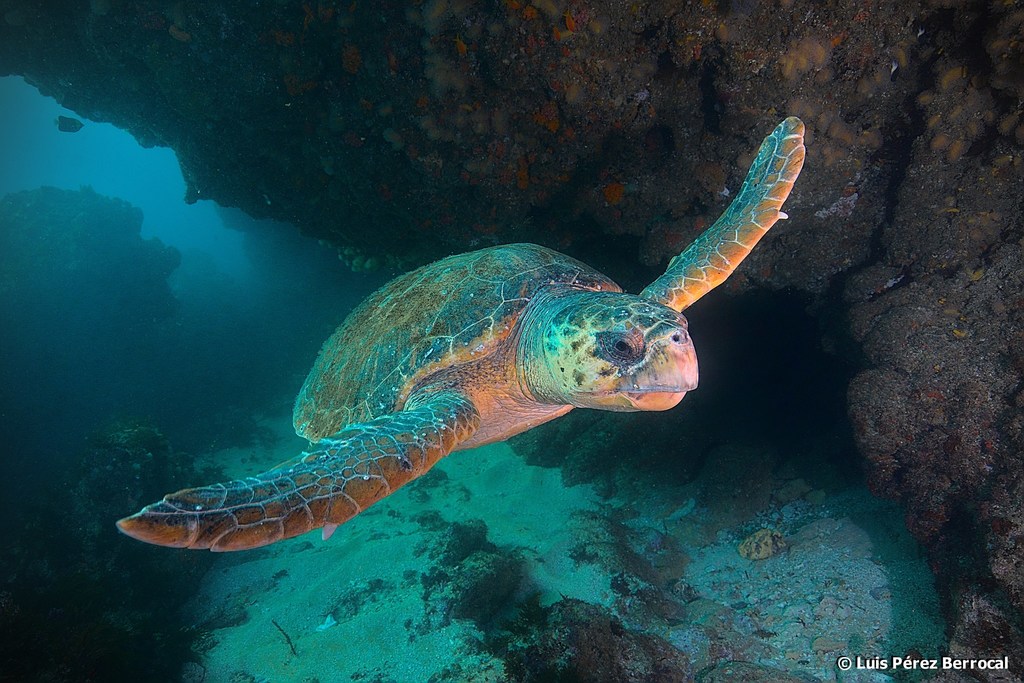
draw a picture of the Loggerhead Sea Turtle for the MLB

introduce Frida Kahlo and read Frida Kahlo and Her Animalitos by Monica Brown


Day 9

do "Self Portrait with Bonito" lesson from video 3 of Magnificent Modern Art: Frida Kahlo & Magic Realism


Day 9

look at and discuss other examples of Frida Kahlo's work from Art History Kids June 2019 topic, The World Through Frida Kahlo's Eyes

"Self-Portrait in a Velvet Dress," 1926

"Frida and Diego Rivera," 1931

"Self-Portrait on the Borderline Between Mexico and the United States," 1932

"My Dress Hangs There," 1933

"Fulang-Chang and I," 1934

"Self Portrait with Thorn Necklace and Hummingbird," 1940

"Me and My Parrots," 1941

"Self-Portrait with Braid," 1941

"Self Portrait with Monkeys," 1943

"Self-Portrait as Tehuana Woman," 1943

"Portrait of Mariana Morillo Safa," 1944

"Self Portrait with Small Monkey," 1945

"Weeping Coconuts," 1951

"Portrait of My Father Wilhelm Kahlo," 1952

"Viva la Vida," 1954


She decided that she was ready to stop here. It's different being a Zoom tutor than it is being a classroom teacher, because you don't have the energy of the whole group to help keep momentum up. I don't push a topic if children stop being interested.

You could of course take this in so many directions. Learn about another state in Mexico. Learn some more about the plants and animals. More decimal multiplication to figure out the conversion between units of currency. More legends. More Spanish. Etc.

If your child is interested in Spanish, I highly recommend Salsa by PBS. https://www.gpb.org/salsa/term/episode


This post contains affiliate links to materials I truly use for homeschooling. Qualifying purchases provide me with revenue. Thank you for your support!

Friday, February 17, 2023

Easter Egg Mean, Median & Mode

This is such a fun activity! And now that the Easter decorations are popping up in the stores, this is a perfect time to prepare it for your class to do soon.

Mean, Median, Mode and Range Easter Activity - FREE on TpT


There are a few ways you can vary the difficulty of this math work.

In my notes from April 2017, I wrote "You can easily individualize it by giving each child 30 eggs and 30 slips of paper and letting the kids choose what numbers they want to put in their eggs. Make sure they remember to repeat some numbers or there won't be a mode."

One of the advantages of having children write their own math problems is that it is valuable assessment. I know a child is only comfortable with numbers up to 20 if in their math problems, they only use numbers up to 20. (It is also a wonderful way to know what operations they are comfortable with. Many children will stick only to addition if given their druthers.)

You can also make sets using plastic Easter Eggs of various sizes! In the things we received from Bill Perk's estate, I found these bags of three different sizes of Easter eggs. I'm not sure what lesson he was thinking of when he purchased them, but to me this is a great way to differentiate this activity. You could make three levels -- beginner, intermediate, advanced -- and have the children who are doing the higher levels work with more numbers or more difficult numbers, or both!

beginner level - 6 eggs

intermediate level - 12 eggs

advanced level - 24 eggs


In the Waldorf Scope & Sequence, finding mean, median, and mode would come in 6th grade Business Math. It requires you to be able to do long division and to work with decimals, both of which are introduced in grade 5.

Monday, February 13, 2023

Week 17 Notes

World Religions Week 3

January was a really interesting month! The older children had a block on World Religions, and the younger children had a block of Jataka Tales.


We start each day with SSR and then have a Morning Meeting at 9:30 am that includes our Land Acknowledgement, Announcements, and Goal Setting. We have Morning Math and then Snack (with a story), which is at 10:15 am.

After Morning Work Time we have Lunch (with a story) at 11:30 am and then the children go out for Recess from noon to 1 pm. Next we come together for another Goal Setting Meeting and then move on into Afternoon Work Time.

At 2:45 pm the children write in their Plan Books to document what they did that day.

    Reading - 1/2 hr - 9 am to 9:30 am
    Math - 1/2 hr - 9:45 am to 10:15 am
    Morning Work Time - 1 hr - 10:30 am to 11:30 am

    Afternoon Work Time - 1 1/2 hr - 1:15 pm to 2:45 pm


Monday, Jan 16

    SSR

    Morning Math: Pterodactyls - play Pick-up Sticks, calculate score using Colored Bead Bars

    Morning Math: Plastic Utensils

    Nature - color the Weather Tree, water seedlings

    Snack - read The Fantastic Adventures of Krishna by Demi

    Jataka Tales - colored pencil illustration of elephant story from The Cat Who Went to Heaven by Elizabeth Coatsworth, rough draft sentence, get edit, write sentence in MLB

    World Religions - do Brahma the Creator Story & Creation Painting for MLB

    finish rough draft of Hinduism, get an edit, add to MLB, review the Hinduism three part cards

    Read Aloud - continue The Cat Who Went to Heaven by Elizabeth Coatsworth (water buffalo chapter)

    Outdoor Play Time

    Knitting - kitten, chicken, lamb

    Board Games - Pengoloo


Tuesday, Jan 17


Wednesday, Jan 18


Thursday, Jan 19


This post contains affiliate links to materials I truly use for homeschooling. Qualifying purchases provide me with revenue. Thank you for your support!

Saturday, February 11, 2023

Philosophy: Yellow & Pink


Yellow & Pink

by William Steig


As part of the World Religions block, we read this wonderful philosophical picture book and explored the following question: Is religion a fundamental human need -- alongside food, shelter, clothing -- or is it a learned behavior?

You could read and discuss this book at any point in the block; we did it when we were studying Abrahamic Religions. Marietta McCarty has god as one of the topics in Little Big Minds: Sharing Philosophy with Kids.

Another way into this question is the Fundamental Needs of Humans lesson in Montessori. It follows the Third Great Lesson about Early Humans.


Here are my questions and some of their responses.

me: Is religion a fundamental human need -- is it something as essential as food, shelter, clothing, and so on -- or do you think it is a learned behavior?

    I think it's learned.

    You start to have these questions because you overheard conversations like this. Someone is talking about it.


me: One way to see if it's a fundamental need is to think about if someone grew up away from people -- like if they were raised by wolves -- would they also have these questions? Would they wonder, where did I come from? What does it all mean?

    No, you'd just be in survival mode.

    Yes, you'd wonder, why don't I look like anyone else in my family? These people don't look like me.


me: What if we take religion away... do people not do as well? People who attend religious services do tend to live longer than those who don't. And for people who have been interviewed whose marriages lasted 60+ years, faith is one of the things that those marriages have in common.

    People whose marriages last have things in common. And this is just one of the things; it's a coincidence that it's religion, it could be a sport or a hobby.

    Most people are religious. So if you interview a group of people, most of them will be religious. It's automatic.

    60 years ago it was common to have religion. That generation, it was common.

    Older people have more free time. When you get past survival and have time to think, then you're more likely to wonder about things.

    It gets passed down. Like a family heirloom, it just gets passed down. You don't really think much of it

    Having answers to your questions gives you peace of mind. Maybe it's peace that's a fundamental human need.


This post contains affiliate links to materials I truly use for homeschooling. Qualifying purchases provide me with revenue. Thank you for your support!

North American Geography: Greenland

In grade 5, Waldorf students are supposed to do a geography study of their home continent. For us, that's North America. Sadly, however, we always seem to spend all our time on U.S. States & Capitals, so I'd like to make some notes on other North American countries. I'm working with a student who has requested Greenland and Mexico, so that's what we will do!


Greenland

Day 1

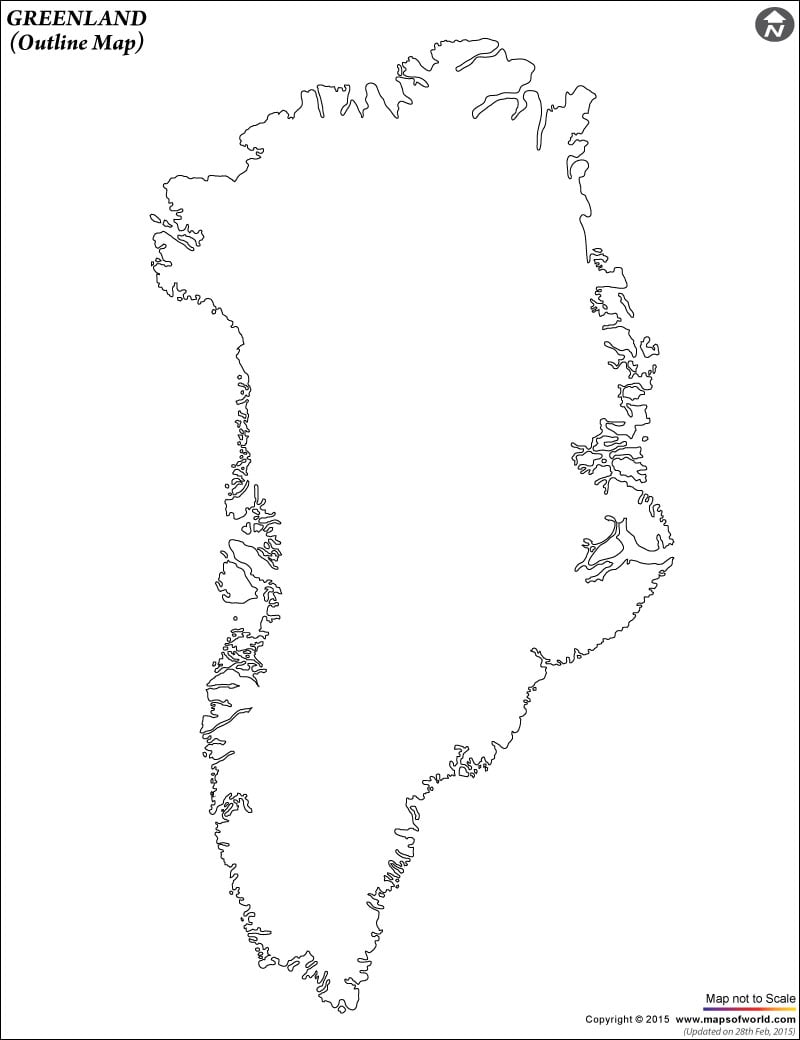
print outline map, use oil pastel map transfer method to transfer map to MLB

notice that the outline of Greenland is all squiggly and jiggly (and extremely hard to trace) because it is surrounded by water on all sides

Greenland on the globe (Greenland centered)


find Greenland on a globe
(optional: find other countries that have straight lines in their borders)

questions for next time:

    does Greenland have counties? how did it get its name?


Day 2

learn that Greenland is itself a county of Denmark

begin to read


Leif the Lucky

by Ingri and Edgar Parin d’Aulaire


questions for next time:

    what do people in Greenland build their houses of?


Day 3

Well, today we ran into a bit of a snag.

All of a sudden I realized that if Greenland is a county of Denmark, that means it is part of EUROPE and not North America! It all depends on whether you are looking at Greenland geographically or politically. When we did the Foods of the World, I included Hawai'i in Oceania. That is because food-wise it is part of the South Pacific. And you could certainly argue that Greenland is part of North America. However, since the task of the grade 5 curriculum is one's home continent, I think we have to exclude it. And Waldorf does World Geography in grades 6 / 7 / 8, so we can pick it back up again then.

So we finished up Leif the Lucky and said good-bye to Greenland.

I would like to say, however, that I want to keep notes here for future classes since I know we will circle back around to it!


Houses of Snow, Skin and Bones (Native Dwellings: the Far North)

by Bonnie Shemie

I'd love some resources for Inuit legends that are particular to Greenland. One big downside to only reading about Leif is that it doesn't make it clear that there were already people living on Greenland.

Other things I'd like to cover:

    population of Greenland

    area

    major cities

    famous people

    coins & paper money

    stamps

    time zone

    length of day on the longest day / shortest day

    climate

    native plants

    native animals

    landforms & water features

    glaciers, icebergs, the Northern Lights


This post contains affiliate links to materials I truly use for homeschooling. Qualifying purchases provide me with revenue. Thank you for your support!

Friday, February 10, 2023

The Book of Perfectly Perilous Math

I absolutely love the science books by Sean Connolly, in particular, his Chemistry and Engineering books. I used The Book of Ingeniously Daring Chemistry: 24 Experiments for Young Scientists for a Science Club: Chemistry topic in the fall of 2019, and The Book of Massively Epic Engineering Disasters: 33 Thrilling Experiments Based on History's Greatest Blunders for a Science Club: Engineering topic in the spring of 2022.

Now, for the first time, I'm using his Math book, The Book of Perfectly Perilous Math: 24 Death-Defying Challenges for Young Mathematicians to create a fun math skills review block for my 12 & 13 year old students.

Sean Connolly has set up 24 epic situations where math will (hopefully) save your life! Each challenge comes with a detailed mock-deadly scenario, a challenging multi-step math problem, several hints (from Euclid, no less), and a step-by-step solution so that students can independently check their work. Here is a list of the problems and the skills involved in solving them:


challenge 1: The Pit and the Pendulum

    Will the rat chew through the rope before or after the blade has slashed through your chest? How much time do you have exactly?

    death by: giant blade

    survival strategies: operations and algebraic thinking


challenge 2: Pizza Peril

    It's your turn now. Will you have enough money -- and will you have a job tomorrow?

    death by: termination

    survival strategies: fractions, equivalence


challenge 3: Spend a Million

    How long will it take you to spend $1,000,000 if you spend it at a rate of 50¢ every second, making sure to round it to the nearest whole number?

    death by: lasers

    survival strategies: numbers and operations in base 10


challenge 4: The Gallon or the Gallows

    Since a gallon is 4 quarts, can you work out a series of steps that will allow you to make use of these buckets to collect 1 gallon?

    death by: vexed parents

    survival strategies: quantitative and abstract reasoning, volume


challenge 5: Sage in the Tower

    How tall is the tower? How long should you make the rope of sheets to rescue the king's scholar?

    death by: enemy knights

    survival strategies: ratios and proportions, geometry, triangles


challenge 6: The "Solution" Solution

    Can you figure out a series of steps that will allow you to dilute the full-strength serum to 1 part per million?

    death by: spider bite

    survival strategies: ratios and proportions


challenge 7: The Desert Decision

    If you use the $23.63 on gas, will that be enough to get you to the next gas station? Or will your bus wind up out of gas and bake in the scorching desert sun? Exactly how far will you be able to travel once you purchase the gas?

    death by: scorching sun

    survival strategies: ratios and proportions, unit rate, decimals


challenge 8: Make It Last!

    How long will the barrel of water keep the 5 of you alive until you either reach land or get rescued at sea? How many cups of water can each person drink each day? And, based on how many days you can survive with the available water supply, how can you divide the cookies between you so that each person gets a piece every day?

    death by: dehydration

    survival strategies: ratios and proportions, unit rate


challenge 9: The Secret Code

    He must have come up with a pattern for these numbers. If 12 = J, 23 = U, 3 = A, and 16 = N, can you figure out the pattern, crack the code, and help rescue Juan before it's too late?

    death by: demolition

    survival strategies: patterns


challenge 10: Quick Change on the Train

    How long will the train be in the tunnel? Is there enough time to change into the chief's outfit while the train is in the tunnel?

    death by: rival spy

    survival strategies: ratios and proportions, variables


challenge 11: Buying a Pyramid

    If you participate in Layer 5 of this scheme, and you can only recruit people from your town, are there enough people in your 9,000 person town for you to make $900?

    death by: disappointment

    survial strategies: expressions and equations, tree diagram


challenge 12: Buried Alive?

    Your only hope is that riddle on the tomb wall. Use the pattern to decipher the riddle and figure out how many feet you are from the hidden exit door. Solve it and escape a deadly fate.

    death by: suffocation

    survival strategies: patterns


challenge 13: The Rope Bridge

    Can you determine how to get all 4 of you across the bridge, 2 at a time, in time for the 6 p.m. pikcup, making sure that each person crossing can use the flashlight?

    death by: zombies

    survival strategies: analytical thinking


challenge 14: The Punk Prank Payback

    Will you be able to give the sales associate at the store exact measurements for each room with the information you have? If so, how much flooring will you need to buy for each room?

    death by: irate uncle

    survival strategies: geometry, area of a rectangle


challenge 15: Tornado on Your Tail!

    How much longer do you have to find shelter from the tornado before everything gets swept away -- including you and Will?

    death by: Mother Nature

    survival strategies: ratios and proportions


challenge 16: The Long Way Around

    How long do you need to make the patch in feet, if you round to the nearest hundredth place? Is there a way to figure it out with a linear equation so you can avoid doing math with many digits?

    death by: asteroid

    survival strategies: geometry, pi, algebraic linear equation


challenge 17: The Sands of Time

    How can you use the hourglass in a series of steps to help you measure 30 minutes and time your escape?

    death by: crazy neighbor

    survival strategies: analytical thinking


challenge 18: The Final Countdown

    Using the information you have, how can you count 35 seconds exactly?

    death by: spacecraft

    survival strategies: ratios and proportions


challenge 19: Defeat the Vampires

    If the vampires feed only on people in your town, approximately how many months will it take for your 500,000-person town to become populated entirely by vampires?

    death by: blood loss

    survival strategies: expressions and equations

    NOTE: This problem is available as a free sample of the book (PDF).


challenge 20: Lost at Sea

    At least how many "knots" must the ship's speed be to get you to Cuba in 7 days? Round your answer to the nearest whole number.

    death by: mutiny

    survival strategies: expresions and equations, unit rate


challenge 21: Beat the Bends

    Assuming you can swim toward the surface at the rate of 10 feet per minute, how much time can you spend looking through the ship's wreckage before you have to start heading up?

    death by: scuba malfunction

    survival strategies: expressions and equations


challenge 22: Escape Blast!

    What fraction of 67 cm is 50 1/4 cm? Can you figure out a way to use the safety belt, through a series of folds, that will allow you to find exactly 50 1/4 cm?

    death by: enemy spies

    survival strategies: ratios and proportions


challenge 23: Deadly Treasure

    Can you figure out the exact weight of each chest?

    death by: executioner

    survival strategies: expressions and equations


challenge 24: Which Door to Choose?

    The decision is yours. If you switch doors, what are the odds you'll choose the door to freedom?

    death by: beheading

    survival strategies: probability


NOTE: If having students work in pairs, it is nice to give them really really big paper that they can both easily see and write on while working their way through the problem. Here we've started using 18 x 24 inch newsprint.


This post contains affiliate links to materials I truly use for homeschooling. Qualifying purchases provide me with revenue. Thank you for your support!